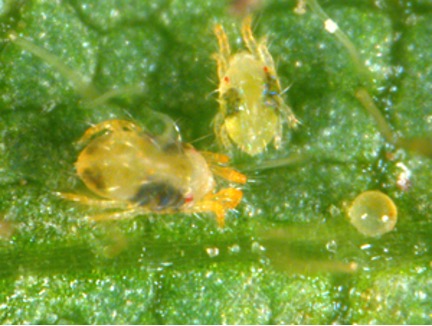
Figure 1. Egg, larva, and adult two-spotted spider mite (Photo by J. Obermeyer).
During a recent farm visit, I encountered one of the worst two-spotted spider mite infestations I’ve seen in a high tunnel tomato crop. Photos sent by the producer prior to the visit indicated that spider mites were undoubtedly the issue, but the extent to which the mite population had exploded was shocking. Nearly all plants in three tunnels showed bronzing foliage, webbing, and premature leaf death. Fortunately, with a bit of education on the pest life cycle and tunnel sanitation, scouting guidance, and treatment recommendations, the producer is on their way to avoiding such a large outbreak in the future.
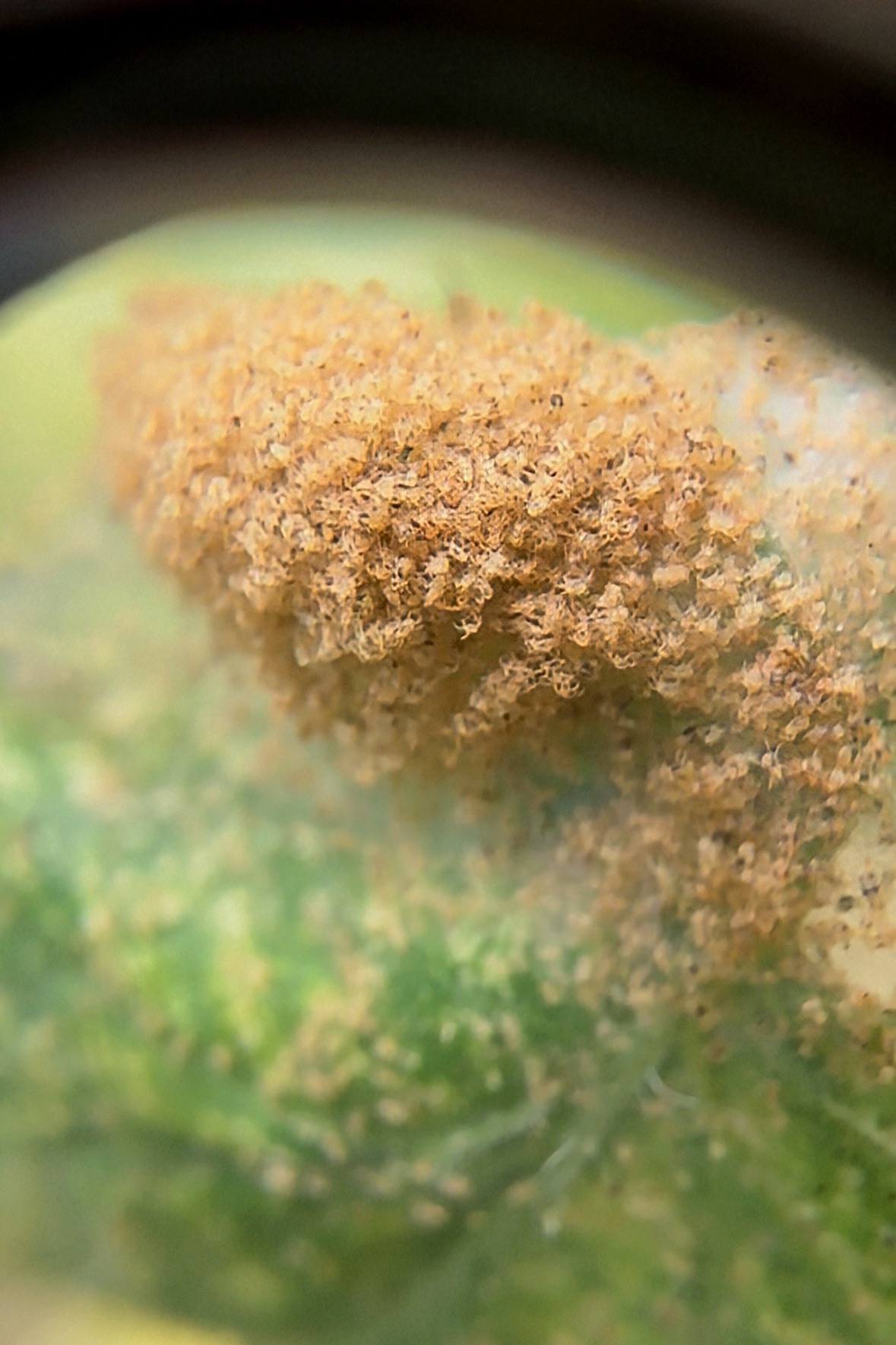
Figure 2. In advanced infestations, two-spotted spider mites may clump together in a yellow-red mass. Viewed through a hand lens (Photo by Sarah Brackney).
Life Cycle and Overwintering
Outside the high tunnel, Tetranychus urticae females overwinter on roadsides, in pastures, and other non-crop areas. Having a broad host range, these pests find plenty to eat as temperatures warm in the spring. Inside hot, dry high tunnels, mites find ideal conditions to develop and reproduce rapidly.
Mated females can lay both male and female eggs, whereas unmated females lay only male eggs. During warm conditions, eggs can hatch in about 3-5 days. Newly hatched 6-legged larva transition through protonymph and deutonymph stages before becoming adults and laying their own eggs. In the absence of washing rain, entire generations can be completed in 7-10 days, with each female laying dozens to over 100 eggs, allowing populations to increase exponentially.
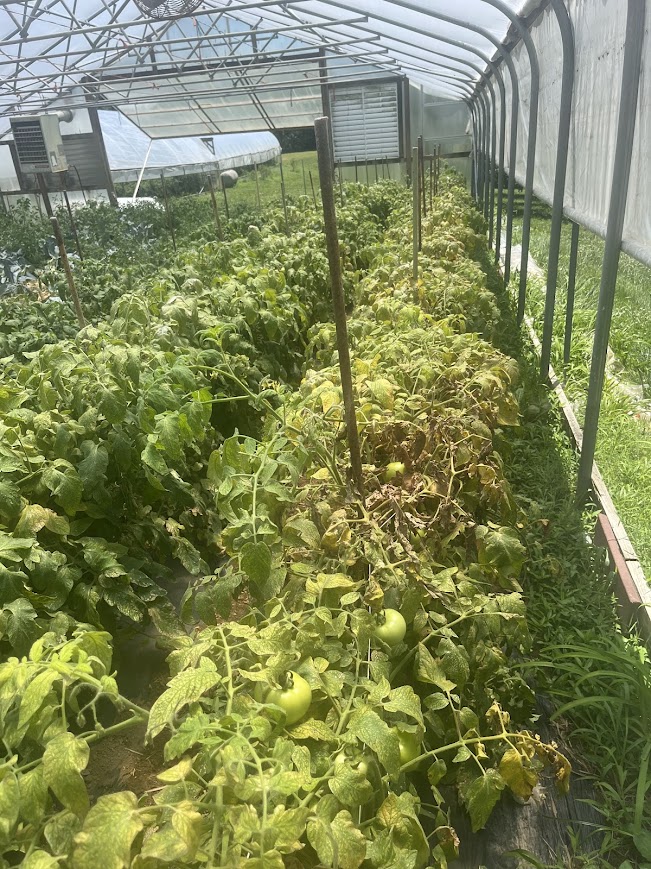
Figure 3. Notice the increased advancement of spider mite damage near tunnel edges (Photo by tomato producer).
Management Begins with Sanitation
Although winter mortality outdoors can be substantial, high tunnels that remain covered throughout the winter may provide a more favorable environment by moderating temperature extremes and reducing exposure to snow and rain. However, this has received relatively little study in Midwestern vegetable systems.
Thoroughly removing plant debris and weeds will certainly reduce overwintering populations, and partially opening tunnels to the elements may assist in this effort.
Early Detection is Key
Spider mite management is highly dependent upon scouting. Once these piercing, sucking pests reach high populations and their eventual extensive webbing, stippling, and leaf bronzing symptoms are evident, complete control becomes much more difficult.
Begin scouting shortly after transplanting and continue at least weekly, increasing frequency during hot, dry weather. The presence of mites is initially indicated by yellowing of lower leaves. If suspected, shake a few leaves over white paper, which causes mites to dislodge from leaves and become easier to see against the white background. Take a close look at leaf undersides with a 10-20x hand lens to check for:
- white or yellow stippling
- tiny white, yellow, or red mites
- clear spherical eggs
- cast skins
- fine webbing
- bronzing
Infestations often start in isolated “hotspots” like doorways and tunnel ends, so early detection may allow for spot treatment before they spread throughout your tunnel.
No economic threshold is universally accepted for two-spotted spider mite in high tunnel tomatoes, so once mites are found on multiple plants and populations are increasing, intervention is justified. Don’t wait for widespread webbing and bronzing.
Integrated Approaches for Control
Successful mite management can be achieved by using multiple tactics rather than miticides alone.
Keeping plants happy and healthy with adequate irrigation can slow population growth, and avoiding unnecessary broad-spectrum pesticide applications helps conserve natural predators such as predatory mites and insects. Remember that mites are not insects, so making insecticide applications will have very little, if any, effect on mites, other than potentially killing their natural enemies.
Mechanical suppression can also be helpful when infestations are detected early. For early, localized infestations, thoroughly spraying the undersides of leaves with directed water can physically remove mites and webbing.
Commercial biological control agents, particularly predatory mites such as Phytoseiulus persimilis can provide excellent suppression in high tunnels when released before spider mite populations become excessive. Once heavy webbing develops, however, biological control becomes much less practical. While effective, biological controls take longer to show improvement and pest population reduction. If you choose biological control, be patient. Applying miticides after introducing predatory mites may eliminate your control, as well.
Chemical Control
When miticides become necessary, timing and coverage are critical. Most products work best against actively feeding mites, and many provide only limited control of eggs, necessitating follow-up applications. Thorough coverage of the underside of leaves is essential, as this is where most mites reside.
According to Wenjing Guan, Clinical/Engagement Professor of Horticulture & Landscape Architecture at the Southwest Purdue Ag Center, growers should rotate products among different IRAC modes of action rather than repeatedly applying the same chemistry to reduce the likelihood of resistance development. Because labels and registrations change regularly, growers should consult current recommendations before making treatment decisions.
The Midwest Vegetable Production Guide for Commercial Growers is a comprehensive resource for selecting labeled pest control products for use on tomatoes and other crops. The online guide allows users to filter recommendations by crop and pest and includes efficacy information, rates, preharvest intervals, restricted-entry intervals, and resistance-management guidance. Keeping the online guide bookmarked makes it easy to access the most up-to-date recommendations throughout the growing season.
Spider mites rarely become serious overnight—they simply go unnoticed until their populations have already exploded. Regular scouting, good sanitation, minimizing plant stress, conserving beneficial organisms, and intervening early remain the most effective strategies for preventing small infestations from becoming season-ending problems.
References
University of Illinois Extension (n.d.) Twospotted spider mite. Retrieved from: University of Illinois Extension
University of California IPM (n.d.) Twospotted spider mites. Retrieved from: University of California
Burst, G. (Oct 2024). Two spotted spider mites on high tunnel vegetables. University of Maryland Extension. Retrieved from: UMD Extension
Purdue Extension. Two-spotted Spider Mites (Corn). Purdue University Extension, West Lafayette, IN. Retrieved from: Purdue Entomology