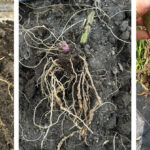
It is time to remove tomato plants from high tunnels. By season’s end, plants often harbor pathogens and insect pests, and removing crop residues can reduce carryover into the next growing season. We remember to remove leaves, stems, and fruit, but often overlook the roots. Roots can harbor several hiding pathogens and pests, including one…Read more about High Tunnel Tomato Production: Dig Out Tomato Roots and Check Root-Knot Nematode Galling at the End of the Season[Read More]
Tomato

You are invited to attend the SWPAC Vegetable Field Day on August 13, 2026, at the Southwest Purdue Agricultural Center (SWPAC) in Vincennes, Indiana. PARP credits will be offered at this event. This free educational event will provide an opportunity to learn about the latest research and Extension programs that support Indiana’s vegetable industry. Participants…Read more about Southwest Purdue Agriculture Center Vegetable Field Day – August 13[Read More]
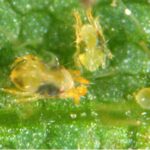
During a recent farm visit, I encountered one of the worst two-spotted spider mite infestations I’ve seen in a high tunnel tomato crop. Photos sent by the producer prior to the visit indicated that spider mites were undoubtedly the issue, but the extent to which the mite population had exploded was shocking. Nearly all plants…Read more about Two-spotted Spider Mites in High Tunnel Tomatoes: Know Your Pest[Read More]
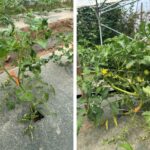
Herbicide drift presents a significant challenge for specialty crop growers. Synthetic auxin-type herbicides, such as dicamba and 2,4-D, pose particular concern for tomatoes. Injury symptoms are typically easy to recognize and include distorted leaves, twisted stems, and malformed fruit. Severity of the damage depends on the herbicide dose and the plant’s growth stage at the…Read more about A Case Study of 2,4-D Drift on Tomatoes[Read More]

You are invited to attend the SWPAC Vegetable Field Day on August 13, 2026, at the Southwest Purdue Agricultural Center (SWPAC) in Vincennes, Indiana. PARP credits will be offered at this event. This free educational event will provide an opportunity to learn about the latest research and Extension programs that support Indiana’s vegetable industry….Read more about Purdue Vegetable Field Day SWPAC[Read More]

In 2023, BASF registered Rely® 280 for use in cantaloupe, cucumber, summer squash, watermelon, tomato, and pepper. The registration occurred as two separate supplemental labels- one for cucurbits and one for fruiting vegetables. Both supplemental labels were set to expire in December of 2025. These supplemental labels allowed for the use of Rely® 280 as…Read more about Rely® 280 Herbicide – Going, Going, Gone[Read More]

The Tomato Organic Management and Improvement (TOMI) project, led by Horticulture and Landscape Architecture Prof. Dr. Lori Hoagland, collaborated with the Culinary Breeding Network to create a Tomato Zine for the general public. The zine highlights the crop’s history, introduces basic botanical traits and culinary attributes, and explains how the TOMI project is working to help tomato…Read more about A Tomato Zine for the General Public[Read More]

As the growing season picks up, high tunnel growers planning to cultivate tomatoes should keep an eye out for the small but mighty tomato pinworm, Keiferia lycopersicella (TPW). The adult moths are up to 6 mm in length, with mottled brown spots (Fig. 1). They are active at night and remain hidden, resting on foliage during the…Read more about Time to Start Monitoring for Tomato Pinworm[Read More]
Most shoppers and food manufacturers don’t buy produce from a farm field; they need veggies that have been washed, sorted, and prepped to consume. In Indiana, crops like tomatoes, pumpkins, and melons thrive, in part, because of strong middle-supply-chain processes that ready them for wholesale markets. Whether in ketchup or toothpaste, you’ve probably consumed an…Read more about Unlocking Markets in the Middle Supply Chain[Read More]

If you’ve ever wondered how to systematically evaluate flavor in vegetable breeding lines, here’s an opportunity to learn from the experts. Join eOrganic for a webinar on March 4, 2026, on cultinary evaluations of vegetable breeding lines, presented by Jordyn Bunting and Lane Selman! The webinar takes place at 11 AM Pacific Time (12 PM…Read more about How to Conduct Culinary Quality Evaluations of Vegetable Breeding Lines[Read More]