
The Purdue Small Farm Education Field Day is presented on July 27, 2023, at the Purdue Student Farm in West Lafayette, IN. Registration for the field day is now open. To reserve your spot, visit https://cvent.me/ewWN3b. Students register for free! Please get in touch with Lori Jolly-Brown to receive the discount code for student registration….Read more about Purdue Small Farm Education Field Day – Registration Now Open[Read More]
Tomato
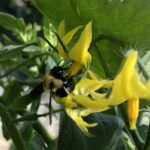
The importance of bees for providing pollination is a regularly discussed topic in many fruit and vegetable production systems. Although tomatoes are often pollinated by wind, they too can benefit from bee pollination. Recent research suggests that tomato flowers visited by bees have a larger fruit set and produce heavier fruits. An ongoing study in…Read more about Pollination Services in Tomatoes[Read More]

The 2022 Purdue Small Farm Education Field Day was a big success. Nearly 72% of attendees reported that they learned something new. Nearly half indicated they plan to adopt recommended practices for diversified farming systems, and over a third (36.0%) plan to adopt recommended practices for creating, improving, or strengthening their business. Half (52.0%) indicated…Read more about Small Farm Education Field Day, July 27, 2023[Read More]

The Midwest Vegetable Trial Report series includes reports of applied research relevant to vegetable and melon production in the midwestern U.S. The purpose of the series is to publish results and document the annual results of vegetable and melon research projects. In 2022, 16 trial reports from Indiana, Illinois, Michigan, and Minnesota were published. Variety…Read more about Midwest Vegetable Trial Reports. A Great Resource for Growers.[Read More]

Almost every year, I have a greenhouse tomato grower or two call me about tomato plants that are distorted and don’t seem to be growing right. The problem often turns out to be ethylene damage. This year, I have already received my first case of heater problem. Please read the article below to avoid or…Read more about Ethylene Damage on Tomato Plants[Read More]

The 2022 Purdue Small Farm Education Field Day was a big success. Nearly 72% of attendees reported that they learned something new. Nearly half indicated they plan to adopt recommended practices for diversified farming systems, and over a third (36.0%) plan to adopt recommended practices for creating, improving, or strengthening their business. Half (52.0%) indicated…Read more about Small Farm Education Field Day – July 27, 2023[Read More]
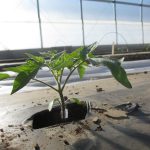
Grafted tomatoes show advantages, particularly for high tunnel production. A Purdue extension publication, Techniques for Tomato Grafting, and the video provide a step-by-step guideline for small growers to explore this technique. I am often asked. When should I start to plant the seeds to produce grafted plants? The chart below shows a general timeline and materials needed to produce…Read more about Grafted Tomatoes for High Tunnel Production[Read More]
Vegetable growers may be wondering when to apply the final fungicide application. It is important to leave the crop protected until the last harvest. Yet, it is important not to waste fungicides. In most cases, the last fungicide application should occur 10 to 14 days from the final harvest. Most fungicides that are designed to…Read more about The Final Fungicide Application[Read More]
This is the fourth article in a series that describes the three primary bacterial diseases of tomato: bacterial canker, bacterial speck and bacterial spot. This article is a general summary of management options for these diseases. All three of these diseases may be seed borne and brought into to field situation on transplants. It is…Read more about General Management Options for Bacterial Diseases of Tomato[Read More]
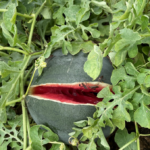
We received more than 8 inches of rain since the evening of July 24 at Southwest Purdue Ag Center. This article discusses a few plant physiological disorders we observed after the heavy rains. We noticed a large percentage of cracked fruit on tomatoes at the stem end (Figure 1). Fruit cracking is a physiological disorder…Read more about Physiological Disorders after Heavy Rains[Read More]