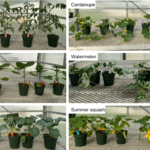
This week, several regions of Indiana experienced excessive rainfall due to the remnants of Hurricane Beryl passing through the state. The heavy rain caused flooding in some vegetable fields. When soil water levels surpass optimal requirements, oxygen is depleted, leading to waterlogging stress for the plants. Figure 1 displays the varied responses of different crops…Read more about Vegetable Responses to Waterlogging Stress[Read More]
Tomato
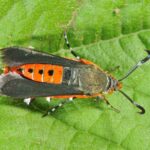
I monitor three different insect pests with pheromone traps to help make informed decisions about when to spray insecticides or take other actions for management. Trap data can be found on the Extension Entomology Vegetables Website. The longest-running is the corn earworm (Figure 1) trapping network. Purdue Meigs farm, in Tippecanoe County, is still catching…Read more about Insect Monitoring Updates[Read More]
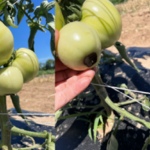
It seems the season has shifted abruptly from wet to dry. Over the past week, we’ve begun to hear reports typically associated with hot and dry conditions. At the Southwest Purdue Agricultural Center, we conduct side-by-side comparisons of different fruiting vegetables under varying irrigation treatments. This article summarizes our observations on how different fruiting vegetable…Read more about Fruiting Vegetable Responses to Drought Stress[Read More]
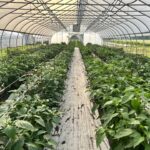
Are you still thinking about varieties for the upcoming season? Purdue has been keeping a record of vegetable variety trials in the Midwest since 1999. The Midwest Vegetable Trial Report series includes reports of applied research relevant to vegetable and melon production in the Midwest. Here are some abstracts of the most recent reports. Visit the Midwest Vegetable…Read more about Selecting Vegetable Varieties for Your Farm[Read More]
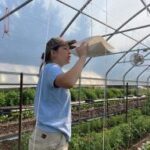
Background Tomato pinworm “TPW” (Keiferia lycopersicella) is a small microlepidopteran pest of solanaceous crops with a strong preference for tomato (Figure 1). It naturally occurs in warm climates of the U.S., including Texas, Florida, Hawaii, and California. It cannot survive outdoors in temperate climates, such as Indiana, where winter temperatures exceed a low threshold of…Read more about Presence of Tomato Pinworm on High Tunnel Tomato in Indiana[Read More]
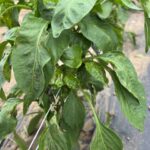
The first symptom of bacterial spot of pepper that is usually noticed is the lesions on the leaves. These lesions are irregular to round in shape and brown and are associated with chlorosis. Lesions are usually water-soaked (Figure 1). In severe cases, the fruit may be affected. The lesions on fruit are often raised (Figure…Read more about Bacterial Spot of Pepper[Read More]
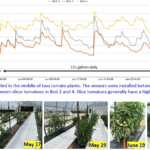
I often receive questions on how much water should apply to high tunnel tomatoes. Even the most experienced tomato growers could sometimes lose yield because of overlooking irrigation management. In this article, I describe a case study of how we use soil moisture sensors for irrigation management in a high tunnel tomato production system. This…Read more about A Case Study: Irrigation Management in High Tunnel Tomato Production[Read More]
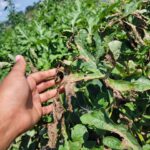
Earlier this year, Rely® 280 was registered for use in transplanted cantaloupe, cucumber, pepper, summer squash, tomato, and watermelon with a supplemental label. The registration allows for the use of Rely® 280 for pre-plant burndown and post-directed applications to row middles. Previously, postemergence burndown and row middle options were limited to glyphosate (Roundup®), carfentrazone (Aim®),…Read more about Rely® 280 Added to Row Middle Weed Control Arsenal in Select Crops[Read More]
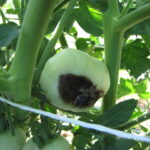
Tomatoes need a consistent water supply when they start to bloom and set fruit. As plants grow more foliage and have more fruits set, their water needs increase. As a result, the irrigation amount must steadily increase to maintain the consistent soil water content and the water supply to the plants. What would happen if…Read more about Tomatoes Need a Consistent Water Supply[Read More]
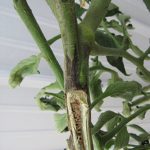
Tomato pith necrosis is a bacterial disease of tomatoes that occurs sporadically, usually in greenhouses or high tunnels. While this disease can kill or at least ruin marketable yield on tomatoes, the disease usually affects perhaps only a handful of plants in a greenhouse. That is, the disease does not seem to spread beyond the…Read more about Tomato pith necrosis[Read More]