
We’re pleased to announce that Purdue Extension will host the Indiana Horticulture and Small Farm Conference in January 2027. Please mark your calendars for January 26–28 in Danville, Indiana. Our planning committee has already begun organizing the conference, and we would greatly appreciate your input. We welcome your suggestions for speakers, topics, panels, and more….Read more about Indiana Horticulture and Small Farm Conference[Read More]
Laura Ingwell

Entomology
Area(s) of Interest: Vegetable Pest Management, Protected Agriculture, Controlled Environment Agriculture, Urban Agriculture
Area(s) of Interest: Vegetable Pest Management, Protected Agriculture, Controlled Environment Agriculture, Urban Agriculture

Purdue Extension is currently undergoing a broader transformation process that includes adjustments to priorities and resource allocation. As a result of these changes, I was recently informed that summer salary support for my Extension activities will not be available this year. Given this shift, there will be some temporary changes to the services I can…Read more about Updates to Entomology Extension Services[Read More]
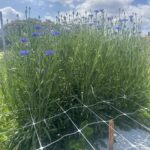
The Purdue cut flower team is currently conducting cut flower demonstrations at three locations in Indiana. In this article, we provide updates and observations on cool-season flowers from three sites: open-field and high-tunnel plantings in Vincennes; an open-field site in Indianapolis; and an open-field site in West Lafayette, representing southern, central, and northern Indiana. The…Read more about Spring Planted Cool-Season Cut Flower Update — Dianthus and Centaurea[Read More]
Purdue Extension is currently undergoing a broader transformation process that includes adjustments to priorities and resource allocation. As a result of these changes, I was recently informed that summer salary support for my Extension activities will not be available this year. Given this shift, there will be some temporary changes to the services I can…Read more about Updates to Entomology Extension Services[Read More]

The Purdue cut flower team is currently conducting cut flower demonstrations at three locations in Indiana. In this article, we provide updates and observations on cool-season flowers from the three sites, including open-field and high-tunnel plantings in Vincennes, an open-field site in Indianapolis, and an open-field site in West Lafayette, representing southern, central, and northern…Read more about Spring Planted Cool-Season Cut Flower Update – Snapdragon, Stock, Ornamental Cabbage[Read More]
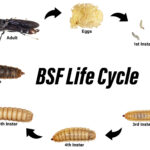
Introduction The black soldier fly (Hermetia illucens; BSF) is a species of fly in the Stratiomyidae, or soldier fly, family. They are an all black fly that has clear windows near the base of its abdomen that it uses to mimic wasps (Figure 1). BSF adults live for about 5-8 days, during which time they…Read more about The Black Soldier Fly[Read More]
Plant-Parasitic Nematodes Plant-parasitic nematodes (PPN) are a group of microscopic, worm-like organisms that live in soil or plant tissues and cause damage to crop production. While some species infect aboveground plant parts such as leaves and stems, those of greatest concern across a wide range of vegetables are soil-dwelling species that feed on plant roots….Read more about Understanding Nematodes in Soils of Diversified Vegetable Farms in Indiana[Read More]

Diversified produce growers and u-pick operations are increasingly exploring cut-flower production as a way to broaden their markets and increase revenue. To support this interest, our team of Extension specialists and educators is establishing demonstration sites in Lafayette, Indianapolis, and Vincennes, spanning north-south Indiana. In this article, we share lessons we’ve learned from our vegetable-growing…Read more about Starting Cut-Flower from Seeds: Lessons Learned from Demonstration Sites[Read More]
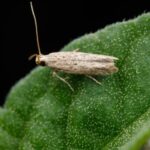
As the growing season picks up, high tunnel growers planning to cultivate tomatoes should keep an eye out for the small but mighty tomato pinworm, Keiferia lycopersicella (TPW). The adult moths are up to 6 mm in length, with mottled brown spots (Fig. 1). They are active at night and remain hidden, resting on foliage during the…Read more about Time to Start Monitoring for Tomato Pinworm[Read More]