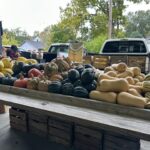
Indiana is one of the nation’s leading pumpkin-producing states. In 2025, growers planted about 7,900 acres, placing Indiana second in the nation for pumpkin production. Growers sell most of the crop in September and October for decoration or home use. Jack-o’-lanterns remain a fall favorite, while specialty pumpkins bring an array of colors, shapes, and…Read more about Diverse Pumpkin and Winter Squash Grown in Indiana[Read More]
Cucurbits

Earlier this summer, I wrote a Vegetable Crops Hotline article discussing the loss of Rely® 280 herbicide. That article can be found here: Rely® 280 Herbicide – Going, Going, Gone | Purdue University Vegetable Crops Hotline Rely® 280 was registered for use in cantaloupe, cucumber, summer squash, watermelon, tomato, and pepper in 2023 through two…Read more about Forfeit® 280 Now Registered For Use In Select Vegetable Crops In Indiana[Read More]
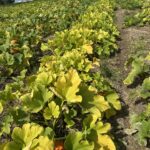
It has been a wet summer across much of Indiana, and conditions became more challenging after historic rainfall hit east-central Indiana in mid-August. I recently had a chance to visit several pumpkin fields in the region. The amount of damage directly associated with the heavy rainfall varied considerably from field to field, clearly demonstrating how…Read more about Pumpkin Field Updates[Read More]
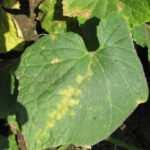
This article was published as a Hot Topic on August 7, 2026. The first symptoms of cucurbit downy mildew (Pseudoperonospora cubensis) on cucumber plants in a commercial field were confirmed in LaGrange County, Indiana, on July 29, 2026. Now is a good time to stay alert and scout fields for symptoms related to this disease. Remember, early detection…Read more about Downy Mildew Symptoms Confirmed in Indiana[Read More]
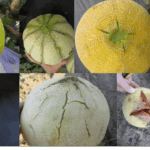
Originally published on: July 25, 2025 Fruit cracking is one of the most commonly observed disorders affecting many fruit crops. Cracking can occur in different forms, such as radial splits extending from the stem end, splits at the blossom end, or concentric rings around the fruit. Research has shown that multiple factors influence fruit cracking….Read more about What Caused the Cracking of Tomatoes and Melons?[Read More]

You are invited to attend the SWPAC Vegetable Field Day on August 13, 2026, at the Southwest Purdue Agricultural Center (SWPAC) in Vincennes, Indiana. PARP credits will be offered at this event. This free educational event will provide an opportunity to learn about the latest research and Extension programs that support Indiana’s vegetable industry. Participants…Read more about Southwest Purdue Agriculture Center Vegetable Field Day – August 13[Read More]

Have you taken a close look at pumpkin or squash fields recently? In June and early July, pumpkin plantings at Pinney Purdue Ag Center in Northwest Indiana, the following insects were observed this week. See the Midwest Vegetable Production Guide for management recommendations. Squash Bee Squash bees collecting nectar from a female pumpkin flower. These…Read more about Pumpkin Insect Observations[Read More]
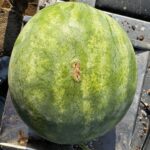
As we move through the growing season, several foliar diseases continue to be observed in watermelon fields across Indiana. The most common diseases this year have been Alternaria leaf blight and gummy stem blight, while anthracnose has been detected less frequently than in previous seasons. Because these diseases can cause similar symptoms in the field,…Read more about Common Foliar Diseases Observed in Indiana Watermelon Fields This Season[Read More]
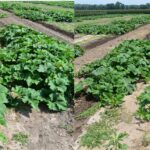
Days ago, the Office of the Indiana State Chemist (OISC) approved expanded label language allowing an over-the-top application of Dual Magnum® herbicide on pumpkins in Indiana. This change follows extensive research conducted in 2021 across 11 sites in 10 states to confirm jack-o’-lantern pumpkin crop tolerance to this application. Full results from that research can…Read more about Dual Magnum® Herbicide Now Labeled Over-The-Top in Indiana Pumpkins[Read More]
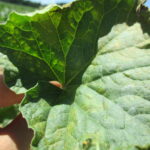
In this article, we discuss another plant nutrient imbalance symptom commonly observed in melon production in southern Indiana: manganese toxicity. Manganese is an essential plant nutrient, but excessive amounts can cause toxic effects. In melons, manganese toxicity usually appears as chlorotic spots made up of many tiny pinhole-like lesions that gradually merge together (Figure 1)….Read more about Melon Nutrient Imbalance – Manganese Toxicity[Read More]