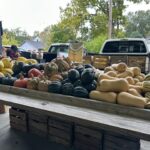
Indiana is one of the nation’s leading pumpkin-producing states. In 2025, growers planted about 7,900 acres, placing Indiana second in the nation for pumpkin production. Growers sell most of the crop in September and October for decoration or home use. Jack-o’-lanterns remain a fall favorite, while specialty pumpkins bring an array of colors, shapes, and…Read more about Diverse Pumpkin and Winter Squash Grown in Indiana[Read More]
Wenjing Guan

Vegetable Crops Hotline Editor & Clinical Engagement Associate Professor
Department of Horticulture and Landscape Architecture
Area(s) of Interest: Commercial Vegetable and Melon Production
Wenjing Guan's website
Department of Horticulture and Landscape Architecture
Area(s) of Interest: Commercial Vegetable and Melon Production
Wenjing Guan's website
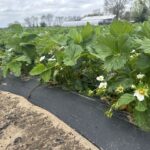
Both plug plants and bare-root plants can be used to establish plasticulture strawberries. Regardless of the type of planting material used, however, proper planting depth is critical. Planting too deep or too shallow can result in poor establishment or even plant death. I have observed both problems during recent farm visits. Planting Strawberry Plugs Too Deep…Read more about Planting Strawberries at the Right Depth[Read More]
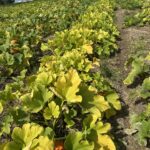
It has been a wet summer across much of Indiana, and conditions became more challenging after historic rainfall hit east-central Indiana in mid-August. I recently had a chance to visit several pumpkin fields in the region. The amount of damage directly associated with the heavy rainfall varied considerably from field to field, clearly demonstrating how…Read more about Pumpkin Field Updates[Read More]
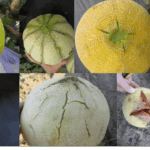
Originally published on: July 25, 2025 Fruit cracking is one of the most commonly observed disorders affecting many fruit crops. Cracking can occur in different forms, such as radial splits extending from the stem end, splits at the blossom end, or concentric rings around the fruit. Research has shown that multiple factors influence fruit cracking….Read more about What Caused the Cracking of Tomatoes and Melons?[Read More]

Purdue Extension is hosting a series of cut flower production events and field tours this summer. Join the Purdue Extension Cut Flower Team to learn about cut flower production, view demonstration plantings, and connect with fellow growers and flower enthusiasts. Date: July 15, 2026 Time: 5:30 pm – 8:00 pm EDT Location: Southwest Purdue Agricultural…Read more about Cut Flower Production Field Tours[Read More]

Purdue Extension is hosting a series of cut flower production events and field tours this summer. Join the Purdue Extension Cut Flower Team to learn about cut flower production, view demonstration plantings, and connect with fellow growers and flower enthusiasts. Date/Time: July 15, 2026, 5:30 pm – 8:00 pm EDT Location: Southwest Purdue Agricultural Center,…Read more about Cut Flower Production Field Tours[Read More]
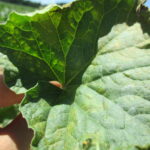
In this article, we discuss another plant nutrient imbalance symptom commonly observed in melon production in southern Indiana: manganese toxicity. Manganese is an essential plant nutrient, but excessive amounts can cause toxic effects. In melons, manganese toxicity usually appears as chlorotic spots made up of many tiny pinhole-like lesions that gradually merge together (Figure 1)….Read more about Melon Nutrient Imbalance – Manganese Toxicity[Read More]
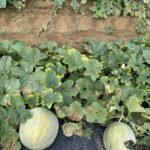
In the next two articles, we discuss two nutrient imbalances in melons commonly observed in southern Indiana: potassium deficiency and manganese toxicity. We will describe the symptoms, field observations, potential factors contributing to their occurrence, and potential remedies. Potassium Deficiency A typical symptom of potassium deficiency in melons is yellowing along the margins of older…Read more about Melon Nutrient Imbalances – Potassium Deficiency[Read More]
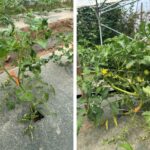
Herbicide drift presents a significant challenge for specialty crop growers. Synthetic auxin-type herbicides, such as dicamba and 2,4-D, pose particular concern for tomatoes. Injury symptoms are typically easy to recognize and include distorted leaves, twisted stems, and malformed fruit. Severity of the damage depends on the herbicide dose and the plant’s growth stage at the…Read more about A Case Study of 2,4-D Drift on Tomatoes[Read More]
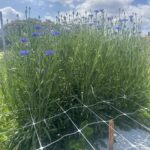
The Purdue cut flower team is currently conducting cut flower demonstrations at three locations in Indiana. In this article, we provide updates and observations on cool-season flowers from three sites: open-field and high-tunnel plantings in Vincennes; an open-field site in Indianapolis; and an open-field site in West Lafayette, representing southern, central, and northern Indiana. The…Read more about Spring Planted Cool-Season Cut Flower Update — Dianthus and Centaurea[Read More]