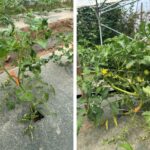
Herbicide drift presents a significant challenge for specialty crop growers. Synthetic auxin-type herbicides, such as dicamba and 2,4-D, pose particular concern for tomatoes. Injury symptoms are typically easy to recognize and include distorted leaves, twisted stems, and malformed fruit. Severity of the damage depends on the herbicide dose and the plant’s growth stage at the…Read more about A Case Study of 2,4-D Drift on Tomatoes[Read More]
Wenjing Guan

Vegetable Crops Hotline Editor & Clinical Engagement Associate Professor
Department of Horticulture and Landscape Architecture
Area(s) of Interest: Commercial Vegetable and Melon Production
Wenjing Guan's website
Department of Horticulture and Landscape Architecture
Area(s) of Interest: Commercial Vegetable and Melon Production
Wenjing Guan's website

As of January 1, 2025, Chateau® SW herbicide is no longer registered for use in melon crops in the state of Indiana. While some growers are aware of this development, others are not. The following article discusses the background on Chateau® SW use in melons and addresses some questions growers may have. What is Chateau®…Read more about Chateau® SW Herbicide No Longer Registered for Melons in Indiana[Read More]
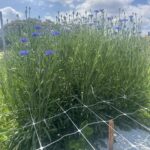
The Purdue cut flower team is currently conducting cut flower demonstrations at three locations in Indiana. In this article, we provide updates and observations on cool-season flowers from three sites: open-field and high-tunnel plantings in Vincennes; an open-field site in Indianapolis; and an open-field site in West Lafayette, representing southern, central, and northern Indiana. The…Read more about Spring Planted Cool-Season Cut Flower Update — Dianthus and Centaurea[Read More]
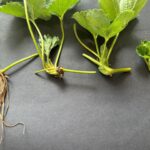
We have seen increasing interest in harvesting strawberry runner tips and producing plug plants on-farm for the next year’s planting. This practice is allowed for cultivars that don’t have a patent or the patent has expired. Several excellent Extension publications describe this process, including Strawberry Plug Plant Production published by Utah State University, and Propagating…Read more about Considerations of Growing Strawberry Plugs by Harvesting Runner Tips[Read More]
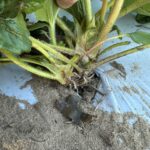
As the strawberry harvest winds down, growers are preparing for next year’s planting. A question among plasticulture strawberry growers is whether to establish a new strawberry patch using plug plants or bare-root plants. Plug plants are actively growing transplants produced from runner tips and typically sold in 50-cell trays filled with soilless growing media. In…Read more about Considerations of Using Plugs or Bare-Root Plants to Start a Plasticulture Strawberry Patch[Read More]

The Purdue cut flower team is currently conducting cut flower demonstrations at three locations in Indiana. In this article, we provide updates and observations on cool-season flowers from the three sites, including open-field and high-tunnel plantings in Vincennes, an open-field site in Indianapolis, and an open-field site in West Lafayette, representing southern, central, and northern…Read more about Spring Planted Cool-Season Cut Flower Update – Snapdragon, Stock, Ornamental Cabbage[Read More]
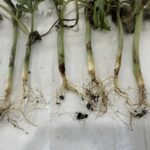
We have experienced several cool days over the past two weeks. One watermelon trial at Southwest Purdue Ag Center was planted on May 4, and during the two days following transplanting, recorded air temperatures dropped below 50°F. We evaluated plant survival 9 days after transplanting. In this trial, we had grafted and non-grafted seedless watermelons…Read more about Watermelon Plant Survival[Read More]
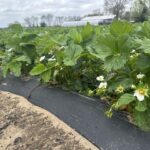
Strawberry harvest has begun in southern Indiana, with growers reporting that the season started at least a week earlier than usual. We experienced a frost event in mid-March, along with a few light, scattered frosts afterward. Fortunately, with the use of row covers, crop damage has been minimal across the region. Overall, the spring was…Read more about Plasticulture Strawberry Update in Southern Indiana[Read More]
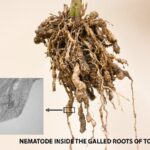
Root-knot nematodes (RKN, Meloidogyne spp.) are among the most damaging plant-parasitic nematodes in vegetable production systems. Infective juveniles hatch from eggs in the soil, find and penetrate host plant roots. They migrate to the vascular tissue, where they establish specialized feeding sites, develop into adults, and reproduce by laying eggs on the surface of roots….Read more about Root-knot Nematodes and Their Populations Identified in Indiana[Read More]

Plant-Parasitic Nematodes Plant-parasitic nematodes (PPN) are a group of microscopic, worm-like organisms that live in soil or plant tissues and cause damage to crop production. While some species infect aboveground plant parts such as leaves and stems, those of greatest concern across a wide range of vegetables are soil-dwelling species that feed on plant roots….Read more about Understanding Nematodes in Soils of Diversified Vegetable Farms in Indiana[Read More]