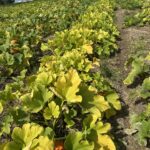
It has been a wet summer across much of Indiana, and conditions became more challenging after historic rainfall hit east-central Indiana in mid-August. I recently had a chance to visit several pumpkin fields in the region. The amount of damage directly associated with the heavy rainfall varied considerably from field to field, clearly demonstrating how…Read more about Pumpkin Field Updates[Read More]
Plant Disease Management
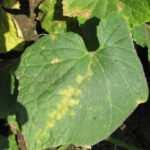
This article was published as a Hot Topic on August 7, 2026. The first symptoms of cucurbit downy mildew (Pseudoperonospora cubensis) on cucumber plants in a commercial field were confirmed in LaGrange County, Indiana, on July 29, 2026. Now is a good time to stay alert and scout fields for symptoms related to this disease. Remember, early detection…Read more about Downy Mildew Symptoms Confirmed in Indiana[Read More]
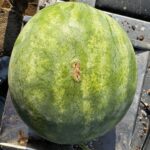
As we move through the growing season, several foliar diseases continue to be observed in watermelon fields across Indiana. The most common diseases this year have been Alternaria leaf blight and gummy stem blight, while anthracnose has been detected less frequently than in previous seasons. Because these diseases can cause similar symptoms in the field,…Read more about Common Foliar Diseases Observed in Indiana Watermelon Fields This Season[Read More]

Author’s note: This article is adapted from a previous article published in Vegetable Crops Hotline, Issue 598, by Dr. Dan Egel Many growers have already finished transplanting watermelons and cantaloupes, while others completed planting a few weeks ago and may be preparing to begin fungicide applications. In many areas of Indiana, rainfall has been relatively…Read more about Optimizing Spray Applications Using MELCAST[Read More]
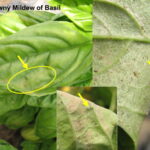
Basil downy mildew has appeared in northern Indiana. As described in a previous article, this pathogen does not overwinter; instead, it must blow in from the south. It can move rapidly through the crop, making it unmarketable. Earlier this year, Meg McGrath, plant pathologist retired from Cornell, notified us that Rutgers researchers are requesting…Read more about Basil Downy Mildew Samples Needed for Research[Read More]
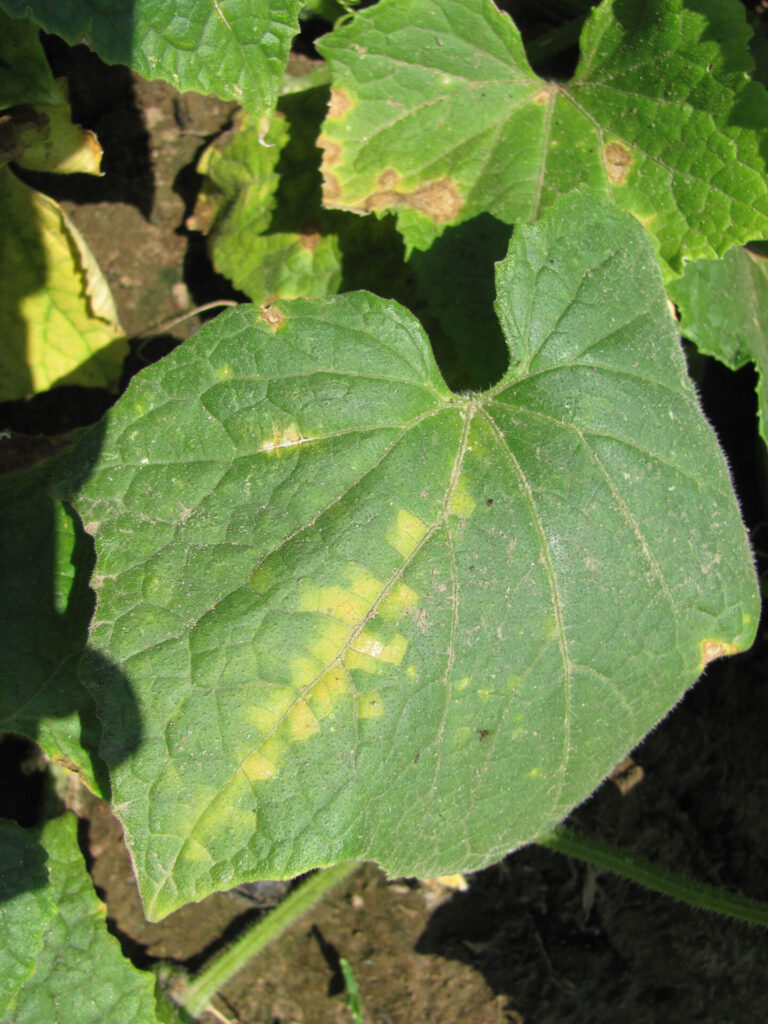
Last week, cucurbit downy mildew (Pseudoperonospora cubensis) was reported on cucumber in southwest Kentucky and northern Ohio. Last month, the disease was also reported in cucumber crops in Michigan. Being that close to Indiana, it is a good time to stay alert and scout fields for symptoms related to this disease. Remember, early detection of…Read more about Downy Mildew Confirmed in States Surrounding Indiana[Read More]
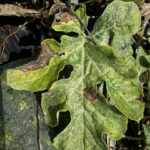
Multiple foliar pathogens (some of which are also major problems for fruits) are appearing in watermelon and cantaloupe crops. It is time to continue or begin fungicide applications to prevent diseases such as gummy stem blight (Figure 1), anthracnose (Figure 2), and Phytophthora blight. During recent field visits, I have observed gummy stem blight and…Read more about Disease Watch: Gummy Stem Blight, Anthracnose, and Phytophthora in Cucurbits[Read More]
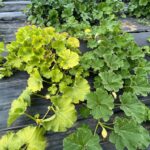
Introduction Cucurbit yellow vine disease (CYVD) is an emergent disease in the United States caused by the bacterium Serratia ureilytica, and it commonly affects zucchini, squash, watermelon, and melons. The pathogen that causes CYVD is transmitted by the squash bug (Anasa tristis, Figure 1), and other potential vectors include the striped cucumber beetle (Acalymma vittatum)…Read more about Pathogen Spotlight: Serratia ureilytica Causing Cucurbit Yellow Vine Disease[Read More]
Many of you are getting ready to start planting your seeds in the greenhouse, especially if you are planning to transplant. Regardless of the time you start or the type of crop you are planting, it is important to ensure that you have clean and disinfected areas in your greenhouse to prevent disease infections and…Read more about Cleaning and Disinfesting Your Greenhouse Before Planting[Read More]
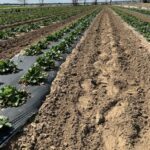
Crop Status Plug plants set on black plastic mulch in late summer and early fall are approaching full bloom. Some early blooms may have been damaged by recent low temperatures. Moving forward, growers should remain vigilant in protecting these crops from potential frost injury (Figure 3). Bare-root plants that were planted on white plastic during…Read more about Plasticulture Strawberry Update from Southern Indiana[Read More]