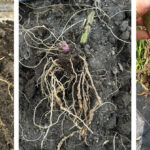
It is time to remove tomato plants from high tunnels. By season’s end, plants often harbor pathogens and insect pests, and removing crop residues can reduce carryover into the next growing season. We remember to remove leaves, stems, and fruit, but often overlook the roots. Roots can harbor several hiding pathogens and pests, including one…Read more about High Tunnel Tomato Production: Dig Out Tomato Roots and Check Root-Knot Nematode Galling at the End of the Season[Read More]
Production Management
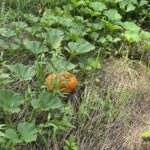
Pumpkin and other cucurbit production in Indiana often involves intensive soil preparation to create a warm, weed-free seedbed. However, increasing interest in soil health, cover crops, and reduced tillage has led some growers to consider a different approach: planting pumpkins into a terminated cereal rye cover crop using no-till or strip-till practices. Planning for this…Read more about Pumpkins in Cereal Rye: Opportunities and Challenges for Indiana Growers[Read More]
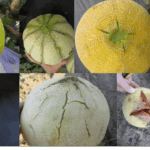
Originally published on: July 25, 2025 Fruit cracking is one of the most commonly observed disorders affecting many fruit crops. Cracking can occur in different forms, such as radial splits extending from the stem end, splits at the blossom end, or concentric rings around the fruit. Research has shown that multiple factors influence fruit cracking….Read more about What Caused the Cracking of Tomatoes and Melons?[Read More]
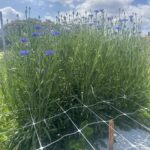
The Purdue cut flower team is currently conducting cut flower demonstrations at three locations in Indiana. In this article, we provide updates and observations on cool-season flowers from three sites: open-field and high-tunnel plantings in Vincennes; an open-field site in Indianapolis; and an open-field site in West Lafayette, representing southern, central, and northern Indiana. The…Read more about Spring Planted Cool-Season Cut Flower Update — Dianthus and Centaurea[Read More]
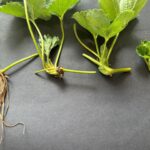
We have seen increasing interest in harvesting strawberry runner tips and producing plug plants on-farm for the next year’s planting. This practice is allowed for cultivars that don’t have a patent or the patent has expired. Several excellent Extension publications describe this process, including Strawberry Plug Plant Production published by Utah State University, and Propagating…Read more about Considerations of Growing Strawberry Plugs by Harvesting Runner Tips[Read More]
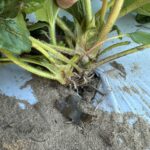
As the strawberry harvest winds down, growers are preparing for next year’s planting. A question among plasticulture strawberry growers is whether to establish a new strawberry patch using plug plants or bare-root plants. Plug plants are actively growing transplants produced from runner tips and typically sold in 50-cell trays filled with soilless growing media. In…Read more about Considerations of Using Plugs or Bare-Root Plants to Start a Plasticulture Strawberry Patch[Read More]

The Purdue cut flower team is currently conducting cut flower demonstrations at three locations in Indiana. In this article, we provide updates and observations on cool-season flowers from the three sites, including open-field and high-tunnel plantings in Vincennes, an open-field site in Indianapolis, and an open-field site in West Lafayette, representing southern, central, and northern…Read more about Spring Planted Cool-Season Cut Flower Update – Snapdragon, Stock, Ornamental Cabbage[Read More]
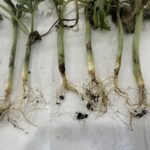
We have experienced several cool days over the past two weeks. One watermelon trial at Southwest Purdue Ag Center was planted on May 4, and during the two days following transplanting, recorded air temperatures dropped below 50°F. We evaluated plant survival 9 days after transplanting. In this trial, we had grafted and non-grafted seedless watermelons…Read more about Watermelon Plant Survival[Read More]

A cold snap is forecast for this weekend, although temperature predictions vary slightly across weather sources. At the same time, some early plantings of watermelon and cantaloupe are already in the field in southern Indiana, or seedlings have already arrived and are waiting to be planted. What steps can growers take to protect these young…Read more about Coming Cold Snap: When to Plant Watermelons and Considerations Under Suboptimal Temperature Conditions[Read More]
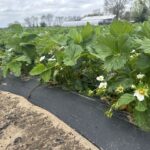
When growers are asked about the top challenges in plasticulture strawberry production, frost/freeze damage is almost always at the top of the list. Anyone living in Indiana understands how unpredictable spring weather can be. This year, in southern Indiana, we experienced warm periods with average daily temperatures exceeding 60°F in mid-February, followed by sharp drops…Read more about Spread out Flower Timing to Reduce Spring Frost/Freeze Risks in Plasticulture Strawberry Production[Read More]