
Dear Melon Growers and Industry Friends, You are invited to tour the watermelon variety trials conducted at Southwest Purdue Ag Center in Vincennes, IN, on July 24, 10:00 am-1:00 pm EST. The variety trials include: A standard-sized seedless watermelon trial A person-sized seedless watermelon trial A seeded watermelon trial This is a self-guided tour. Extension…Read more about Southwest Purdue Ag Center Watermelon Variety Evaluation Open House on July 24[Read More]
Cucurbits
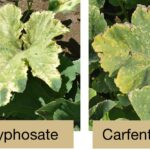
Across the state, pumpkin plantings are hitting their stride with varying degrees of success. The grower phone calls I’ve received lately revolve around options for managing emerged weeds. Broadcast options are limited to grass-selective herbicides such as sethoxydim, clethodim, and halosulfuron (Sandea®) for small broadleaf weeds and sedge suppression. All of these products can result…Read more about Post-Directed Herbicide Applications in Pumpkin[Read More]
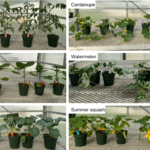
This week, several regions of Indiana experienced excessive rainfall due to the remnants of Hurricane Beryl passing through the state. The heavy rain caused flooding in some vegetable fields. When soil water levels surpass optimal requirements, oxygen is depleted, leading to waterlogging stress for the plants. Figure 1 displays the varied responses of different crops…Read more about Vegetable Responses to Waterlogging Stress[Read More]
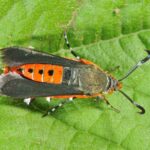
I monitor three different insect pests with pheromone traps to help make informed decisions about when to spray insecticides or take other actions for management. Trap data can be found on the Extension Entomology Vegetables Website. The longest-running is the corn earworm (Figure 1) trapping network. Purdue Meigs farm, in Tippecanoe County, is still catching…Read more about Insect Monitoring Updates[Read More]
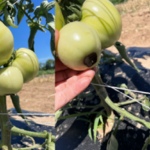
It seems the season has shifted abruptly from wet to dry. Over the past week, we’ve begun to hear reports typically associated with hot and dry conditions. At the Southwest Purdue Agricultural Center, we conduct side-by-side comparisons of different fruiting vegetables under varying irrigation treatments. This article summarizes our observations on how different fruiting vegetable…Read more about Fruiting Vegetable Responses to Drought Stress[Read More]

By now, most watermelons have been planted in southern Indiana, and most fields are currently in the vegetative growth stage. The earliest planted fields have begun to set fruit. In the past two weeks, I have observed herbicide damage in a few watermelon fields. Although the application rate and method were consistent with the labels…Read more about Watermelon Update[Read More]
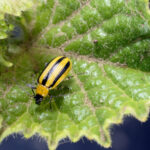
It was timely that in last week’s issue, we chose to spotlight cucumber beetles because they are on the move and hungry. Friday afternoon, I received an email from a grower reporting that his squash transplants were getting hammered (Figure 1). This weekend, I decided to take a look in my own garden, where I…Read more about Cucumber Beetles Are Out In Full Force[Read More]

Over the past two years, we’ve been testing various cucumber cultivars to see which ones are most vulnerable to pests in high tunnel systems. We split the cucumbers into two groups based on fruit characteristics for a fair comparison. The first group consists of pickle-type cucumbers, known for being small, blocky, and having thin skin….Read more about Selecting Your Ideal Cucumber Cultivar for High Tunnel Production[Read More]
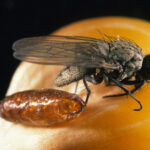
The seedcorn maggot, Delia platura, is one of the first pests that will cause damage to vegetables in the spring in our region. This fly, which resembles a house fly but is smaller (Figure 1), begins to emerge from the overwintering pupal stage in the soil in early spring. Upon emergence, the flies quickly aggregate…Read more about Insect Spotlight: Seedcorn Maggot[Read More]
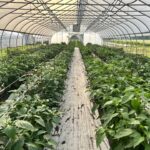
Are you still thinking about varieties for the upcoming season? Purdue has been keeping a record of vegetable variety trials in the Midwest since 1999. The Midwest Vegetable Trial Report series includes reports of applied research relevant to vegetable and melon production in the Midwest. Here are some abstracts of the most recent reports. Visit the Midwest Vegetable…Read more about Selecting Vegetable Varieties for Your Farm[Read More]