The Indiana Vegetable Growers Association (IVGA) will host an evening meeting on Wednesday, November 29, 2023, at the Vincennes University Agricultural Center, 4207 North Purdue Road, Vincennes, IN. Registration starts at 5 pm. Purdue researchers will be onsite to discuss production issues. We will also discuss presentation topics for the upcoming winter meetings. Dinner will…Read more about Indiana Vegetable Growers’ Evening Meeting Highlighting Melon Variety Trial Results[Read More]
For most pumpkin growers, it is too late to take any corrective action against diseases for the 2023 crop. However, it might be wise to determine what disease problems were present during the 2023 season. This article will discuss two relatively unusual virus diseases of pumpkin. Recently, I visited several pumpkin fields in northern Indiana….Read more about Virus on Pumpkin Update[Read More]
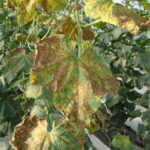
Downy mildew has been observed in Adam County in northern Indiana on cucumber. In addition, downy mildew on cucumber has been reported in southern Michigan and northern Ohio. Growers in northern Indiana should manage for downy mildew on valuable cucurbit crops. Growers throughout the state should scout for the disease. Growers should assume that all…Read more about Downy Mildew of Cucurbits[Read More]
There are many challenges in growing watermelons. Hail occurring right before harvest time is undoubtedly one of them. In the past weeks, there have been thunderstorms in southern Indiana. Some brought hail. Small hail causes minor damage to watermelon leaves and stems, but big hail can devastate the foliage and cause significant scarring to the…Read more about Watermelon Recovery from Hail Damage, Suggestions from Bob Hochmuth[Read More]

Dear Melon Growers and Industry Friends, You are invited to tour melon variety trials conducted at Southwest Purdue Ag Center, in Vincennes, IN, on July 26, 10:00 am-1:00 pm EST. The variety trials include: A standard-sized seedless watermelon trial A person-sized seedless watermelon trial A seeded watermelon trial A cantaloupe trial This is a self-guided…Read more about Southwest Purdue Ag Center Melon Variety Evaluation Open House on July 26[Read More]
It is not unusual for watermelon wilt to occur in the late season in our region. The plants are loaded with fruit and are sensitive to many stresses. In some cases, it is clear pathogens cause the problem, such as late-season fusarium wilt. While in other cases, it is hard to associate the symptom with…Read more about Improving Watermelon Cultural Practices, Are We on the Right Track?[Read More]
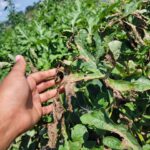
Earlier this year, Rely® 280 was registered for use in transplanted cantaloupe, cucumber, pepper, summer squash, tomato, and watermelon with a supplemental label. The registration allows for the use of Rely® 280 for pre-plant burndown and post-directed applications to row middles. Previously, postemergence burndown and row middle options were limited to glyphosate (Roundup®), carfentrazone (Aim®),…Read more about Rely® 280 Added to Row Middle Weed Control Arsenal in Select Crops[Read More]
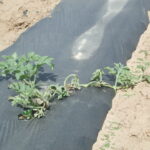
Fusarium wilt of watermelon is one of the most economically important diseases of watermelon in the Midwest. Fusarium wilt typically shows up in watermelon fields just after Memorial Day. This year is no different. After a brief description of the symptoms of the disease, this article will discuss the pluses and minuses of possible fungicide…Read more about Fungicides for Fusarium wilt of Watermelon after Symptoms?[Read More]
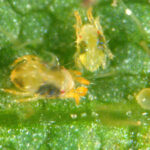
Are you interested in collaborating with Purdue Entomology on the grant “Improving two-spotted spider mite management in high tunnel cucumber production” funded by North Central SARE, Sustainable Agriculture Research and Education (LNC20-438)? The primary objectives of this research are to increase our understanding of two-spotted spider mite dynamics and management in a high tunnel cucumber…Read more about Looking for Collaborators on High Tunnel Spider Mite Project[Read More]
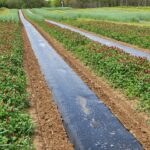
In watermelon systems in Indiana, cover crops are extensively used with the primary function of acting as a wind-break to protect the seedlings when they are planted in May. Due to the nature of the landscape and the soil type (e.g., open areas with sandy soils), seedlings are exposed to physical damage caused by sandblasting….Read more about Enhancing Insect Pest and Pollinator Management with Flowering Cover Crops[Read More]