
I conducted a summer squash (zucchini) variety trial at the Throckmorton Purdue Agriculture Center/Meigs Horticulture Facility, Lafayette, IN, a few years ago (Figures 1 & 2). We evaluated ten varieties with cylindrical fruit shape characteristics. (Table 1). Unfortunately, one variety, Felix, is no longer available. Standard zucchini production protocol was followed. Diseases and pests…Read more about Planning on Growing Summer Squash this Summer?[Read More]
Cucurbits

What is Optogen®? The active ingredient in Optogen® (Figure 1) is bicyclopyrone. Corn growers may recognize bicyclopyrone as one of the four ingredients in Acuron® herbicide. Bicyclopyrone is a Group 27 herbicide with pre- and post-emergence activity on select weed species. Group 27 herbicides inhibit an enzyme known as “HPPD”, resulting in an inhibition of…Read more about Optogen®- a New Herbicide Available in Select Vegetables and Strawberry[Read More]
Are you still thinking about varieties for the upcoming season? Purdue has been keeping a record of vegetable variety trials in the Midwest since 1999. The Midwest Vegetable Trial Report series includes reports of applied research relevant to vegetable and melon production in the Midwest. Here are some abstracts of the most recent reports. Visit…Read more about Selecting Vegetable Varieties for your Farm[Read More]
Vegetable growers may be wondering when to apply the final fungicide application. It is important to leave the crop protected until the last harvest. Yet, it is important not to waste fungicides. In most cases, the last fungicide application should occur 10 to 14 days from the final harvest. Most fungicides that are designed to…Read more about The Final Fungicide Application[Read More]
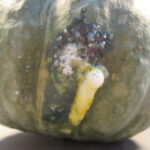
For a few years, I participated in the Squash Hunger Trial led by Dr. Annette Wszelaki, where we grew a wide range of winter squashes at multiple states. One year, I failed to manage insects, leading to a squash bug and cucumber beetle outbreak. The insects defoliated leaves (Figure 1) and caused cosmetic damage to…Read more about What Happened to the Winter Squash?[Read More]
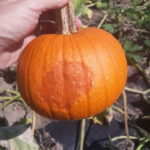
Pumpkin and winter squash should be harvested fully mature to reach their optimal quality and fulfill their potential shelf life. Characters indicating fruit maturity include loss of rind surface gloss, ground spot yellowing, and hardening of the skin to the level that it is resistant to puncture with a thumbnail. Except for some striped varieties,…Read more about Tips for Harvest and Postharvest of Pumpkin and Winter Squash[Read More]
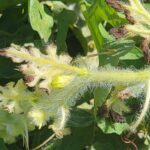
Throughout the growing season, vegetable crop farmers often report suspected herbicide drift injury. Each type of herbicide results in specific types of injury. Knowing what to look for can help us narrow which herbicide or herbicide mode of action could be responsible. To document how watermelon and pumpkin respond to various herbicides, we sprayed a…Read more about Pumpkin and Watermelon Herbicide Injury Symptoms – In Photos[Read More]

Recently, I have observed several pumpkin vines and fruit with Plectosporium blight. When I receive phone calls about Plectosporium blight, the caller often has trouble describing the disease. Indeed, the disease is difficult to describe. Therefore, I will include several photos with this article. Lesions of Plectosporium blight are most often observed on the stems…Read more about Plectosporium Blight of Pumpkin[Read More]
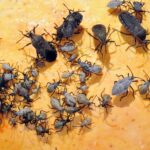
Squash bugs and cucumber beetles (both spotted and striped) are in full swing this time of year on your cucurbit crops. We no longer have to worry about flowers developing into harvestable fruits, so it is a time that you need to think strategically about insect pest damage thresholds in relation to the decision to…Read more about Late Season Pest Management in Pumpkins[Read More]
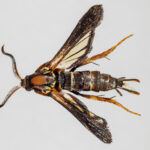
This is my second year coordinating a bucket trap network to monitor squash vine borers. And, for a second year in a row we are witnessing some interesting organisms in the trap. The first of which is the unfortunate capture of pollinators. This is nearly unavoidable because of the color attraction; yellow mimics flowers, but…Read more about Squash Vine Borer (SVB) Trapping Bycatch[Read More]