Have you taken a close look at pumpkin or squash fields recently? In June and early July, pumpkin plantings at Pinney Purdue Ag Center in Northwest Indiana, the following insects were observed this week. See the Midwest Vegetable Production Guide for management recommendations.
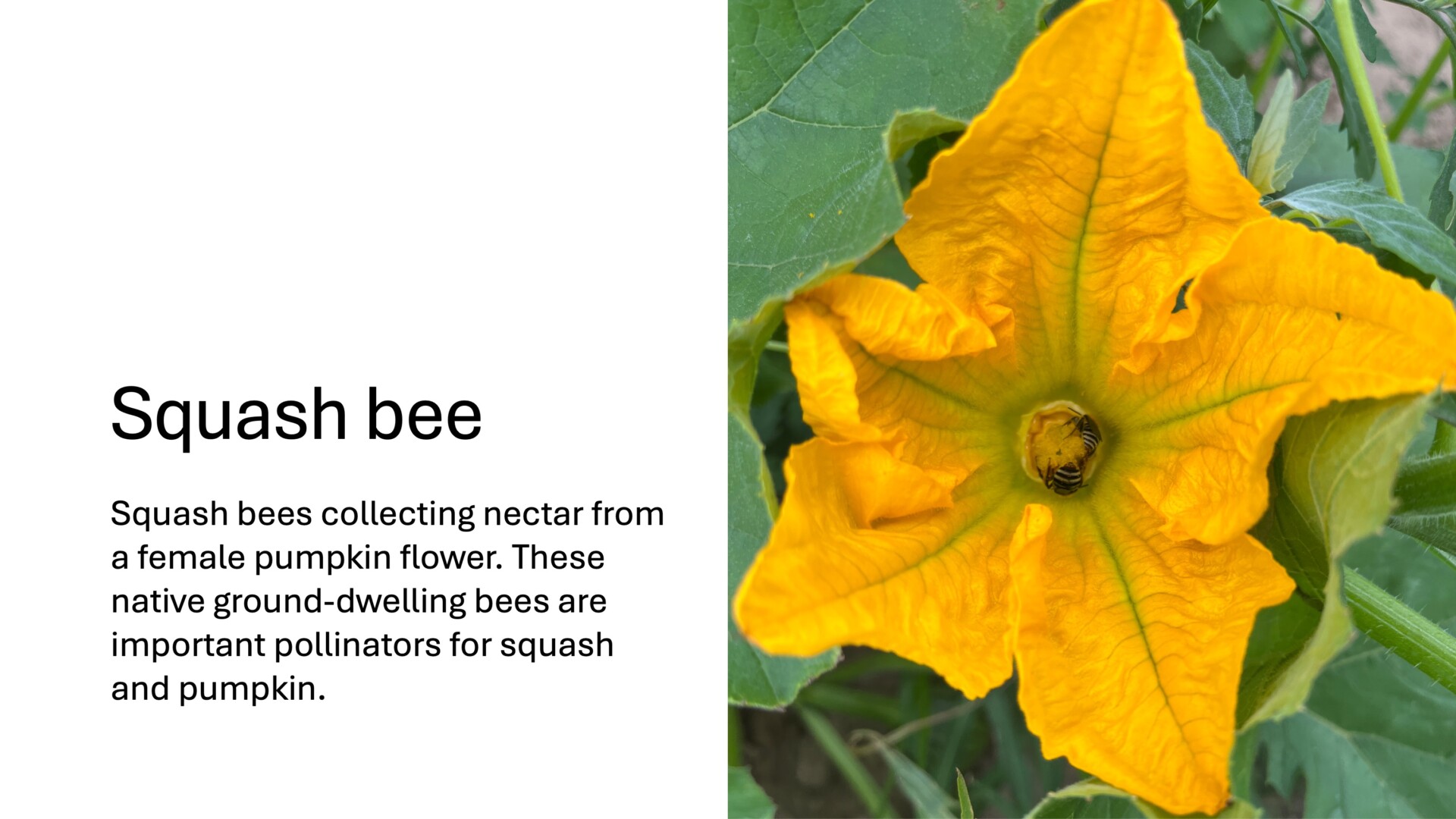
Squash Bee
Squash bees collecting nectar from a female pumpkin flower. These native ground-dwelling bees are important pollinators for squash and pumpkin.
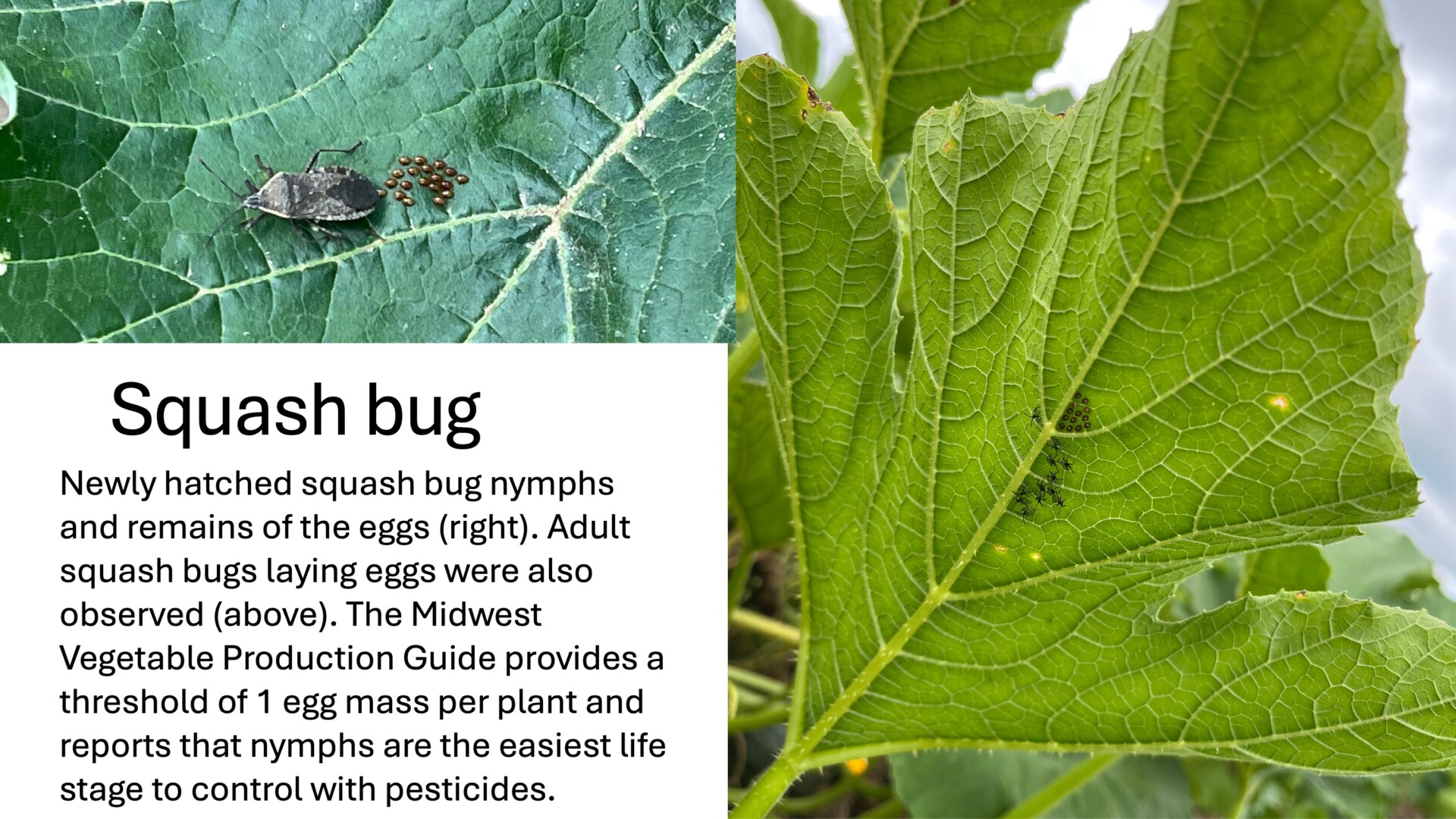
Squash Bug
Newly hatched squash bug nymphs and remains of the eggs (right). Adult squash bugs laying eggs were also observed (top left). The Midwest Vegetable Production Guide provides a threshold of 1 egg mass per plant and reports that nymphs are the easiest life stage to control with pesticides.
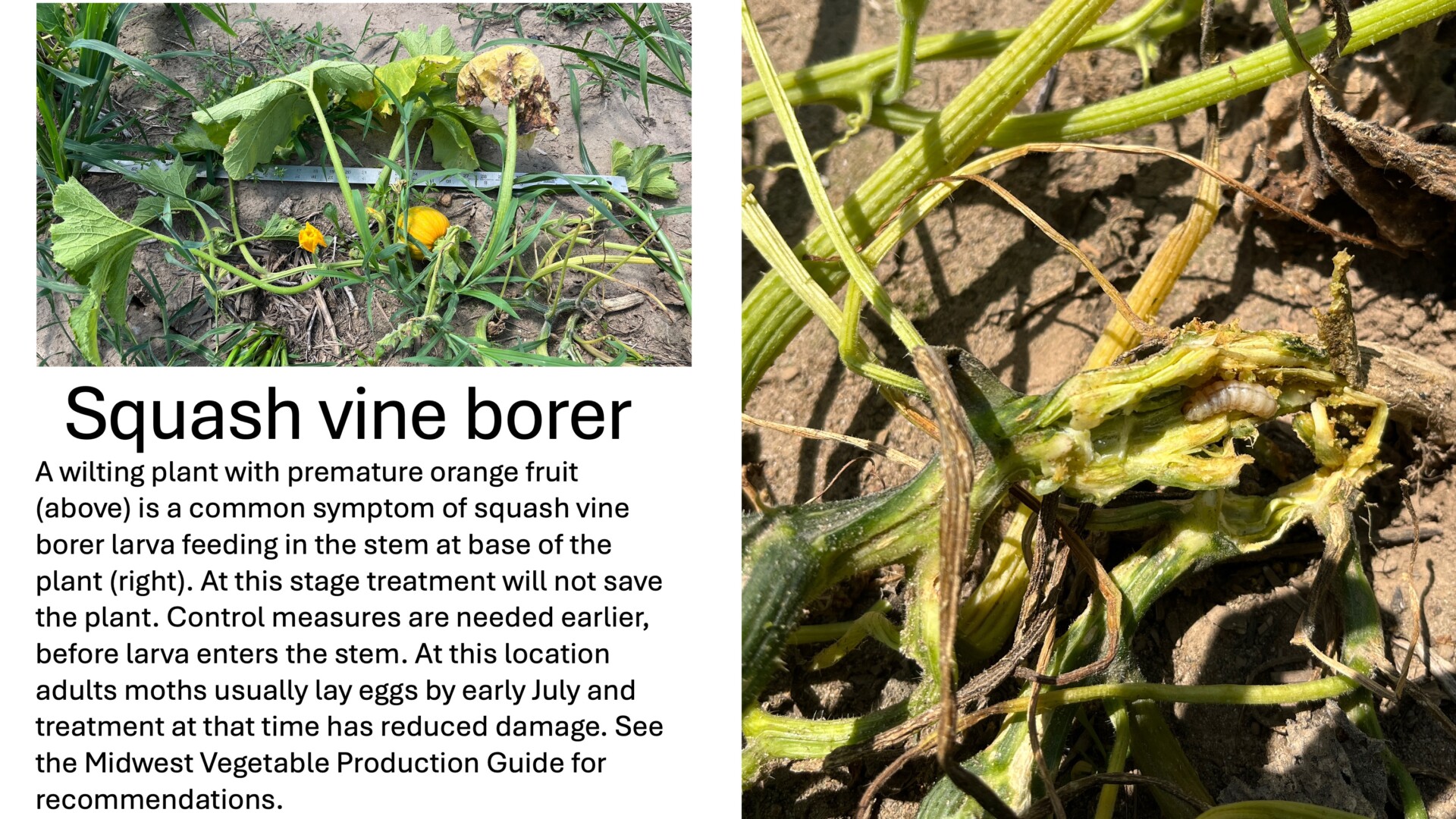
Squash Vine Borer
A wilting plant with premature orange fruit (top left) is a common symptom of squash vine borer larva feeding in the stem at the base of the plant (right). At this stage, treatment will not save the plant. Control measures are needed earlier, before larva enters the stem. At this location, adult moths usually lay eggs by early July, and treatment at that time has reduced damage. See the Midwest Vegetable Production Guide for recommendations.
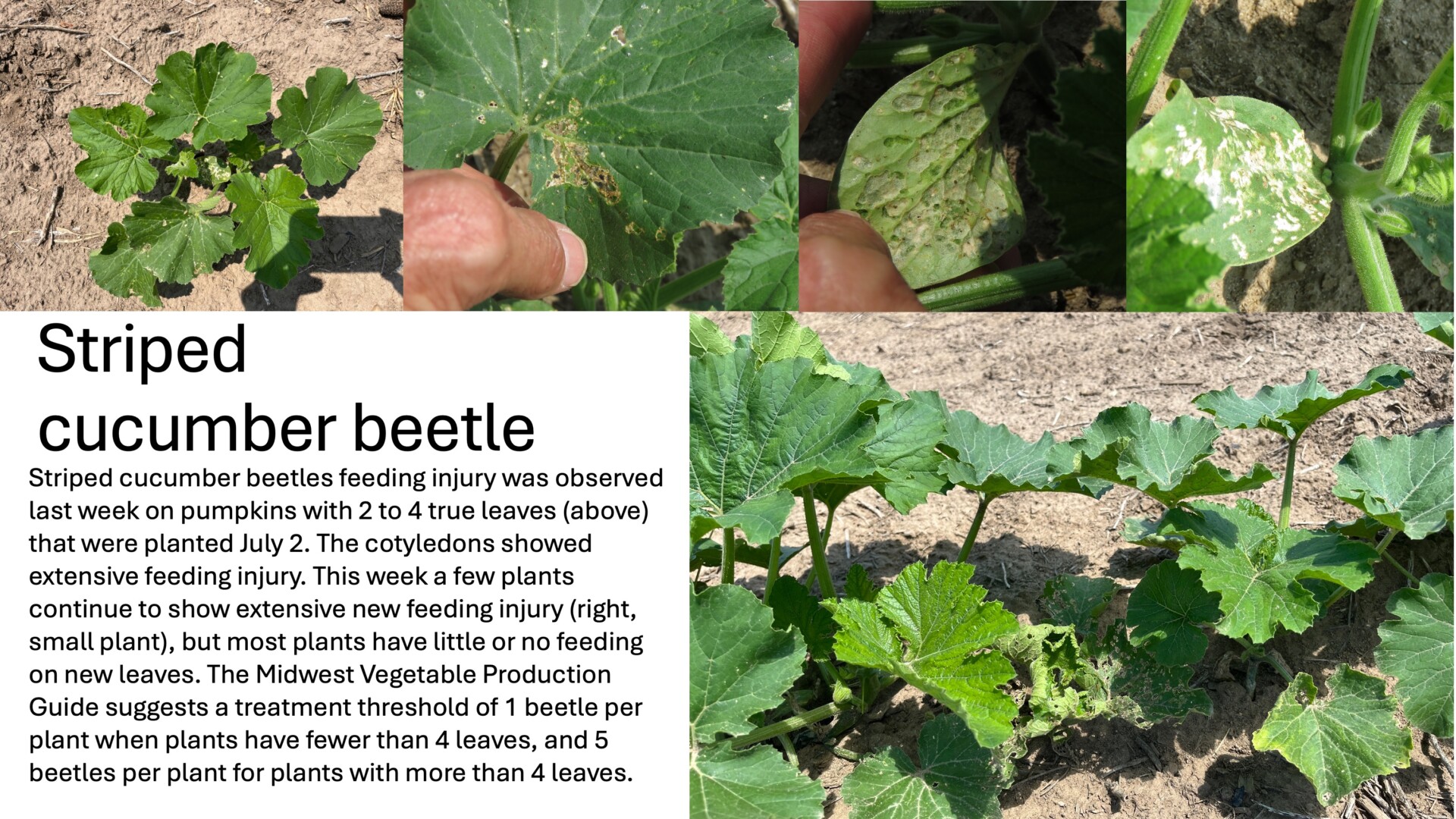
Striped Cucumber Beetle
Striped cucumber beetle feeding injury was observed last week on pumpkins with 2 to 4 true leaves (top left to right) that were planted July 2. The cotyledons showed extensive feeding injury. This week, a few plants continue to show extensive new feeding injury (right, small plant), but most plants have little or no feeding on new leaves. The Midwest Vegetable Production Guide suggests a treatment threshold of 1 beetle per plant when plants have fewer than 4 leaves, and 5 beetles per plant for plants with more than 4 leaves.