The 2026 Purdue Fruit and Vegetable Field Day, held July 16 at the Meigs/Throckmorton Purdue Agriculture Center, brought together 58 attendees for a full afternoon of hands-on demonstrations spanning entomology, plant pathology, horticulture, and specialty crop research. The turnout included a large contingent from Corteva, alongside growers, Extension educators, and researchers from across the region — a strong showing that reflects the growing interest in the applied, field-based research being conducted at the site.
Attendees moved through six demonstration stations, each led by Purdue faculty, staff, and graduate students, covering topics ranging from pollinator-friendly companion planting to smart-trap technology for pest monitoring. A recap of each stop is below.
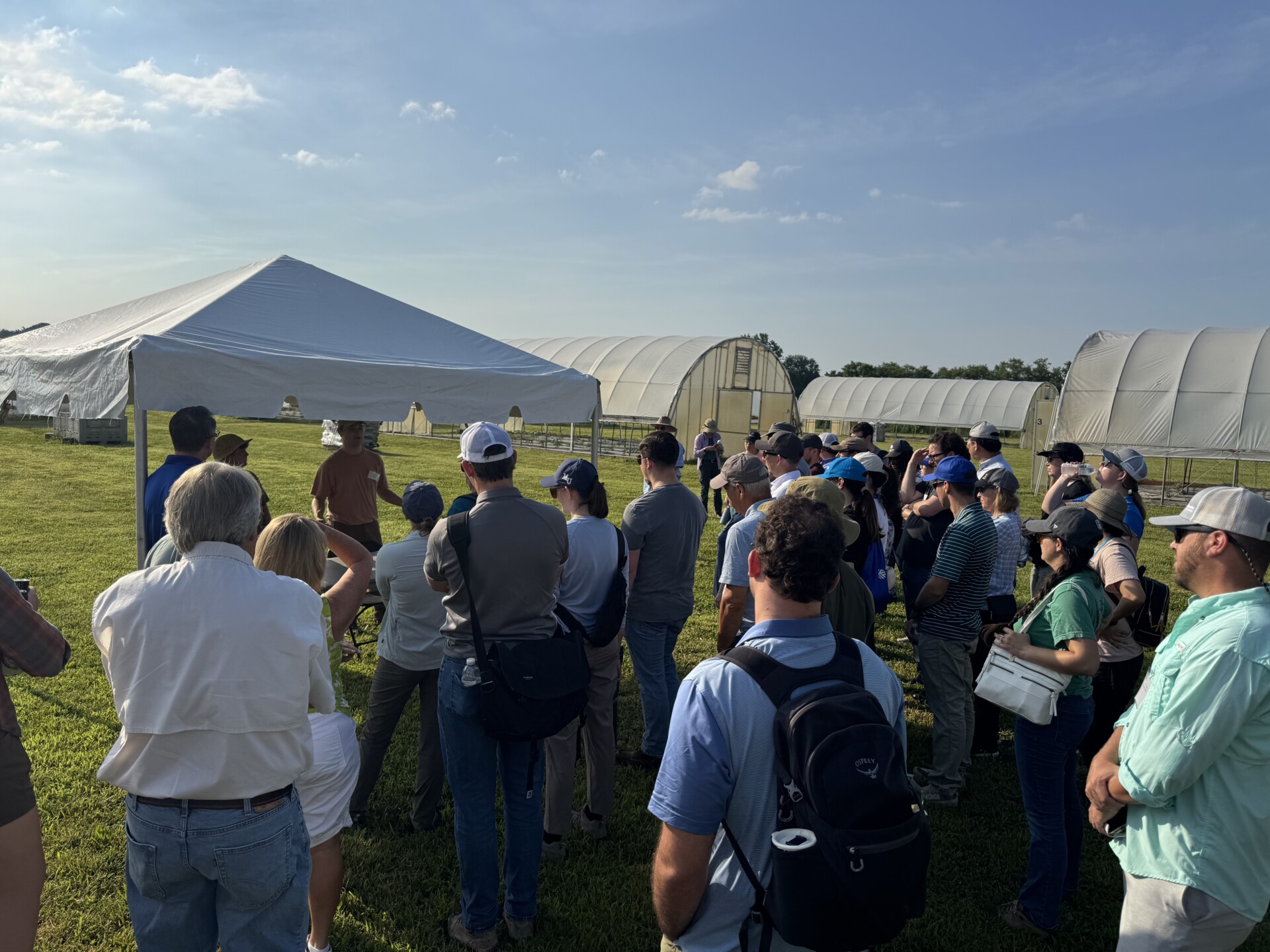
Figure 1. Attendees at the Fruit and Vegetable field day listen to Sydney Territo and Tucker LaRue talk about pollination and pest management in high tunnel tomato (Photo by Petrus Langenhoven).
Pollination and Pest Management in High Tunnel Tomato Production
Laura Ingwell, Sydney Territo, and Tucker LaRue, Entomology
Growing tomatoes in an enclosed high tunnel comes with real advantages, but it also complicates pollination and pest management. This station highlighted companion cut flower plantings as a biologically based strategy for attracting pollinators and beneficial insects into the tunnel environment. Attendees saw firsthand how integrating flowering species alongside tomato production can support both fruit quality and overall tunnel ecology.
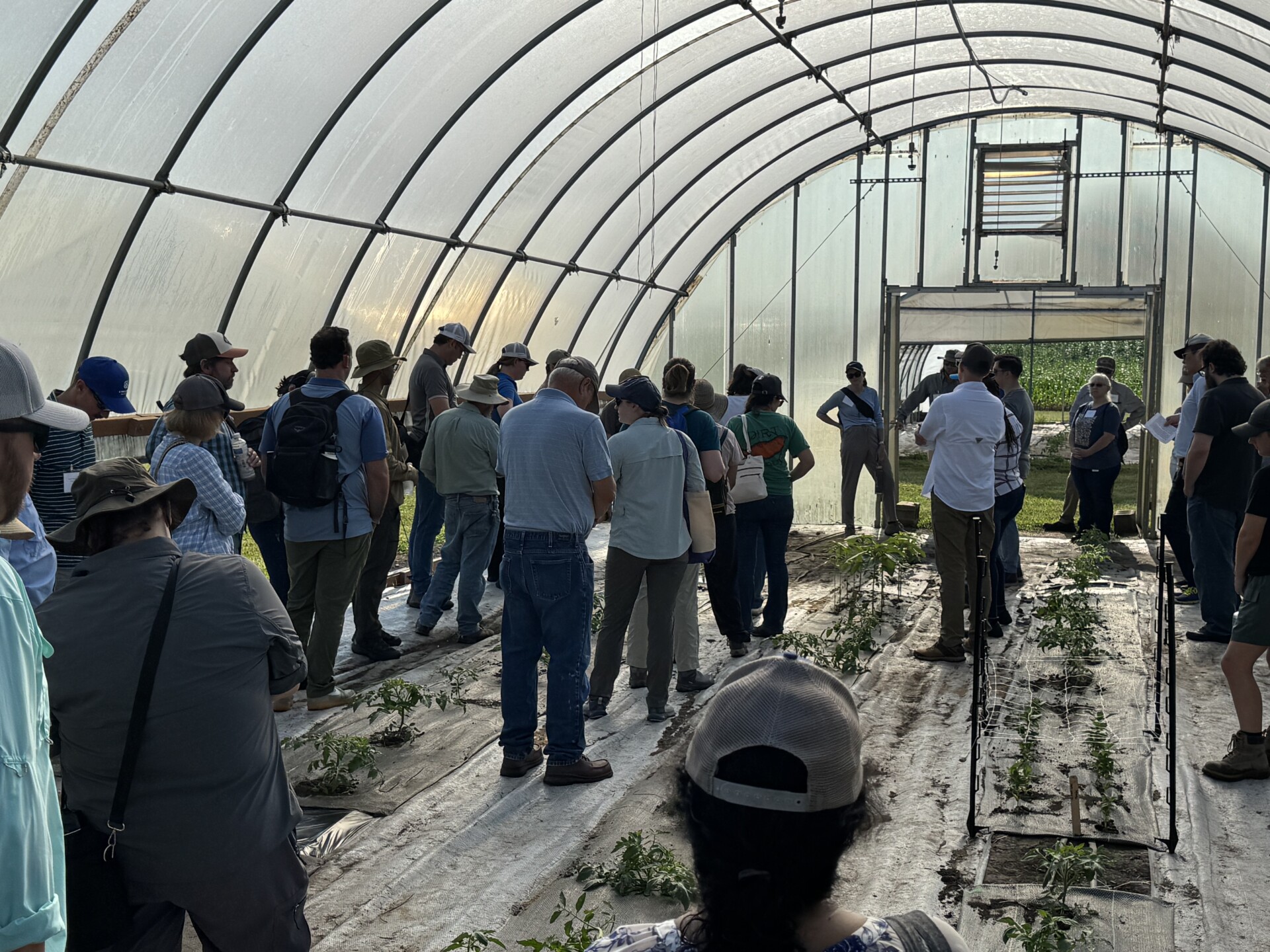
Figure 2. Attendees at the Fruit and Vegetable field day listen to Sydney Territo and Tucker LaRue talk about the role of cutflower plantings as a strategy to attract pollinators and support natural enemies of common pests (Photo by Petrus Langenhoven).
Dogwood Borer Management in Apples
Elizabeth Y. Long, Entomology, and Brian Schilling, Purdue Agricultural Center
The dogwood borer, a native clear-wing moth, continues to be a persistent threat to apple trees, particularly in U-pick orchards across the north-central region, where injury has been on the rise. This demonstration walked attendees through the insect’s life cycle, identification, and — most practically — how to assemble and deploy pheromone monitoring and mating disruption tools to better time management decisions.
Introduction to the Long-Term Resilient Agriculture Research Trial
Laura Ingwell, Entomology; Jack Howard, Petrus Langenhoven, and Steve Meyers, Horticulture and Landscape Architecture
This 9-acre trial is one of the most ambitious long-term comparisons of resilient versus conventional specialty crop production practices underway in the region. Attendees got an early look at the study design and preliminary findings on weed and insect community dynamics, as well as initial crop performance data for paste tomato and watermelon. As a multi-year effort, this trial will continue to be a focal point of future field days.
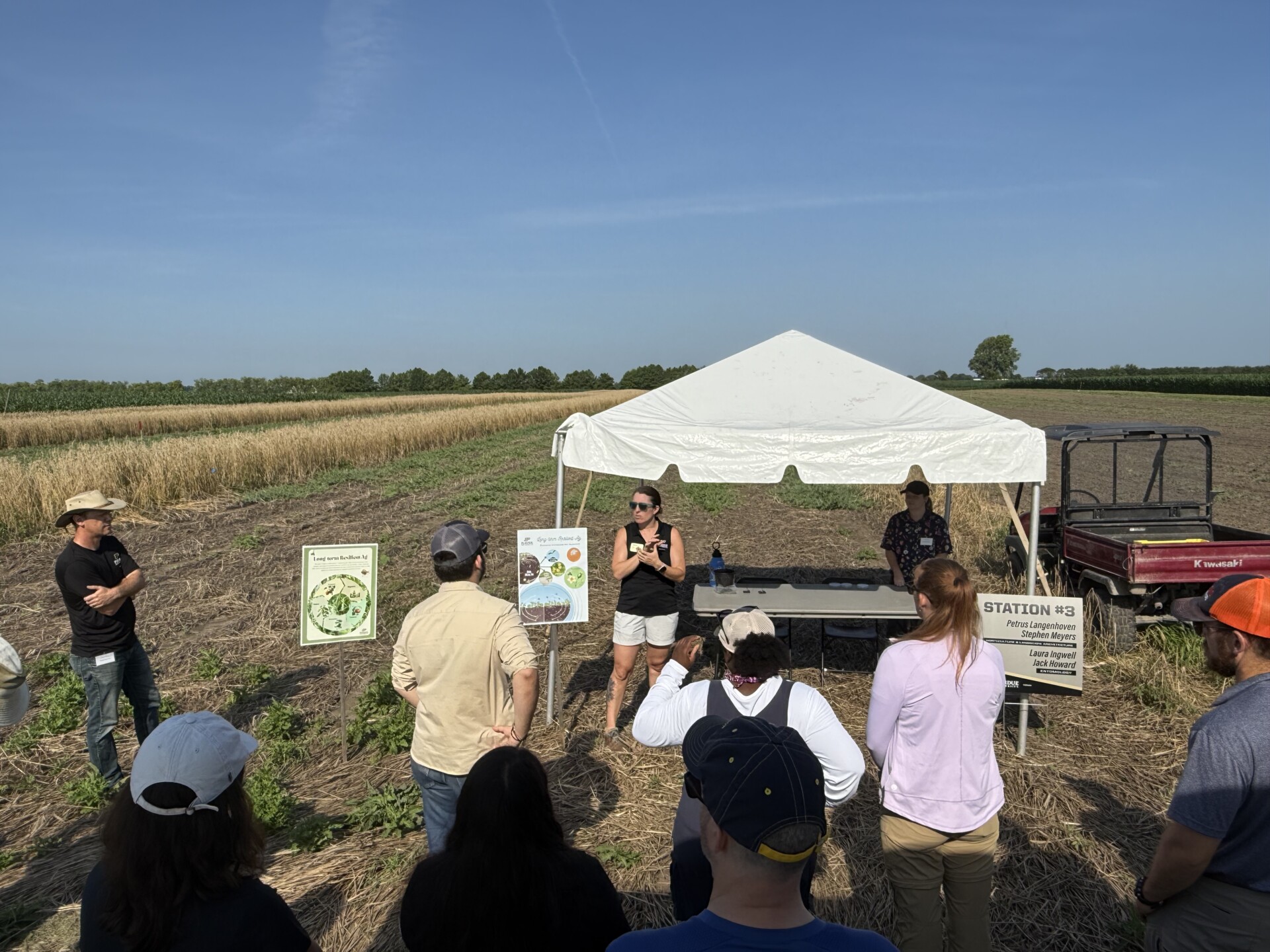
Figure 3. Attendees at the Fruit and Vegetable field day listen to Steve Meyers and Laura Ingwell talk about the long-term resilient agriculture research at Meigs (Photo by Pam Fisher).
Scotch Bonnet Peppers in the Midwest: Variety Performance and Mechanical Harvest Potential
Alexandria Snabes, Petrus Langenhoven, Kranthi Varala, and Brian Schilling
Scotch bonnet peppers have surged in demand alongside the craft hot sauce market, but growers have lacked regional variety data to guide production decisions. This demonstration shared results from an evaluation of 21 Scotch bonnet varieties across two growing seasons, with total yields ranging from roughly 4,000 to 24,000 lb/A and heat levels spanning 5,000 to 500,000 SHU. Fruit detachment force also varied considerably among varieties, with several showing promising potential for mechanical harvest — a key consideration for growers looking to scale up specialty pepper production.
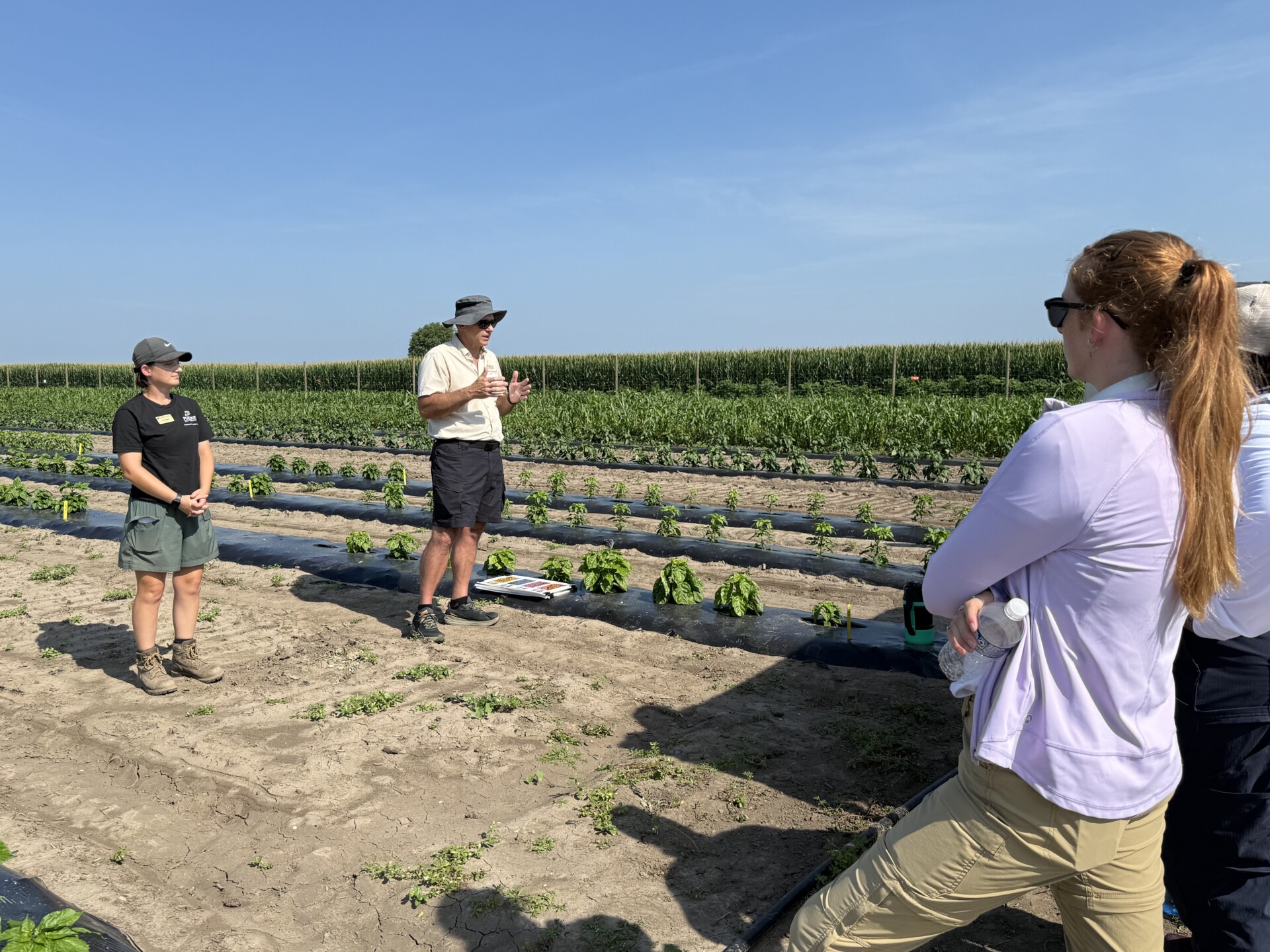
Figure 4. Attendees at the Fruit and Vegetable field day listen to Alex Snabes and Petrus Langenhoven talk about scotch bonnet variety performance and mechanical harvest potential (Photo by Pam Fisher).
Smart Trap for Cucumber Beetle Monitoring and Management
Ian Kaplan, Grace Wang, and Amy Bagby, Entomology
Consistent pest scouting is one of the toughest parts of IPM to implement in practice. This NSF-funded station showcased a prototype automated camera trap, developed in collaboration with a team of engineers and computer scientists, designed to deliver real-time pest density data for cucumber beetle management in watermelon and other cucurbits.
Cut Flower Production
Laura Ingwell and Charlie Fox, Entomology
The final stop featured a demonstration plot of cut flower species well-suited to Midwest production, including Dianthus, Lisianthus, Snapdragon, Stock, Centaurea, Zinnia, Celosia, Amaranth, Marigold, and Strawflower. Attendees explored cultivar selection for regional markets and saw how cultural practices like pinching and planting density affect stem quality, flower timing, and marketable yield, along with common pest challenges in cut flower systems.
Thank you to all the presenters, staff, and volunteers who made this year’s Field Day possible, and to everyone who joined us at Meigs/Throckmorton. Stay tuned to future issues of the Vegetable Crops Hotline for updates from the Long-Term Resilient Agriculture Research Trial and other ongoing work highlighted this year.
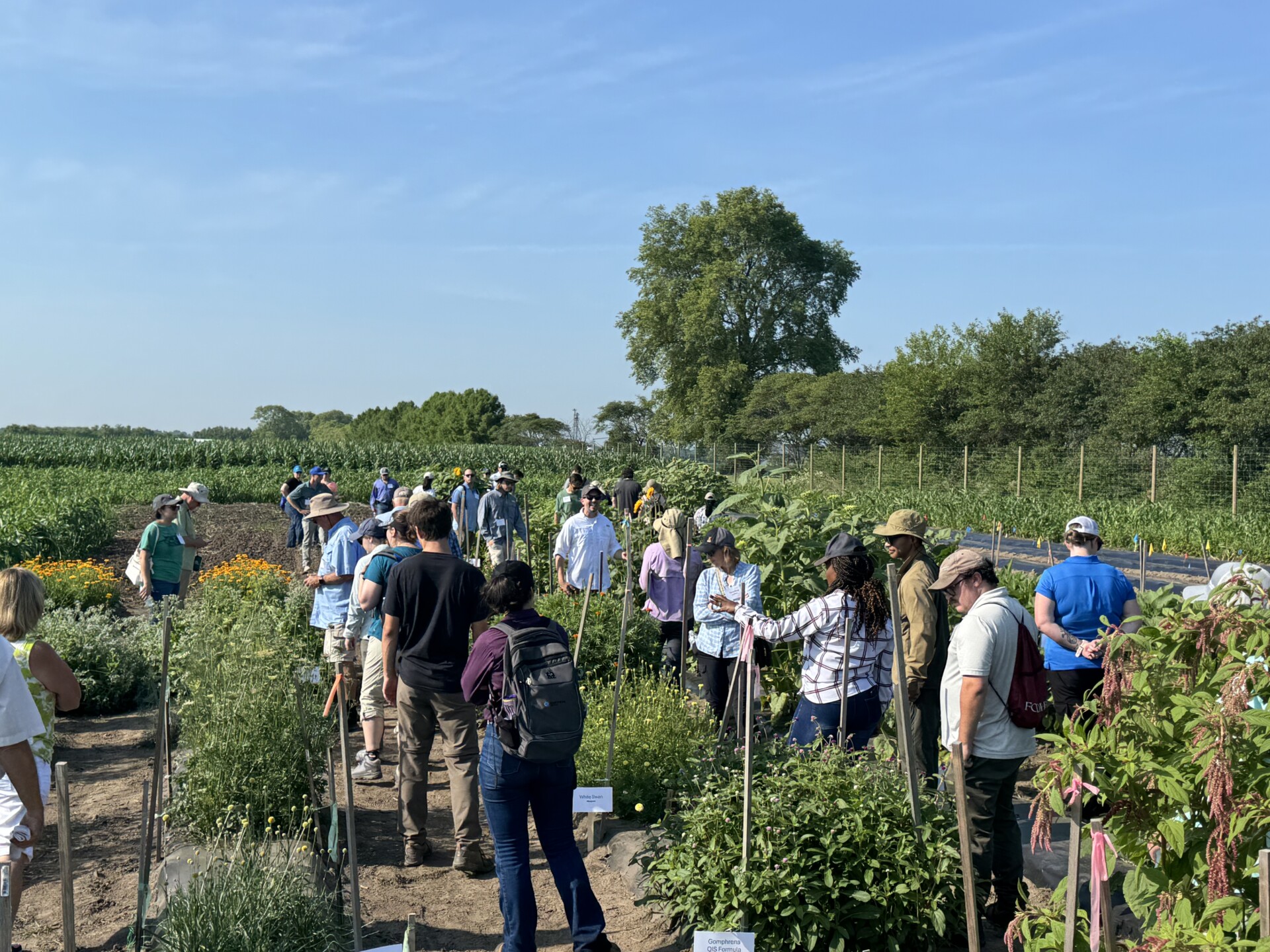
Figure 5. Attendees listen to Laura Ingwell and Charlie Fox talk about how cultural practices influence flower timing and marketable yield (Photo by Petrus Langenhoven).