Dear Valued Vegetable Crops Hotline Readers,
Welcome to issue 779 of the Vegetable Crops Hotline newsletter! Our mission remains steadfast: to deliver crucial updates on pest management, production practices, food safety, and marketing opportunities that directly impact your farming operations.
What’s Inside This Issue
Fall is here, and on many Indiana farms the season is shifting from harvest to planning. This issue offers something for both. You’ll find a regulatory update that fills the gap left by Rely® 280, and a new EPA tool that keeps pesticide users current on Endangered Species Act requirements. Upcoming educational opportunities include webinars on agritourism and on soil science for cut flower production, a Market Ready workshop in Fort Wayne, and an MVEG field day on farm infrastructure. We also introduce a new publication on the diverse pumpkins and winter squashes that fill Indiana farm stands each autumn.
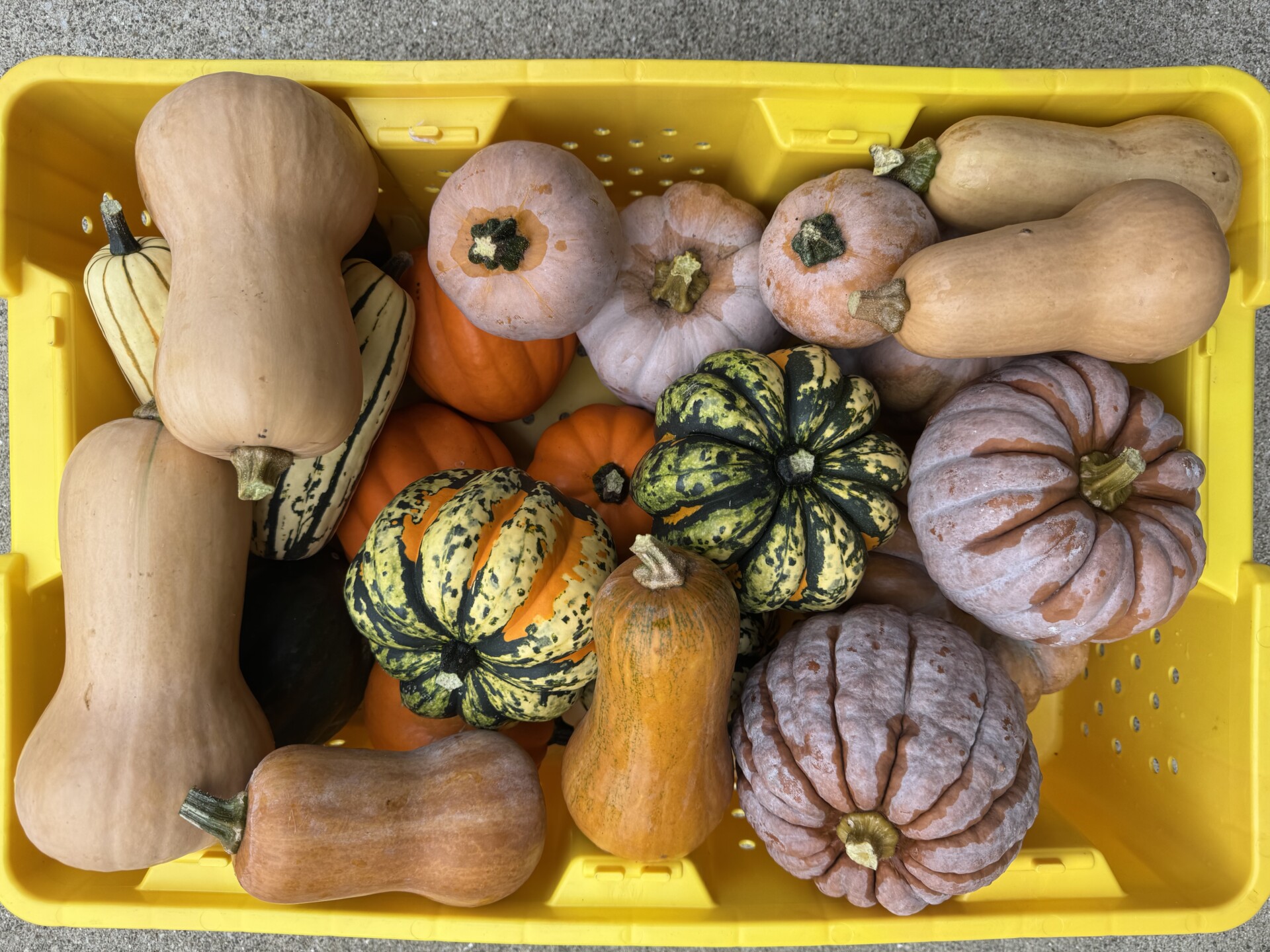
Figure 1. Bin with a variety of winter squash fruits (Photo by Petrus Langenhoven).
Pumpkins and winter squash are also the crops that need attention right now. Harvest when the fruit has reached full mature color, the rind is hard enough to resist a fingernail, and the stem has begun to dry and turn corky. Cut the fruit from the vine with pruners or a sharp knife, leaving a 3- to 4-inch stem on pumpkins. Never carry them by the stem, because a broken handle is an open door for rot. Get fruit out of the field before a hard freeze. Frost-damaged fruit breaks down quickly in storage, and a light frost that kills the canopy leaves fruit exposed to sunscald. Handle everything gently, since bruises and cuts shorten shelf life. Curing at about 80–85°F for 7–10 days hardens the rind and heals minor wounds on pumpkins, butternut, and hubbard types. Skip curing acorn squash, as it loses quality under those conditions. After curing, store in a dry, well-ventilated space at 50–55°F.
Subscription Information
Hard Copy Subscribers
If you need a hard-copy subscription form and don’t have internet access, please contact your nearest Purdue Extension office. Extension Educators, please download the hard-copy subscription form.
Digital Subscribers
If you receive the newsletter via email, you do not need to take any action. You will continue to receive the newsletter on the issue date.
New digital subscribers can now register their email address
In addition, digital subscribers receive emails with information about articles or announcements that need your immediate attention. These articles will be posted under Hot Topics on the VCH webpage and will be included in the next issue. All previous articles published in the VCH newsletter are available on the Vegetable Crops Hotline website.
Website Links in Newsletter Articles
We frequently include links to websites or online publications. If you can’t access these resources, don’t hesitate to contact your local Purdue Extension office or us to request a hard copy of the information.
Midwest Vegetable Production Guide
The 2026 Midwest Vegetable Production Guide is now available for growers, or you can download and print a guide from your computer. The guide is also available for $20 per copy. Contact your Extension Office or Stephen Meyers directly to purchase a copy.
Midwest Vegetable Trial Reports
Are you considering purchasing vegetable seeds? The Midwest Vegetable Trial Report features many articles to help you make an informed decision. The resource also hosts production-related research results.
Contact Us If You Have a Story to Share
Growers and Purdue Extension Educators, your input and expertise make this newsletter a truly useful resource. If you have hot topics you’d like us to cover, success stories to share, or questions for our Extension specialists, please email Petrus langenhoven or reach out to the specialist directly. We also welcome high-quality photos of pest issues, unusual symptoms, or innovative production practices you’ve implemented on your farm.
As always, thank you for reading, and happy growing!
Petrus Langenhoven, Editor
Clinical Assistant Professor and Vegetable Extension Specialist
Department of Horticulture and Landscape Architecture
Purdue University