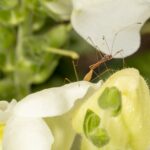
Description Spined stilt bugs are small, slender insects in the family Berytidae. Typically brown or bronze in color, these insects have slim bodies with long and thin legs (Figure 1). The antennae of stilt bugs bend at very sharp angles and frequently have obvious swelling at the tip. Occasionally, some stilt bug species will also…Read more about Insect Spotlight: The Spined Stilt Bug[Read More]
Spotlight
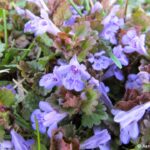
Common names: Ground ivy, gill-over-the-ground, creeping Charlie, field balm, haymaids, cat’s foot, alehoffs Latin name: Glechoma hederacea L. Family: Lamiaceae (Mint Family) General Description and Identification Ground ivy is a perennial herbaceous plant that creeps along the soil surface and thrives in moist and shady areas (Figure 1). It was introduced to the US from…Read more about Weed Spotlight: Ground Ivy[Read More]
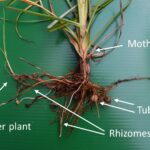
Common names: Yellow nutsedge, yellow nutgrass, nut sedge, chufa, earth almond, northern nutgrass Latin names: Cyperus esculentus L. Family: Cyperaceae (Sedge family) General Description Perennial sedges are among the most troublesome weed species globally across agronomic crops, horticultural crops and turfgrass. Because nutsedges look like grasses (Figure 1), they are often referred to as “nutgrasses”….Read more about Weed Spotlight: Yellow Nutsedge[Read More]
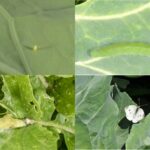
Cabbage white butterflies are medium-sized white butterflies in the family Pieridae. They have black spots on their wings, and a black band on the top of their forewings (top wings), distinguishing them from other species. The butterflies themselves don’t do any damage, however their caterpillars do significant damage to plants in the Brassica family, including…Read more about Insect Spotlight: Cabbage White Butterfly (Pieris rapae)[Read More]
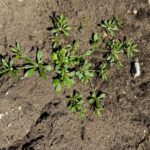
Common names: Carpetweed, Indian chickweed, whorled chickweed, devils-grip, green carpetweed Latin name: Mollugo verticillata L. Family: Molluginaceae General Description and Life Cycle Carpetweed is a summer annual. Compared to other summer annual weeds, its germination is usually later in the summer. The plant grows rapidly and reproduces by seeds. Carpetweed is mostly found in dry…Read more about Weed spotlight: Carpetweed[Read More]

Common names Common milkweed, silkweed, cotton-weed, Virginia silk, wild cotton, silky milkweed, common silkweed, showy milkweed, swallow wort. Latin name Asclepias syriaca. “Asclepias” from Asklepios, the Ancient Greek god of medicine and healing. “syriaca” is Latin for the country of Syria and was so named because Linnaeus mistakenly thought this plant came from Syria. Family…Read more about Weed Spotlight: Common Milkweed[Read More]
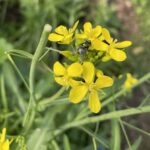
Blow flies are a group of iridescent green or blue flies belonging to the family Calliphoridae. Flies undergo complete metamorphosis, transitioning through egg-larva(maggot)-pupa-adult. Often in this situation, the larvae and adults occur in different environments and feed on different food sources. In fact, blow fly larvae are carrion feeders, meaning they feed on the decaying…Read more about Insect Spotlight: Blow Flies[Read More]
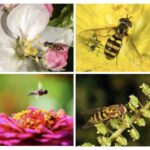
The presence of syrphid flies, also called hoverflies, is a welcome sight in agricultural landscapes. Syrphid flies contribute to pollination, pest suppression, and decomposition. There are four subfamilies of syrphids: Pipizinae, Eristalinae, Microdontinae, and Syrphinae. Larvae from the Eristalinae subfamily act as recyclers, feeding on decaying organic matter. The Pipizinae subfamily includes species whose larvae…Read more about Insect Spotlight: Syrphid Flies[Read More]
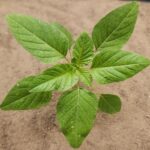
Common names: Palmer amaranth, Palmer pigweed, carelessweed, and dioecious amaranth. Latin name: Amaranthus palmeri. “Amaranthus” is derived from the Greek word “amarantus” meaning “everlasting flowers”. This is a reference to the showy bracts (modified floral leaves) of Amaranthus species that persist well after the plants have flowered and set seed. “palmeri” is a reference to…Read more about Weed Spotlight: Palmer Amaranth[Read More]
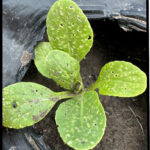
Introduction Flea beetles are small, often metallic, and dark-colored beetles in the family Chrysomelidae. They are given their common name due to their impressive jumping abilities, afforded by their enlarged hind legs, which serve as a near-foolproof escape from predators. Most flea beetle species are oligophagous herbivores, feeding on several related species of plants. For…Read more about Insect Spotlight: Flea Beetles[Read More]