Temperature regulation is a cornerstone of protected agriculture production. High tunnels trap infrared rays from the sun, keeping temperatures sufficiently warm for production year-round. However, on hot, sunny, summer days, this very function can work against crops by disrupting the pest control services provided by natural enemies.
Insect predators and parasitoids tend to be more susceptible to extreme temperatures than the pests they rely on for prey and hosts. This results in ecological imbalances where pest populations can continue to grow while the natural enemies that keep them at bay decline. Previous research has shown that heat stress can cause lower reproduction rates, reduced feeding, and even death in natural enemies. Additionally, natural enemies released in high tunnels may disperse from the structure when temperatures get too high.
In summer 2025, we deployed data loggers to collect air and soil temperature data from inside a high tunnel and in the field at the Purdue Student Farm. We found that while air temperatures tended to be consistently higher under high tunnels, soil temperatures were lower overall (Figure 1). Therefore, we hypothesized that entomopathogenic nematodes (EPN), soil-dwelling natural enemies, would be well suited for pest control in high tunnels.

Figure 1. Temperature data collected in 2025 at the Purdue Student Farm show air temperatures were consistently higher than soil temperatures, specifically in the high tunnel (Photo by Julia Wooby).
EPN are available commercially to control pests with soil-dwelling life stages. They live in the soil in their infective juvenile (IJ) life stage, where they seek out, infect, and kill their insect hosts. They are used across diverse agricultural systems because they are highly compatible with various application technologies and are able to be used alongside pesticides (Figure 2). Additionally, EPN can be strategically used to target soil-dwelling life stages missed by foliar insecticide applications or insect biocontrol agents. In the soil, they pose low risk to non-target insects, including other beneficials. Despite their high potential across many systems, there is currently very little research on how protected agriculture microclimates, specifically high tunnels, impact EPN persistence.
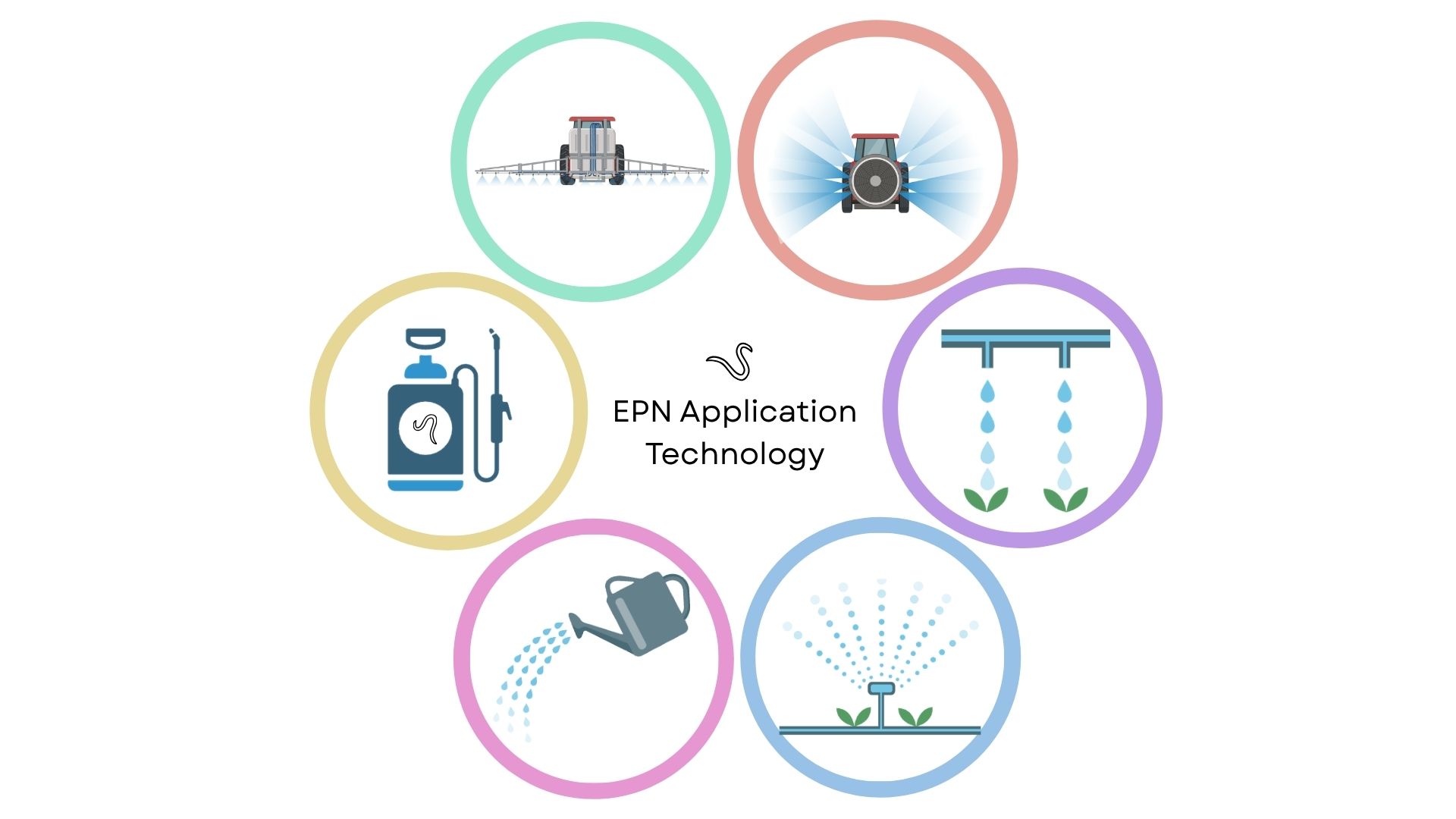
Figure 2. EPNs are compatible with various irrigation and spray technologies to be applied in large-scale field and orchard settings as well as smaller-scale crop production (Photo by Julia Wooby).
To investigate how high tunnel conditions impact the persistence of EPN, we conducted an experiment at the Purdue Student Farm in summer 2025 and 2026. We sourced three products representing the three most common species of EPN from Koppert Biologicals. These products were stored, mixed, and applied according to manufacturer instructions to best illustrate the biocontrol services provided by commercial products available to growers. EPNs were applied using a watering can at a rate of 500,000 IJ per square meter in identical plots in the high tunnel and field. After application, we collected soil cores from each plot 2-, 5-, 9-, and 14-days post-application, and then weekly until infection rates approached zero. To detect whether EPN were present in the soil, we used waxworms to bait and isolate IJs from the samples (Figure 3).
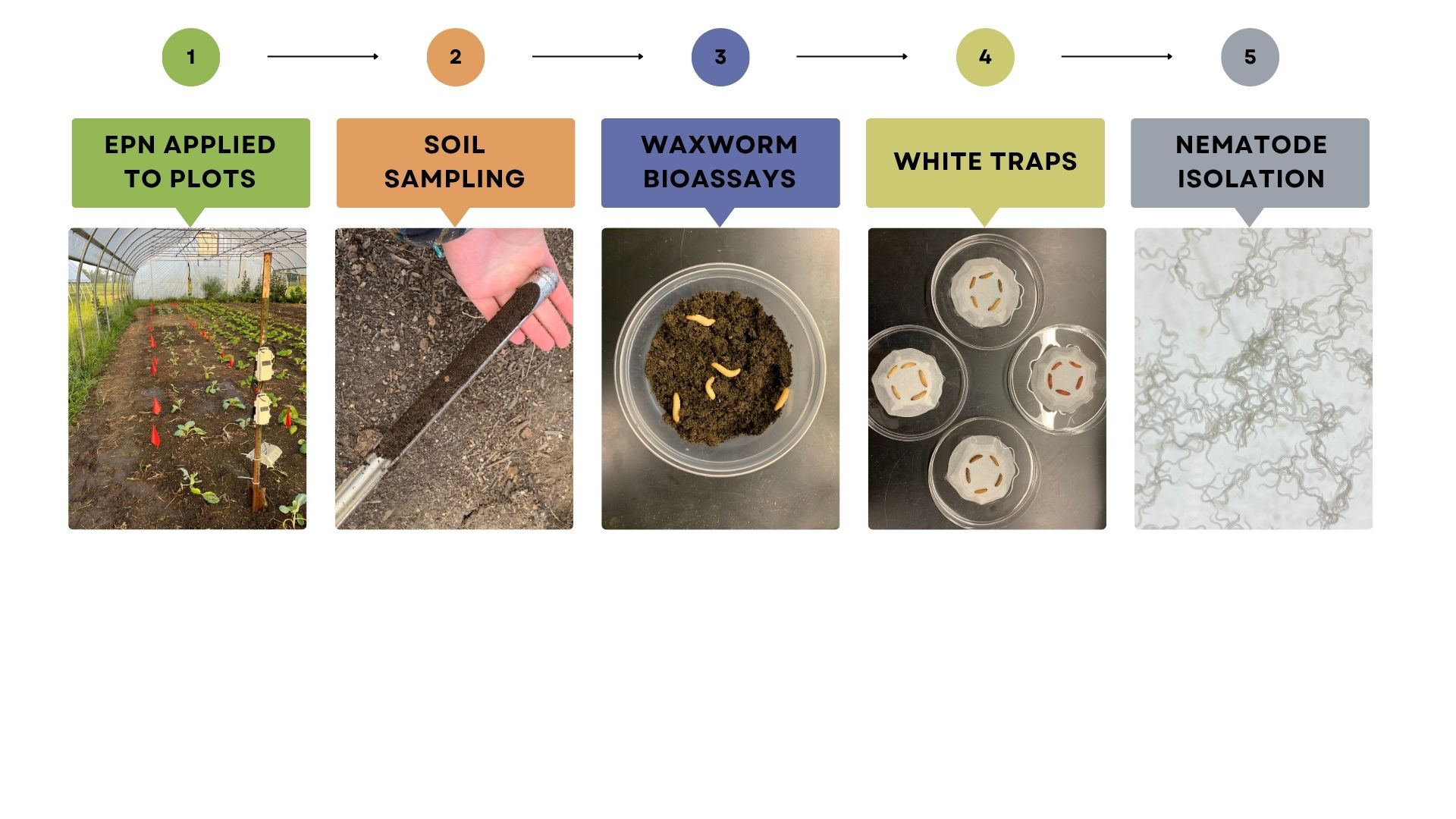
Figure 3. Experimental methods from EPN application to isolation and confirmation of infection (Photo by Julia Wooby).
The data presented here are summarized across the three EPN species applied to the soil. Our data show that, in both years, EPN persisted better in soil under high tunnels than in the field. In 2025, by three weeks post-application, there was very little infection overall in either the high tunnel or field plots (Figure 4). In 2026, EPN persistence was greater overall, with infection occurring six weeks after application (Figure 5).
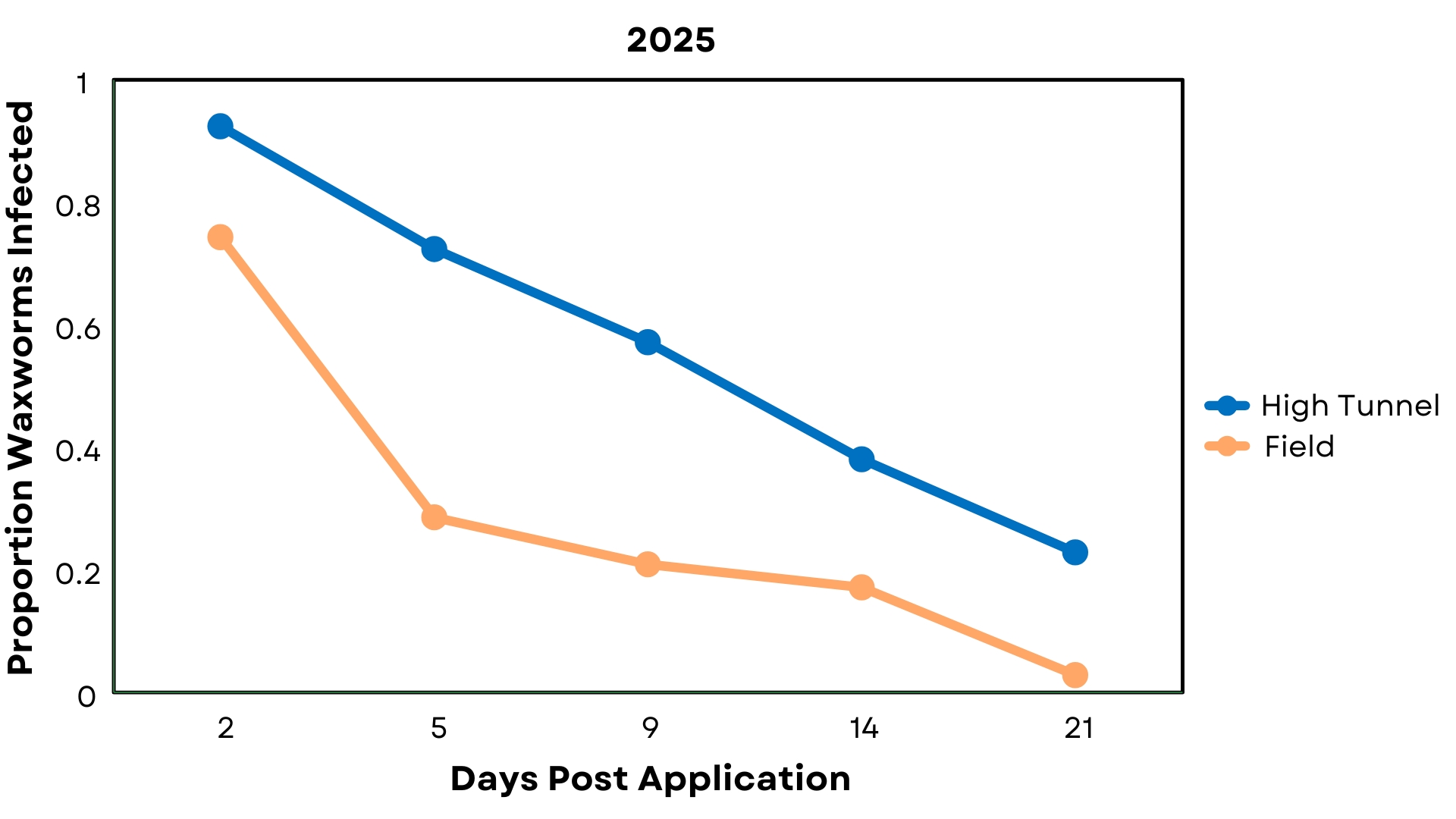
Figure 4. In 2025, EPN remained present in the soil for 21 days post application. Infection rates were higher in soil samples collected from the high tunnel than from the field (Photo by Julia Wooby).
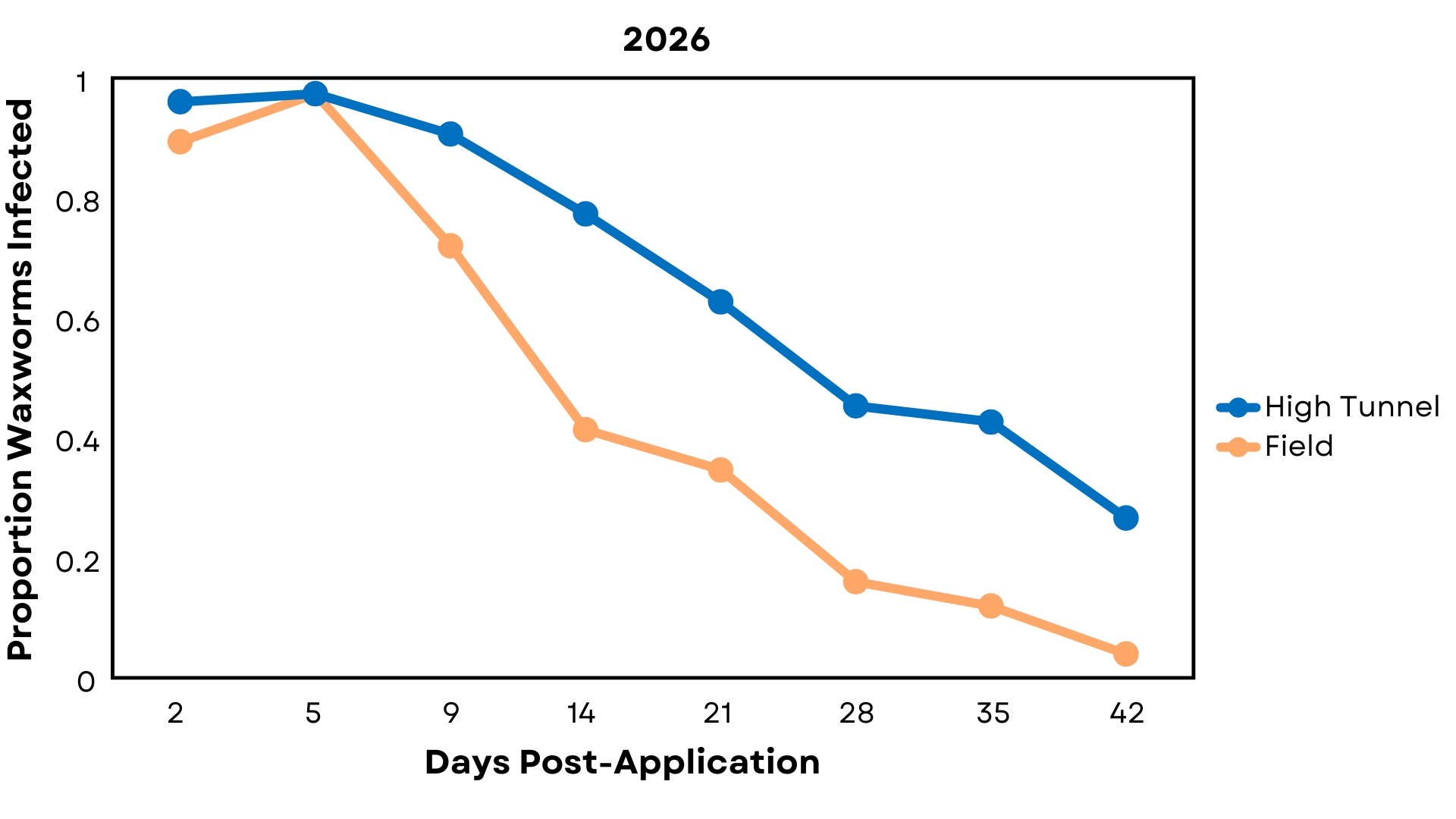
Figure 5. EPN remained in the soil for 42 days post-application in 2026. Infection rates declined more quickly in the field than in the high tunnel (Photo by Julia Wooby).
These data show not only that EPN are able to persist in high tunnels despite high temperatures, but that certain attributes of the high tunnel environment may be more favorable for EPN persistence compared to the field. While sunlight is essential to the functionality of a high tunnel, EPN are very sensitive to UV light. Research has shown that UV exposure can reduce the ability of EPN to infect and kill their hosts, and in extreme cases, lead to mortality. However, the polyethylene cover that traps infrared rays to increase high tunnel air temperatures can filter UV light, protecting EPN in the soil.
In the high tunnel environment, where other commercial natural enemies such as parasitoid wasps and predators may experience diminished efficacy due to high air temperatures, EPN are largely protected and may be a viable option for controlling certain soil-dwelling pests. As protected agriculture grows in popularity, production can be maximized by better understanding how this unique microclimate affects not only crop growth, but all organisms, including beneficials, interacting within the agroecosystem.
This research is supported by USDA National Institute of Food and Agriculture (Specialty Crop Research Initiative grant number 2021-51181-35858).