We have experienced several cool days over the past two weeks. One watermelon trial at Southwest Purdue Ag Center was planted on May 4, and during the two days following transplanting, recorded air temperatures dropped below 50°F. We evaluated plant survival 9 days after transplanting.
In this trial, we had grafted and non-grafted seedless watermelons and non-grafted pollenizer plants. The majority of the plant loss occurred on the non-grafted pollenizer plant, with approximately 18% mortality. Plant loss was less than 5% for non-grafted seedless watermelons and for seedless watermelons grafted onto wild watermelon rootstocks. No plant loss was observed in seedless watermelons grafted onto squash rootstocks.
There may be multiple factors contributing to the plant loss. One possible factor is low temperature stress, which we discussed in the previous article. We observed high cucumber beetle populations in the field, including both striped and spotted cucumber beetles, with striped cucumber beetles being more abundant (Figure 1). The beetles were actively feeding on watermelon stems (Figure 2). Several dead plants had stem damage, although we are not sure whether beetle damage was the direct cause of plant death. Watermelon is less susceptible to bacterial wilt, which is transmitted by cucumber beetles, compared to cantaloupes and cucumbers; however, severe feeding damage to the stems of young seedlings may still lead to plant death, especially at a time when plants grow slowly due to low night temperatures.
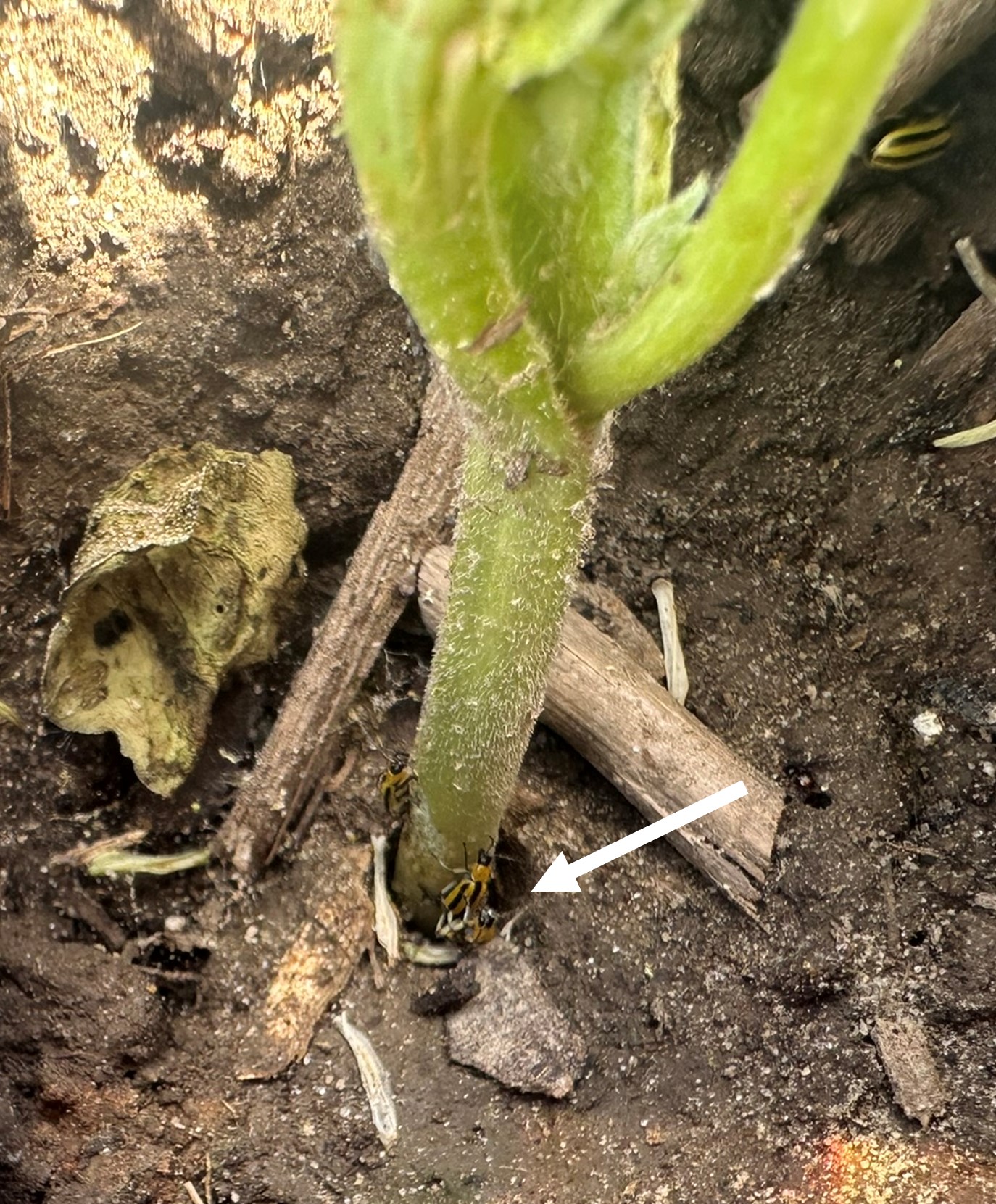
Figure 1. Cucumber beetle damage on watermelon seedlings (Photo by Wenjing Guan).
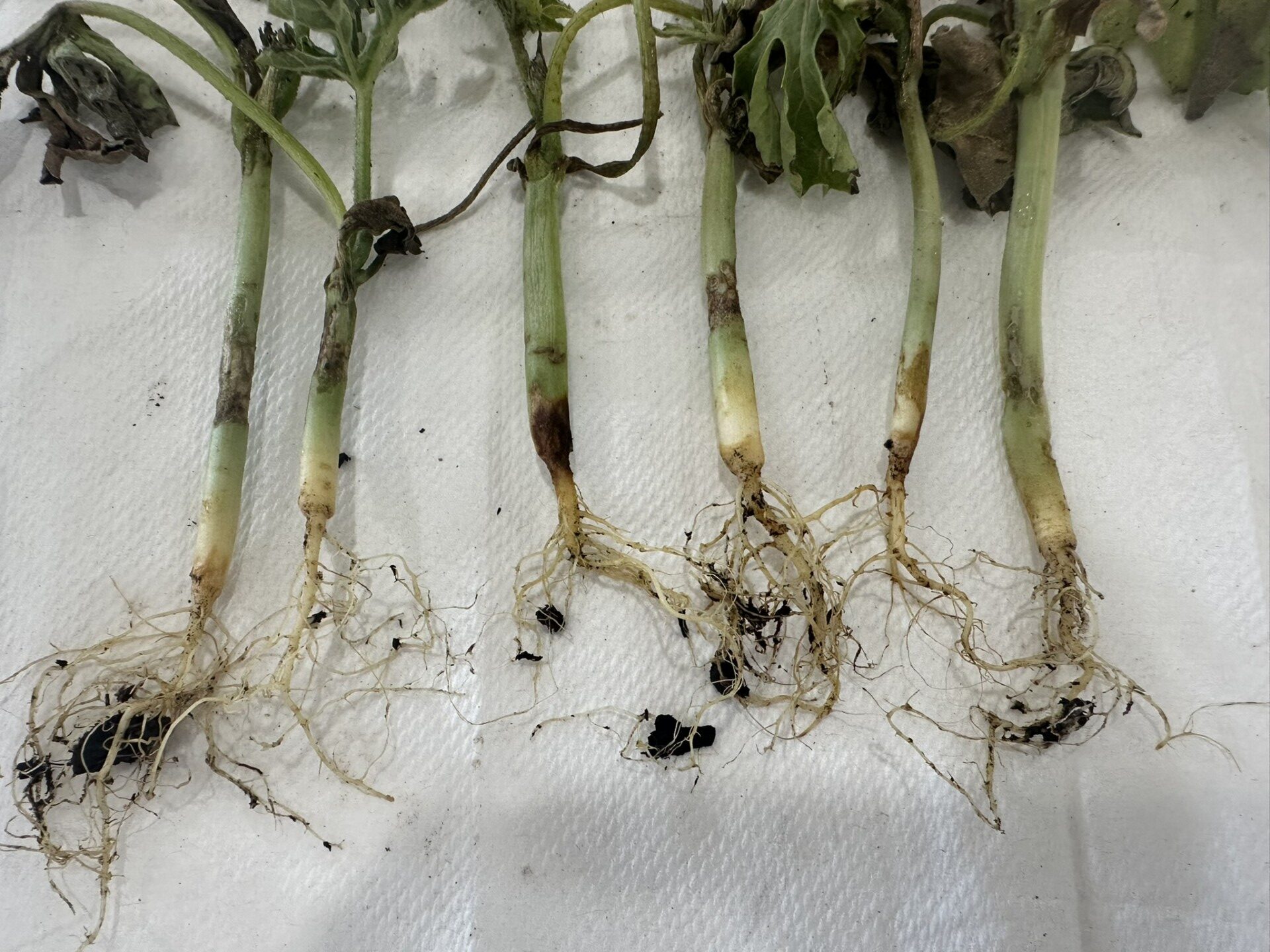
Figure 2. Dead watermelon seedlings were likely affected by multiple factors. Cucumber beetle feeding damage was observed on nearly all stems (photo: Wenjing Guan)
We did not observe differences in cucumber beetle preference between grafted and non-grafted plants. However, the stronger stems associated with squash rootstocks may have made those plants more tolerant of chewing damage.
There have been questions about whether pollenizer plants should also be grafted in fields planted with grafted seedless watermelons, since pollenizers are often considered less susceptible to Fusarium wilt than seedless watermelons. It is understandable that farmers may choose to use non-grafted pollenizers to reduce production costs. However, in the situations observed here, a high percentage of non-grafted pollenizer plants were lost due to environmental stress and insect damage. If this occurs, growers may not achieve the yields expected from grafted seedless watermelon plants due to insufficient pollination.