Although high tunnels make it possible for Indiana farmers to grow vegetables year-round, many growers may choose to end the production season in the fall. After a busy summer, it is not unusual that off-season management is overlooked. Nevertheless, these good management practices determine the success of the next year. It is an old lessen,…Read more about High Tunnel Off-season Management[Read More]
Wenjing Guan
Vegetable Crops Hotline Editor & Clinical Engagement Associate Professor
Department of Horticulture and Landscape Architecture
Area(s) of Interest: Commercial Vegetable and Melon Production
Wenjing Guan's website
Department of Horticulture and Landscape Architecture
Area(s) of Interest: Commercial Vegetable and Melon Production
Wenjing Guan's website

Date: October 26, 2019 8:30 am sign-in Location: Elkhart County Fairgrounds 17746 County Rd. 34, Goshen, IN 46528 Home and Family Arts Building This one-day hands-on workshop will offer a view into aquaculture and aquaponics water quality parameters and considerations. The day will consist of information that will benefit new and established producers. More information…Read more about Indiana & NCRAC Water Quality Workshop[Read More]
This is the final issue of the Vegetable Crops Hotline (VCH) for 2019. Subscribers who receive a paper copy in the mail need to renew. A renewal form is included with this issue. We are providing up-to a three years’ subscription of VCH at a reduced price (1 year for $15, 2 years for $25, and 3…Read more about Time to Renew[Read More]

Date: November 14, 2019 5:00 pm (EST) Location: Southwest Purdue Ag Center (SWPAC) 4369 N. Purdue Road, Vincennes, IN 47591 This event is a great opportunity to learn about watermelon, cantaloupe and other specialty melon production regardless if you have been growing watermelon all your life or are new to this crop. The meeting will start…Read more about Southwest Indiana Melon and Vegetable Growers Winter Meeting[Read More]
Farmer Rancher Program This program is for farmers/ranchers to explore innovative sustainable agriculture solutions to production, marketing, labor, and other problems. This grant is offered as individual ($9,000 maximum), team of two farmers or ranchers ($18,000 maximum), or group ($27,000 maximum). Projects may last up to 24 months. Proposals are due December 5, 2019. Interested…Read more about Grant Opportunities from NC-SARE[Read More]

Vegetable Field Day at Pinny Purdue Ag Center Date: Aug. 13, 5:00 pm CDT. Location: Pinney Purdue Ag Center. 11402 S. County Line Rd., Wanatah, IN 46390. Just north of US 30 between LaPorte and Porter Counties The public and those who raise vegetables commercially or as a hobby are invited to a vegetable and…Read more about Upcoming Events[Read More]
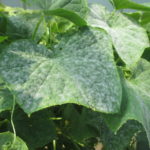
Powdery mildew is particularly severe in high tunnel and greenhouse growing conditions (Figure 1). It affects a wide range of crops including tomatoes and cucumbers. In addition to using synthetic fungicides to control this disease in high tunnels, we found powdery mildew on cucumbers can also be effectively controlled through variety selection and intensive plant…Read more about Variety Selection is Important for Managing Cucumber Powdery Mildew in High Tunnels[Read More]

Small Farm Education Field Day at Purdue Student Farm Date: August 1, 2019 Location: Purdue Student Farm, West Lafayette, IN 47907 The Purdue Student Farm is proud to announce its second annual Small Farm Education Field Day. The event is packed with educational sessions during the morning, followed by a tour and hands-on experiences on…Read more about Upcoming Events[Read More]
The 2019 production season started with above-normal rains. The wet conditions affected agriculture production, including watermelon and cantaloupe. In this article, we will review some of the watermelon and cantaloupe problems that are often associated with wet conditions. Manganese toxicity– This nutrient disorder occurs more often on cantaloupe that is grown in soils with pH…Read more about Results of Wet Condition on Watermelon and Cantaloupe[Read More]

Meigs High Tunnel Field Day Date: July 18, 2019 Location: Purdue Meigs Farm, 9101 S 100E, Lafayette, IN 47909 Topics of the field day include Production of specialty melons in high tunnels; Early detection of bacterial wilt; Impact of crop rotation and rootstock on the resilience of high tunnel tomatoes. Lunch and refreshments are provided….Read more about Upcoming Events[Read More]