According to the Midwestern Regional Climate Center’s “Number of Days since last Precipitation Observation” tool, there is an increasing area of Indiana that has not had at least a tenth of an inch (number of days since precipitation tool provides maps for the Midwest region with precipitation threshold amounts of ≥ 0.01”, 0.10”, 0.25”, 0.50, and 1.00”) of precipitation in at least 8-14 days (Figure 1). In fact, over the 30-day period from August 4 through September 2, 2026, areas in far northeastern Indiana, as well as in southern and southwestern Indiana, have seen only between 50% and 75% of their historical norms (Figure 2). Of course, areas that were hit hard by the intense rainfall events in August – across central and east-central Indiana – are still well ahead of average regarding the 30-day precipitation totals.
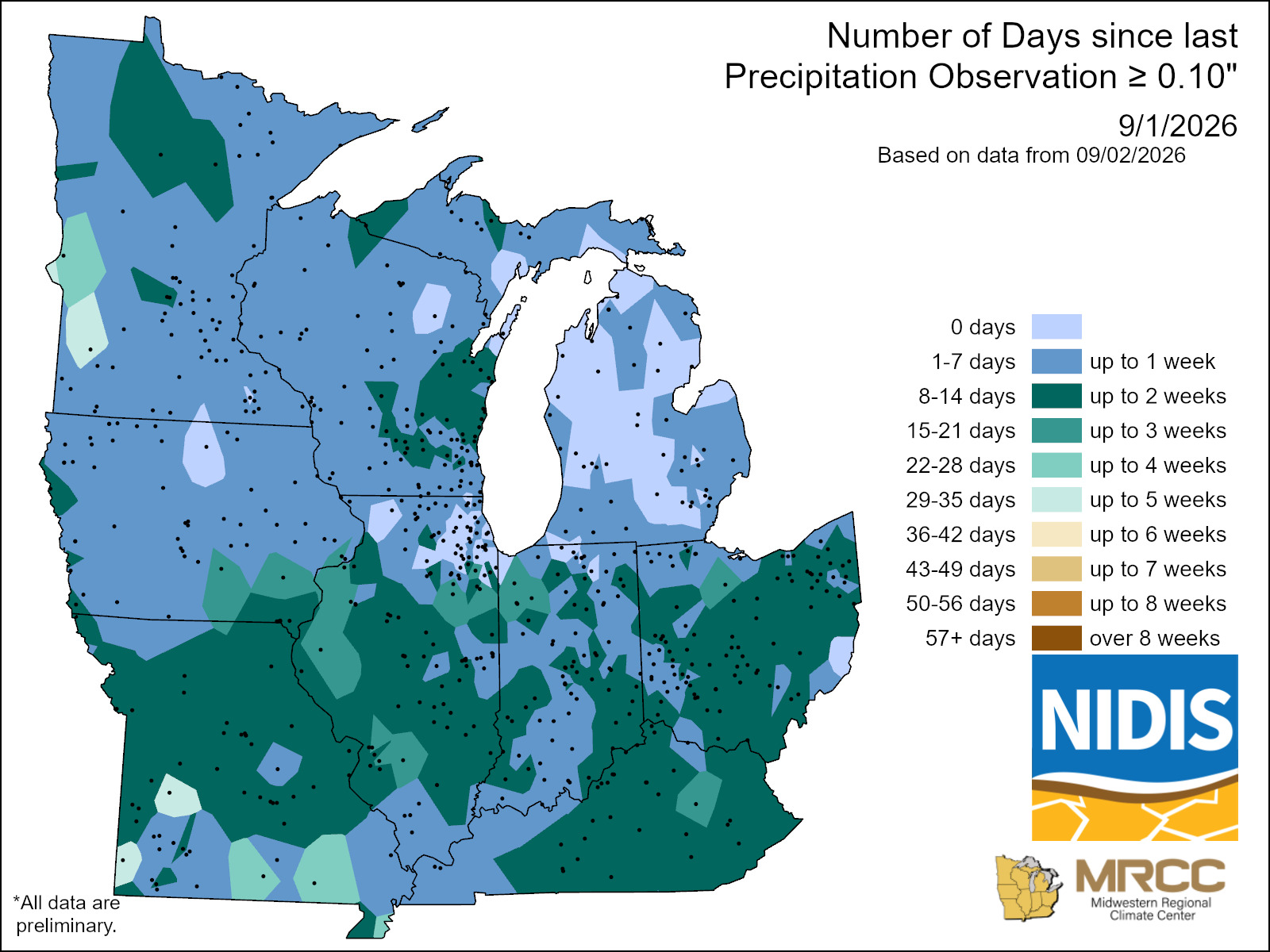
Figure 1. Number of days since the last observed 24-hour precipitation amount of at least 0.10 inches.
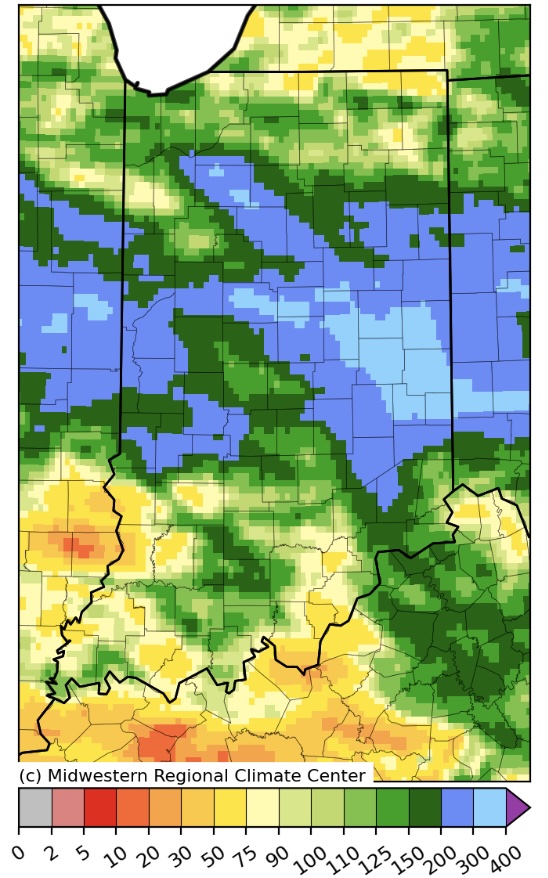
6 Figure 2. Total precipitation from August 4 through September 2, 2026, represented as the percentage of the 1991-2020 normal amounts. A value of 100% would indicate an amount equal to the historical average.
Does this mean drought in those drier locations is imminent? Drought is measured across multiple time scales and considering multiple types (e.g., meteorological, hydrological, agricultural). Therefore, it is difficult to say for certain whether drought will develop and, if so, what type. Currently, groundwater levels and soil moisture percentages are near if not above normal in those areas that have not been getting much rain. These factors could impact hydrological and agricultural drought. However, there is clearly a meteorological drought developing not only due to the lack of recent precipitation, but also because forecasts and climate outlooks do not predict much precipitation over the next several weeks, particularly for southern and southwestern Indiana. Couple that with short-term climate models favoring above normal temperatures continuing for the next several weeks, and at least the introduction of the Abnormally Dry (D0) category of the U.S. Drought Monitor is very likely.