As of January 1, 2025, Chateau® SW herbicide is no longer registered for use in melon crops in the state of Indiana. While some growers are aware of this development, others are not. The following article discusses the background on Chateau® SW use in melons and addresses some questions growers may have.
What is Chateau® SW herbicide?
Chateau® SW is a soil-applied, preemergence herbicide containing the active ingredient flumioxazin, a Group 14 herbicide. It provides control of common small-seeded broadleaf weeds as well as suppression of annual grasses and larger-seeded broadleaves. Chateau® SW is essentially the equivalent of Valor®, but covers uses in fruit and vegetable crops.
When was Chateau® SW registered for use in melons?
Chateau® SW was first labeled for use in Indiana melons in 2018 and remained registered through 2024. The path to registration was not straight-forward, as retired Purdue University professors Dan Egel and Steve Weller outlined in this 2016 Vegetable Crops Hotline article.
How was Chateau® SW registered in Indiana?
Chateau® SW was registered for use in the state of Indiana as a 24C Special Local Needs label. The label was a little unusual in that it was both an indemnified label and a third-party label. The Indiana Vegetable Growers Association (IVGA) held the rights to the label as a way to decrease liability for the herbicide’s registrant, Valent. To use Chateau® SW on melons in Indiana, a grower had to sign an agreement with IVGA, a waiver of liability, and pay a $100 administration fee.
What is a 24C herbicide registration?
24C is the subsection of pesticide law that allows for pesticide uses to be expanded beyond those outlined in the master label approved by the US Environmental Protection Agency (EPA). 24C labels do not replace the label on the jug; instead, they are intended to be used as an extension of the product label.
What are alternatives to Chateau® SW?
Although Chateau® may no longer be labeled for melons in Indiana, other flumioxazin products are labeled for use in row middles of plasticulture-grown melons. These include:
Varsity® (page 30)
Varsity® SC (pages 14-15)
To read the labels, visit cdms.net and search the product name.
Read labels carefully. Some herbicides containing flumioxazin are only registered for a “fallowbed” application, which requires that 4 inches of the bed be removed prior to transplanting melons. These labels may not include a row middle application.
What does the research say about the use of flumioxazin in melons?
Flumioxazin should only be applied to row middles in plasticulture melon production systems. Flumioxazin applied to the plastic can result in decreased watermelon plant growth and a reduction in yield. To learn more about this research conducted at the Southwest Purdue Agricultural Center in Vincennes, IN, visit: Triploid watermelon response to flumioxazin | Weed Technology | Cambridge Core
Combining flumioxazin with Dual Magnum and applying the tank mixture to row middles prior to transplanting provided an average of 88% weed control by 8 weeks after transplanting. Of the herbicides tested, this mixture provided the most consistent weed control (Figure 1). To learn more about this work conducted at Purdue’s Meigs Horticulture Research Farm in Lafayette, IN visit: Herbicide-Based Weed Management in Plasticulture Triploid Watermelon Row Middles Using Pre-Transplanting and Layby Application Timings | Weed Technology | Cambridge Core
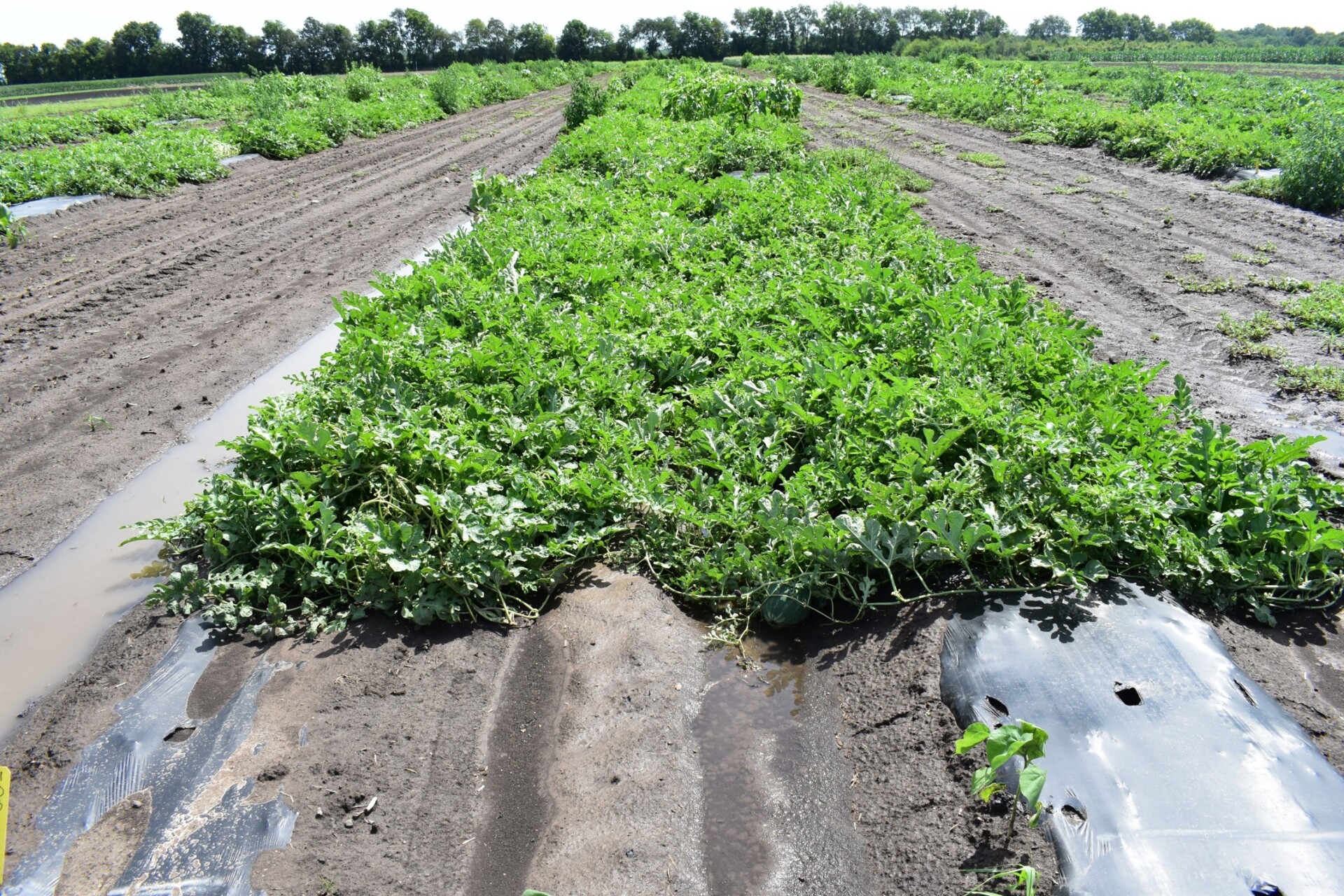
Figure 1. A watermelon plot at the Meigs Horticulture Research Farm, Lafayette, IN, in 2023. Chateau and Dual Magnum were applied to the row middles prior to transplanting (Photo by SL Meyers).