Herbicide drift presents a significant challenge for specialty crop growers. Synthetic auxin-type herbicides, such as dicamba and 2,4-D, pose particular concern for tomatoes. Injury symptoms are typically easy to recognize and include distorted leaves, twisted stems, and malformed fruit. Severity of the damage depends on the herbicide dose and the plant’s growth stage at the time of exposure.
In the spring of 2025, we encountered a case of 2,4-D drift affecting high tunnel tomato production. We monitored the affected plants over time to assess injury progression and recovery (Figure 1). This article summarizes our observations.
The impacted crop consisted of a slicer tomato cultivar, which was transplanted in mid-April into a high tunnel. Symptoms consistent with auxin herbicide exposure were first observed around May 10, when the plants were beginning to develop their first flower clusters. A foliar sample was submitted to Waters Agricultural Laboratories for a phenoxy herbicide screen, and 2,4-D was detected at a concentration of 0.018 ppm.
By May 22, the affected plants had resumed new growth, but the emerging leaves continued to show signs of injury. By June 10, plant growth had substantially progressed, although some newly developing leaves still exhibited tapered leaflet tips (Figure 2), a common symptom of auxin herbicide exposure. While a few plants set fruit on their first flower clusters, most failed to do so. Floral abortion is another common symptom of auxin herbicide exposure. Some early-forming fruit exhibited elongated shapes and a pronounced tip (Figure 3). Although some cultivars of tomato do produce elongated fruits, it was atypical for this cultivar which would produce rounded tomato fruits in the absence of 2,4-D. These results are similar to those observed by a different vegetable grower the same season. Following auxinic herbicide injury exposure shortly after transplanting, the first fruits harvested from their field-grown slicing tomatoes were elongated, and the fruit became more round as harvest progressed higher on the plant and later into the season (Figure 4). A second set of tissue samples from the high tunnel tomatoes—including symptomatic leaves and misshapen fruit—was submitted for further residue analysis. 2,4-D was again detected, with concentrations of 0.028 ppm in leaves and 0.016 ppm in fruit. Notably, these levels remained below the U.S. maximum residue limit of 0.05 ppm for 2,4-D (Tolerance and Exemptions for Pesticide Chemical Residues in Food. Part 180), and the declining residue trend suggested that asymptomatic fruit would be marketable.
In a typical season, the harvest of high tunnel tomatoes begins in late June. Although the plants had fully recovered from the herbicide injury by June 30, with no symptoms observed on new growth, the drift incident likely caused a harvest delay of at least 2 to 3 weeks.
An interesting observation was that only the slicer tomato cultivars showed visible herbicide injury. Grape and cherry tomato cultivars, which were also grown in the same high tunnel, did not exhibit any symptoms. This observation suggests a possible difference in sensitivity among tomato types.
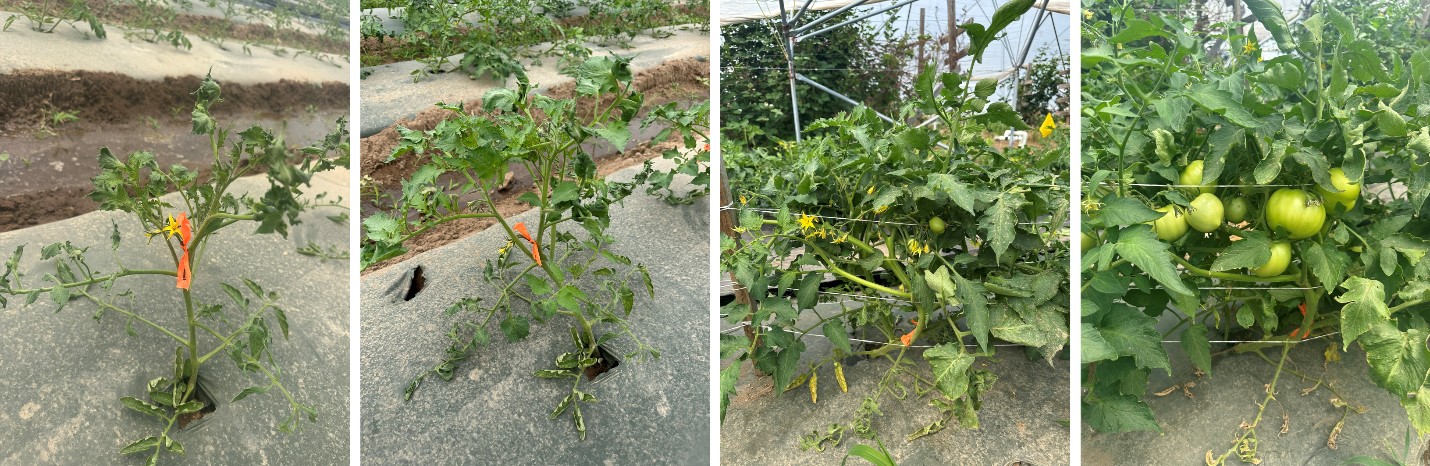
Figure 1. The pictures were taken on the same tomato plants on May 16, May 22, June 10, and June 30, from left to right. (Photo by Wenjing Guan).
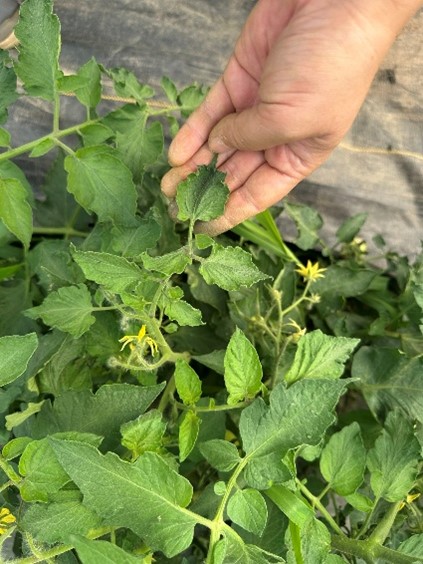
Figure 2. Tapered leaflet tips on recovering tomato plants on June 10 (Photo by Wenjing Guan).
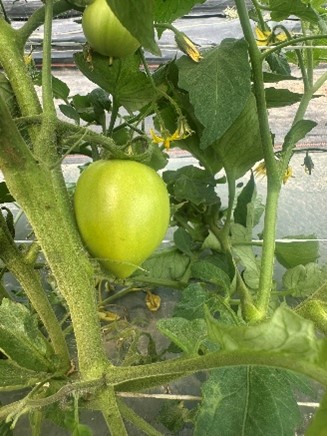
Figure 3. Elongated fruit with pronounced tips, a symptom related to the herbicide injury (Photo by Wenjing Guan).
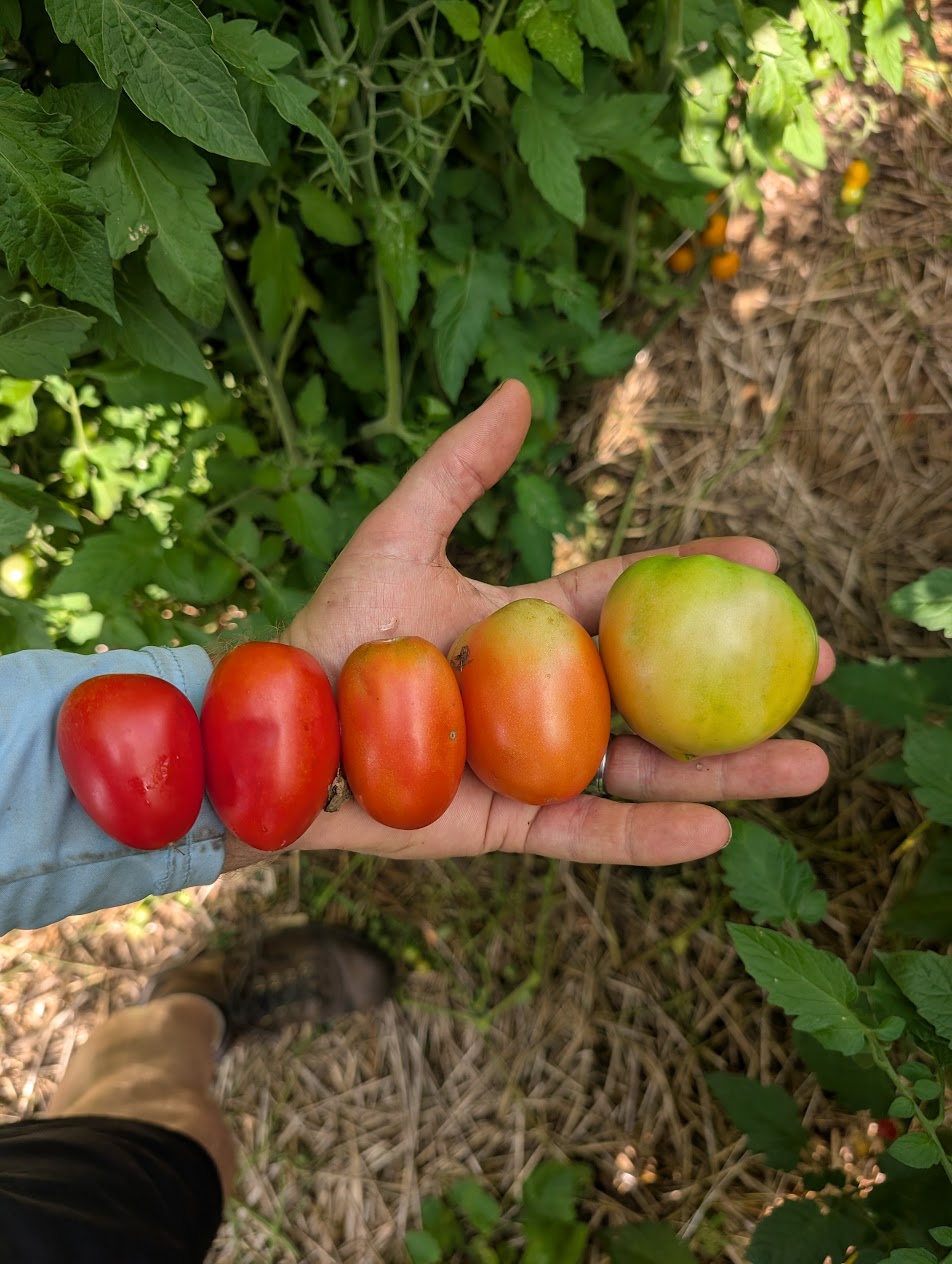
Figure 4. Fruit harvested from a field-grown tomato plant exposed to an auxin herbicide. All fruits were harvested from a single plant with the lowest fruit on the left and highest positioned fruit on the right (Photo by SL Meyers).
Additional information
To learn more about tomato leaf curling and herbicide injury, visit these archived VCH articles:
Tomato Leaf Curling | Purdue University Vegetable Crops Hotline
Herbicide Drift on Tomatoes | Purdue University Vegetable Crops Hotline
These fact sheets may be helpful for preparing and responding to herbicide drift: Dicamba and 2,4-D Fact Sheet Series | Herbicide-Drift Risk Management for Specialty Crops
Information about filing a pesticide or fertilizer tip or complaint with the Office of the Indiana State Chemist can be found on their website, choose option #6 OISC – Office of Indiana State Chemist Home Page