We have received heavy rainfall in recent days across several parts of Indiana. These conditions, combined with the current growth stage of melons (for example, the dense canopy resulting from active vegetative growth) can create favorable conditions for disease development. Diseases that may become problematic under these conditions include gummy stem blight and anthracnose (Figures 1 and 2).
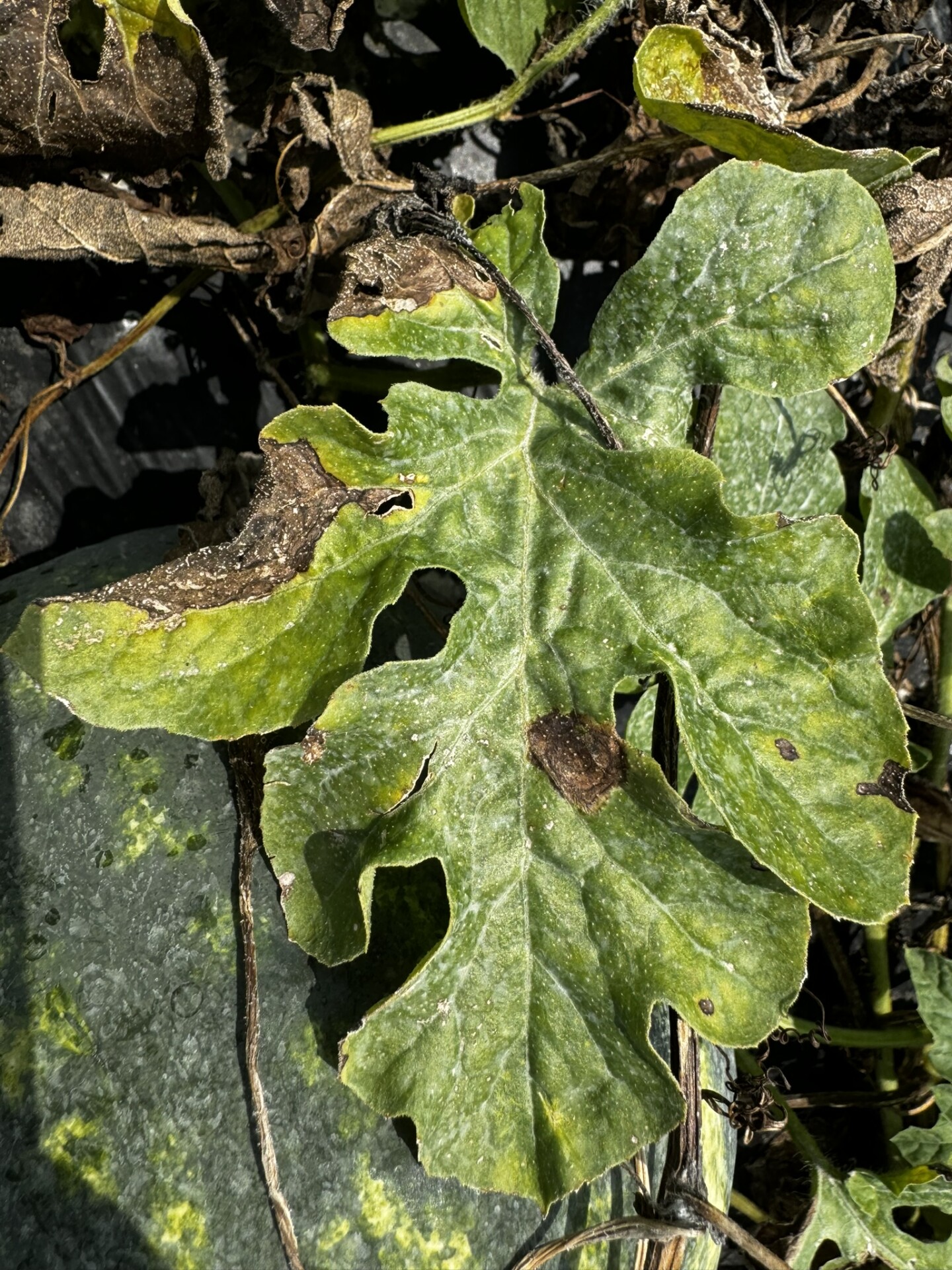
Figure 1. Watermelon leaf infected with gummy stem blight (Photo by Cesar Escalante).
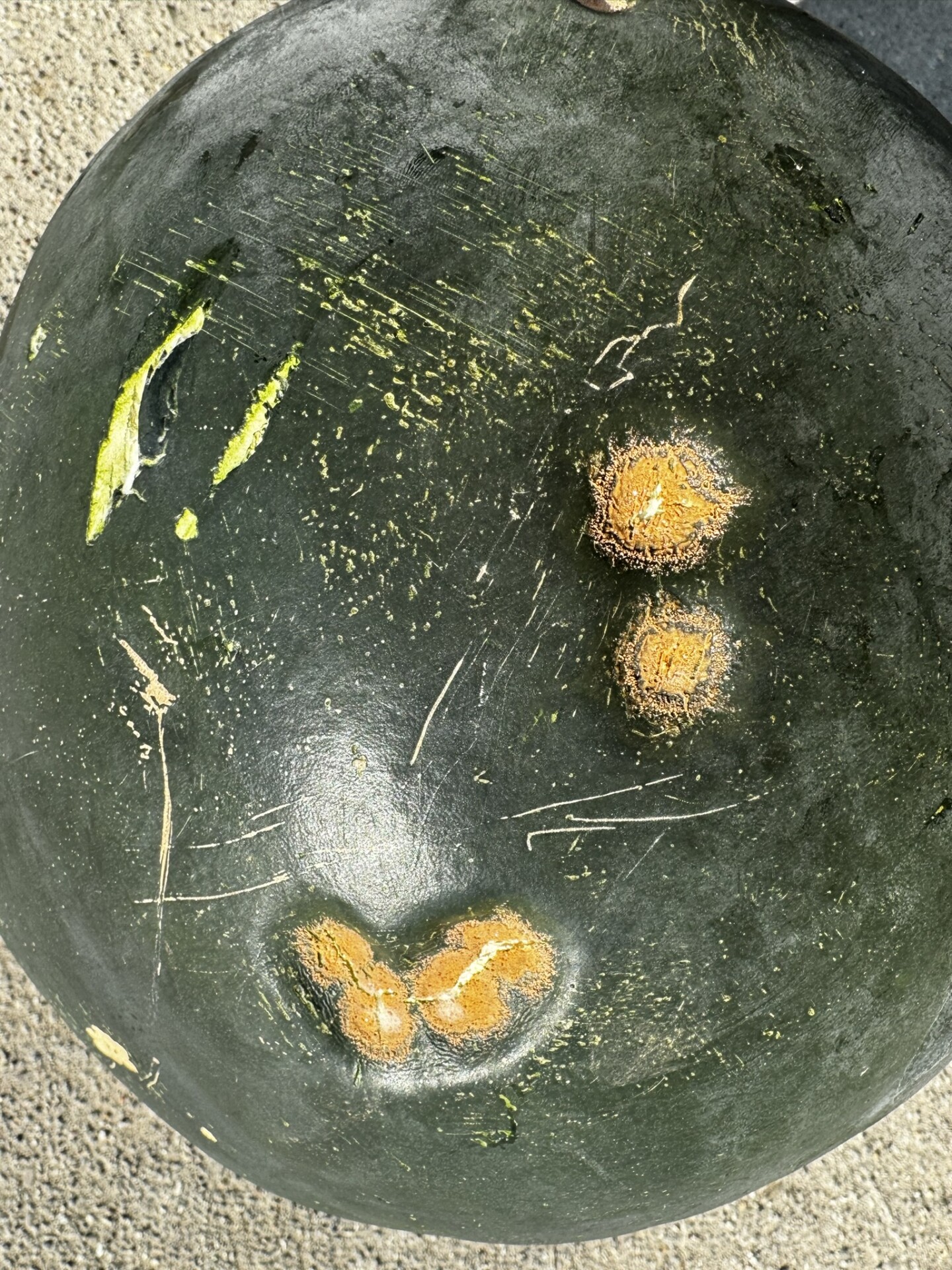
Figure 2. Mature watermelon fruit affected by anthracnose. Notice the sunken, circular lesions with a pinkish color produced by conidia aggregates. Anthracnose can also affect leaves, which may later infect fruits in the same field (Photo by Cesar Escalante).
Consider applying systemic fungicides as a preventive measure. Remember that many diseases have latent periods during which no symptoms are visible; however, the pathogen may already be actively colonizing and infecting plant tissues. Preventive management is most effective during this stage, and systemic fungicides can play an important role in suppressing pathogen development. Refer to the cantaloupe and watermelon fungicide schedule for information on available fungicide options and their recommended use.
I would also like to remind cucurbit growers that MELCAST remains active this season. I am providing weekly updates via email and posting them on the MELCAST website. If you would like to be added to the mailing list, please contact me or Barbara Joyner at joynerb@purdue.edu. MELCAST is an effective tool for managing foliar diseases such as anthracnose, gummy stem blight, and Alternaria leaf blight. The system uses environmental data to help growers time fungicide applications more effectively, improving disease management while reducing unnecessary sprays.
Continue to monitor fields for other common diseases, including bacterial diseases and Phytophthora blight. The MELCAST system does not account for these diseases, so fungicide applications should be made promptly when they are detected. Phytophthora blight affects cucurbit crops differently. In watermelon, the disease primarily affects fruit (Figure 3), whereas in pumpkins, both foliage and fruit may be affected. To protect watermelon fruit, fungicide applications are recommended beginning at the softball stage. In pumpkins, fungicide applications can begin when plants reach the bushy growth stage. Applications may be continued on a weekly or biweekly schedule, depending on weather conditions.
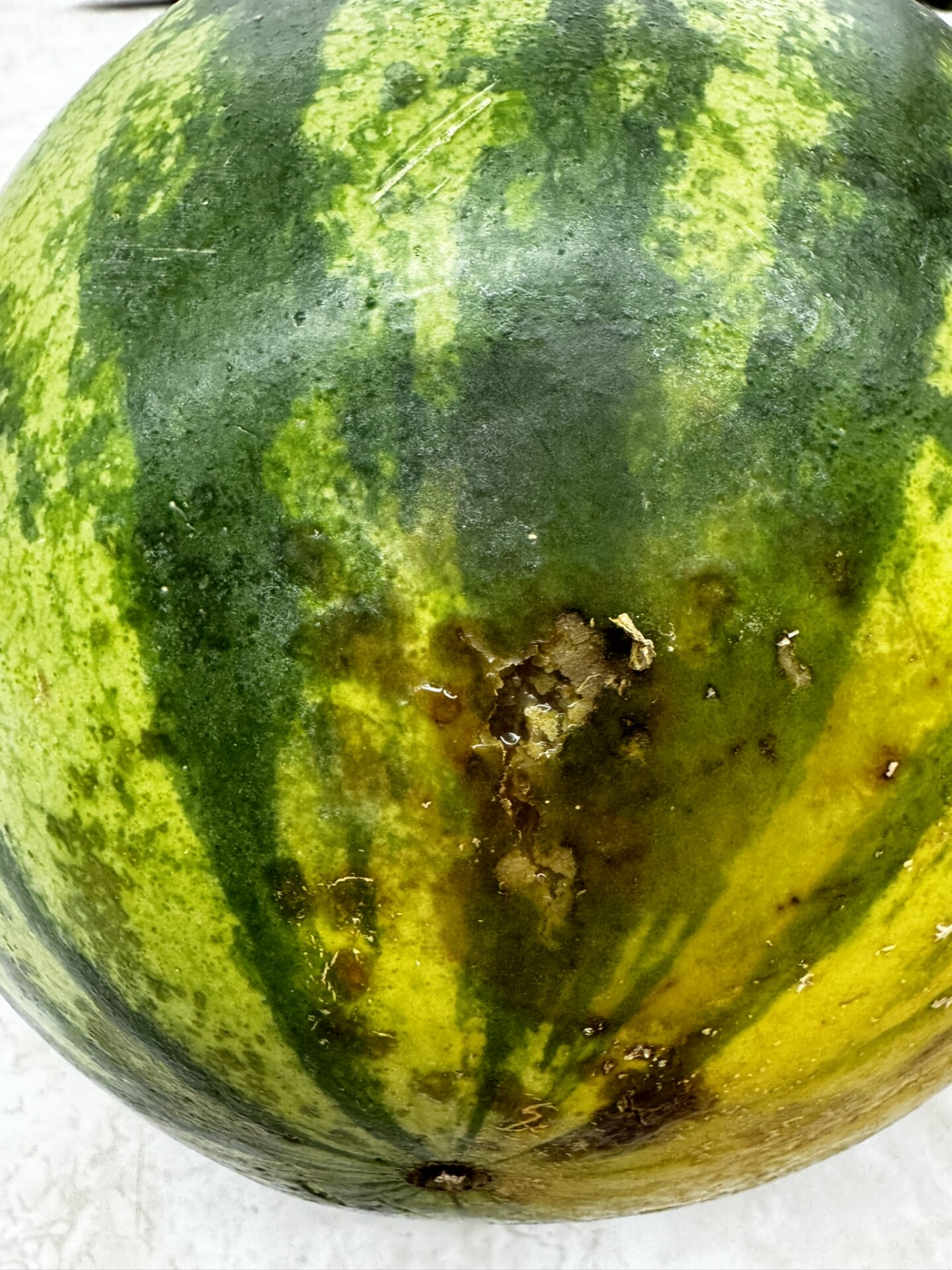
Figure 3. Mature watermelon fruit infected with Phytophthora blight. The fruit tested positive using ImmunoStrips in the lab (Photo by Cesar Escalante).
Remember that Phytophthora capsici thrives under warm, wet conditions. The disease is often more severe in low-lying areas of fields that remain saturated for extended periods or have poor drainage. These areas should receive special attention, as they are often the first locations where Phytophthora blight becomes a significant problem. For a complete list of fungicides recommended for managing the diseases discussed in this article, consult the Midwest Vegetable Production Guide. You may also refer to the fact sheet “Managing Phytophthora Blight of Cucurbits” for a comprehensive list of fungicide options and cultural practices.
Additional resources:
Egel, D. Managing Phytophthora Blight of Cucurbits. 2020. BP-204-W. Purdue University