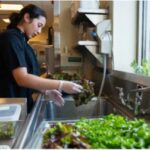
Keeping produce safe and meeting buyers’ and regulatory expectations starts with strong cleaning and sanitation practices. Farms that implement proper procedures not only protect public health but also improve efficiency and build trust with customers. To help growers and farm workers strengthen these skills, we invite you to join us on December 9th from 1:00…Read more about Cleaning and Sanitation Workshop – December 9[Read More]
Amanda J Deering

Freeze-drying is rapidly gaining momentum as a method for home food preservation as freeze-dryer units become more accessible to the general public. This unique process involves removing water from a food product to preserve its color, nutritional value, and structural integrity. In a recent Extension publication, two Purdue University researchers discuss food safety, dehydrating versus…Read more about New Publication – Freeze-drying Food Preservation[Read More]

Introduction Ensuring the microbial safety of fresh produce is a critical step in preventing foodborne illnesses and safeguarding public health. Fresh produce is often exposed to contaminants during various stages of production, including growing and harvesting, where it can come into contact with soil, irrigation water, compost and wildlife (Dogan et al., 2023; Rock et…Read more about Understanding the Impact of Organic Matter on Free Available Chlorine (FAC) Concentration in Postharvest Water[Read More]
On October 1, the Safe Produce Indiana team welcomed Katheryn Parraga as its newest team member. Katheryn will serve as a Food Safety Research and Outreach Specialist in the Department of Food Science. She will be stationed at the Purdue Extension Food Safety Training Hub in Vincennes. Katheryn received her Ph.D. and master’s degree in…Read more about Safe Produce Indiana Welcomes New Team Member[Read More]
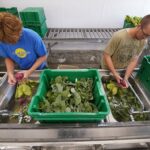
Harvest season is easily one of the busiest and craziest times of the year. Crops are being harvested, packed, shipped, and sold against a backdrop of perishability, weather, and ever-changing markets. Harvest and postharvest handling are also critical times for food safety. Handling of the crop by workers, transporting of produce, and aggregating the crop…Read more about Food Safety Considerations for Postharvest Handling of Produce[Read More]
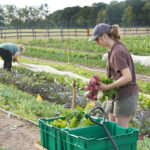
Intense heat and long days serve as a reminder that we are officially in the heart of Summer, where Indiana consumers rush to grocery stores and farmers markets to purchase fresh, locally-grown fruits and vegetables. As produce farms strive to meet this demand, it is important that growers consider food safety and follow good agricultural…Read more about Food Safety Considerations for Vegetable Farms[Read More]
Water is an essential component of crop production. However, water may also contain or transmit human pathogens. As a result, management of any food safety risks presented by water is critical. As part of the Produce Safety Rule (PSR) (21 CFR 112), Subpart E deals with the management of both production and postharvest water on…Read more about Update on Proposed Changes to Subpart E of the Produce Safety Rule[Read More]
The Safe Produce IN team is planning Produce Safety Alliance (PSA) Grower Training courses for winter 2022. This training is for fruit and vegetable growers and others interested in learning about produce safety, the Food Safety Modernization Act (FSMA) Produce Safety Rule, Good Agricultural Practices (GAPs), and co-management of natural resources and food safety. This…Read more about Produce Safety Alliance Grower Training Interest Survey[Read More]
Over the last week or so, many people have received an online offer to provide a Produce Safety Alliance Trainer – Cornell Cals Professionals List. If you receive this email, please be aware that this is not an offer for a grower list. The Produce Safety Alliance (PSA) has a publicly available list of certified trainers and…Read more about Phishing Scam Offers PSA List[Read More]
Recently, the Food and Drug Administration (FDA) announced a temporary policy regarding eligibility for the qualified exemption under the Food Safety Modernization Act (FSMA) Produce Safety Rule. The policy is designed to provide flexibility to growers during the COVID-19 public health emergency. The policy and guidance may be found on FDA’s website at https://www.fda.gov/media/138316/download. Under…Read more about FDA Announces Temporary Policy During the COVID-19 Public Health Emergency[Read More]