The Midwestern Regional Climate Center (MRCC) has launched a new version of cli-MATE, its main online portal for United States climate data, analyses, statistics, maps, graphics, and other information. For over 40 years, MRCC has provided climate data to the public—initially through printed reports and later digitally as web access grew. The latest redesign of…Read more about Explore the New cli-MATE: Your self-service portal to U.S. climate data, maps, and more[Read More]
Austin Pearson

County Extension Director, Extension Educator Agriculture and Natural Resources
Tipton County
Tipton County

The heat and humidity have returned to the state, as heat indices soared above 100°F on Wednesday and Thursday (July 23-24) this week. The National Weather Service issued heat advisories that spanned from northeast Texas to northeast Ohio on July 24. Over the last 7-day period (July 16-22), average temperatures ranged from near normal in…Read more about Hot and Humid Weather Persists, but a Cool Down is Expected During the First Week of August[Read More]

Calling all corn and soybean producers and agricultural advisers! The United Soybean Board (USB), in partnership with the Midwestern Regional Climate Center (MRCC), Iowa State Extension, Iowa Department of Agriculture & Land Stewardship, and the Iowa Soybean Association, invites you to a virtual workshop informing the future of the MRCC’s Ag Climate Dashboard and new…Read more about July 16: Get Paid for Your Opinions About Ag Climate Data[Read More]
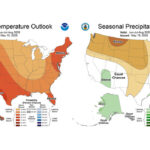
I couldn’t think of a better title this week, thanks to the hot weather we’ve been experiencing and the song by Arrow. While some people enjoy the heat and humidity, I must admit that I don’t find it overly pleasant. Over the past few days, average temperatures have ranged from 6 to 13°F above normal,…Read more about Feeling Hot, Hot, Hot[Read More]
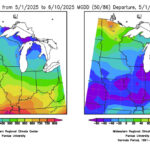
We’ve made it! Meteorological summer started on June 1, but the official start of summer isn’t until June 20. The days are longer, temperatures have risen, and my allergies are in full swing. I let the dogs out last night, and there was still quite a bit of light in the sky just before 10:00…Read more about Meteorological Summer Has Arrived[Read More]
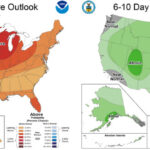
Precipitation in May has varied tremendously, but most of the state has generally been on the dry side. Areas from Vermillion and Parke Counties to Lake Michigan have received between 25% and 75% of the normal precipitation through May 27 (Figure 1). Conditions were dry enough that thunderstorm winds on May 16 prompted the National…Read more about Will May’s Mixed Precipitation and Temperatures Persist into June?[Read More]
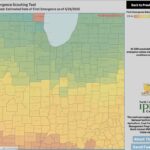
Midwestern farmers have faced a buildup of pesticide resistance in pigweeds (waterhemp and Palmer amaranth), highlighting the importance of scouting to detect weeds early in their growth stages. Otherwise, weed escapes are a common issue as herbicides lose their efficacy when weeds are allowed to grow long enough into their growth cycle. The Midwestern Regional…Read more about Midwestern Regional Climate Center Launches New Experimental Weed Emergence Scouting Tool[Read More]
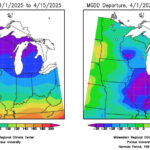
Despite the wet start to the month, the entire state saw less than 50 percent of normal rainfall from April 10 to 16, and in some cases, less than 10 percent of normal rainfall (Figure 1). This was helpful, especially since some locations are still dealing with river flood warnings and ponded, saturated fields. This…Read more about Wet Pattern to Return[Read More]
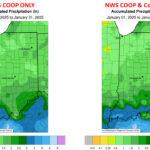
How often have you heard that your neighbor received rain while you missed it? Precipitation is highly variable and has significant impacts on communities. Insufficient rainfall can cause drought and water supply issues, while excessive rain can lead to flooding and damage to infrastructure. The dense precipitation measurements provided by the Community Collaborative Rain, Hail,…Read more about Expanding Precipitation Observations in Indiana[Read More]
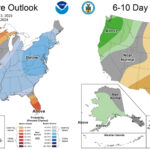
As September begins, we officially welcome meteorological fall. While the autumnal equinox isn’t until September 22, the past few mornings have already brought a crisp, fall-like feel to the air. Around town, fall decorations are starting to appear, and a few maple trees are showing early hints of color. My wife, however, is eagerly waiting…Read more about Welcome Meteorological Fall, Drought Concern Grows[Read More]