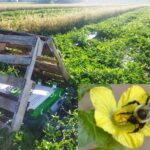
Seedless watermelons are extremely dependent on pollinators for yield. A pollinator, typically a bee, has to first visit a male flower from a pollinizer plant (pollen donor) and then deposit the pollen on a female flower from the seedless plant. That pollinated female flower will become a seedless watermelon fruit. This pollen-transfer job can be…Read more about Do Managed Bumble Bees Contribute to Seedless Watermelon Pollination?[Read More]
Beneficial Insects and Mites
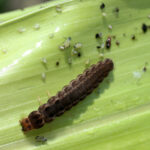
If you’re scouting for cabbage aphids (Figure 1) in your brassicas this summer, don’t overlook one of your garden’s lesser-known allies: soldier beetles, also known as leatherwings (Figure 2). These beneficial insects can be valuable predators, especially when aphid populations begin to surge in warm weather. Cabbage aphids are difficult to manage due to their…Read more about Soldier Beetles: Summer Allies Against Cabbage Aphids[Read More]
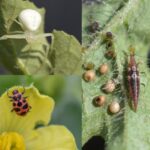
Growing watermelons in Indiana isn’t always easy if you have cucumber beetles and spider mites. These pests are some of the most damaging to Midwest cucurbits and are commonly managed with a combination of insecticides and miticides. Unfortunately, chemical management for one pest could interfere with control of another pest. For example, spider mite outbreaks…Read more about Want Fewer Spider Mites? Ease Up on the Beetle Spraying![Read More]
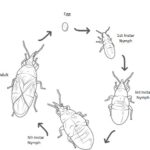
Orius insidiosus, also known as the minute pirate bug, is native to North America and a beneficial insect (Figure 1). They are generalist omnivores, feeding on other insects and pollen. Minute pirate bugs belong to the Order of true bugs — Hemiptera — in the family Anthocoridae. Orius insidiosus can be found in a wide range…Read more about Insect Spotlight: The Minute Pirate Bug – A Key Predator[Read More]
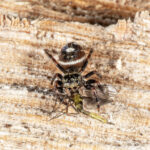
I know what you’re thinking: this is an insect spotlight, but you are writing about spiders! They are not insects! Well, you are correct. They are not insects but rather Arachnids. However, they are closely related, studied by Entomologists, and play an important role in arthropod food webs, so bear with us. Hopefully, this article…Read more about Insect Spotlight: Spiders – An Overview Of Their Role In Agricultural Systems[Read More]
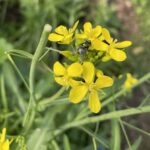
Blow flies are a group of iridescent green or blue flies belonging to the family Calliphoridae. Flies undergo complete metamorphosis, transitioning through egg-larva(maggot)-pupa-adult. Often in this situation, the larvae and adults occur in different environments and feed on different food sources. In fact, blow fly larvae are carrion feeders, meaning they feed on the decaying…Read more about Insect Spotlight: Blow Flies[Read More]
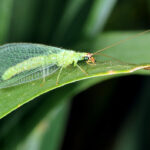
Lacewings are a group of insects commonly found in Indiana and throughout the world. There are several species, but the most common that you will see in Indiana include the green lacewing and the brown lacewing. They belong to a unique order of insects, Neuroptera, and are commonly referred to as aphid lions. The life…Read more about Insect Spotlight: Lacewing (Chrysoperla carnea)[Read More]
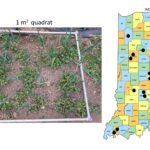
Background High tunnels provide a hospitable environment for crops and insect pests, but little is known about the weed community present within them. From 1 December 2022 to 17 March 2023, we visited 14 farms monthly across Indiana and used a quadrat-style approach to measure weed pressure (0% to 100% weed coverage per quadrat) and…Read more about Winter Weeds as Refuge for Pest and Beneficial Invertebrates[Read More]
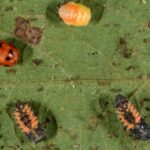
The Two-spotted lady beetle, Adalia bipunctata, is a common insect predator, meaning it feeds on other, smaller bugs. Native to North America and Europe, the Two-spotted lady beetle is distinguished from other lady beetles by its oblong shape and two large black spots on either of its back, as well as its large white spots…Read more about Insect Spotlight: Two-Spotted Lady Beetle[Read More]
