Pheromone trap catches for corn earworms continue to be very low. Again, this is a time when growers can save a lot of money and time by monitoring their pheromone traps and not spraying. I harvested untreated sweet corn on Friday, July 31, and had over 98% clean ears and the few that were damaged…Read more about Corn Earworm[Read More]
Corn
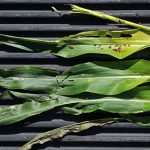
Fall armyworms have completed their annual trek from the Gulf Coast to the Midwest. Fall armyworm larvae will feed on all aboveground parts of the sweet corn plant, during all stages of growth. The damage to the foliage is much more severe than with European corn borer. Larvae will feed from within the whorl of…Read more about Fall Armyworm[Read More]
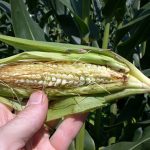
I have seen more green stink bugs this year than at any time in my career. I have no logical explanation for their abundance. It was thought that as the invasive brown marmorated stink bug became established, it might outcompete the native stink bugs such as the green stink bug, causing numbers to decrease. However,…Read more about Green Stink Bug[Read More]

Pinney Purdue Vegetable Field Day and Sweet Corn Sampler. Thursday, August 13, 2015. 4:00 p.m. – 8:00 p.m. CDT. Pinney Purdue Ag Center, 11402 S. County Line Rd., Wanatah, IN. Plot tours include soil health management and disease suppressive soils, tomatoes and peppers in high tunnels, and sweet corn varieties. Private Applicator Recertification (PARP) Credit…Read more about Upcoming Events[Read More]
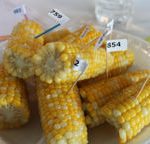
Pinney Purdue Vegetable Field Day and Sweet Corn Sampler. Thursday, August 13, 2015. 4:00 p.m. – 8:00 p.m. CDT. Pinney Purdue Ag Center, 11402 S. County Line Rd., Wanatah, IN. Plot tours include soil health management and disease suppressive soils, tomatoes and peppers in high tunnels, and sweet corn varieties. To register, contact Lori Jolly-Brown,…Read more about Upcoming Events – Pinney Purdue Vegetable Field Day and Sweet Corn Sampler[Read More]
We are again seeing a lull in pheromone trap catches of corn earworms. However, I caution sweet corn growers to remain vigilant in checking their traps. Populations can increase rapidly, especially if carried north on storm fronts from the Gulf Coast. It is also important to watch the development of the field corn around your…Read more about Corn Earworm[Read More]
In years past, the European corn borer was the most important pest of sweet corn, as well as being a pest of peppers and other vegetables. Since the advent of Bt field corn, the overall population of corn borers has been dramatically suppressed, so far that we often forget about it being a pest of…Read more about European Corn Borer[Read More]
After a brief lull in pheromone trap catches, we have resumed catching earworm moths all around the state. Although most of the counts are relatively low (less than 10 per night), remember that for early planted sweet corn that silks before the neighboring field corn silks, the threshold for treatment is 1 moth per night….Read more about Corn Earworms[Read More]
2015 marks the 40th year of my career as an entomologist and I still am surprised on a regular basis by how insects behave. I put out a corn earworm pheromone trap on May 14 and immediately caught 7 moths that night. Over the next three nights, I caught 36 moths. Typically, the few earworms…Read more about Corn Earworms[Read More]
The cool, wet weather we have been having is perfect for the root and seed maggots in early planted vegetables. I have already received calls about onion maggots. If you are planting early vegetables, check out the article in the March 17, 2015, issue of the Hotline for 2015. So, how do we define early…Read more about Root and Seed Maggots[Read More]