Bees


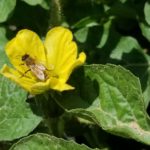
Insecticides are often needed to control pests in vegetable crops, but in crops that require pollinators we often worry about the impact those insecticides may have on those pollinators (Figure 1). In the summer of 2018, a team of researchers at Purdue University explored the effects of insecticide applications on watermelon yield across Indiana, considering…Read more about IPM Revisited: A Cost-effective Solution for Balancing Pest and Pollinator Management[Read More]


We just completed a new publication that will assist fruit and vegetable growers in protecting pollinators while still managing their insect pests. The title is “Protecting Pollinators in Fruit and Vegetable Production.” It can be found at https://extension.entm.purdue.edu/publications/POL-2/POL-2.html. There are two companion publications in this series, “Protecting Pollinators in Home Lawns and Landscapes” and “Protecting…Read more about New Pollinator Publication[Read More]


In recent years, protecting declining populations of pollinators has become an important issue. Many of our vegetable crops are dependent upon pollinators for production of fruit. Below is a table that highlights the benefits of honey bees and other pollinators for vegetable production.   Crops That Require Pollinators Crops That Don’t Require Pollinators But Have…Read more about Protecting Pollinators[Read More]


​On May 29, 2015, the EPA issued a proposal to protect bees from acutely toxic pesticides. As stated in the announcement, “EPA is proposing to prohibit the application of pesticides that are highly toxic to bees when crops are in bloom and bees are under contract for pollination services. These restrictions would prohibit application of…Read more about EPA’s Proposal to Protect Bees[Read More]


​Indiana is working on a state pollinator protection plan, which is being spearheaded by the Office of the Indiana State Chemist with input from various stakeholders, including growers, farm chemical company representatives and beekeepers. A large part of the plan will involve protecting bees from pesticides. This plan is part of a national movement initiated…Read more about Notes on Recent Pollinator Health Initiatives[Read More]


​During the past two weeks, I am aware of two beehives that were almost decimated when insecticides were used nearby.  In both cases, the commercial applicators had used the DriftWatch program before spraying to look for sensitive crops or bees near the targeted crop.  However, neither hive was recorded in DriftWatch.  DriftWatch is a web-based program to help…Read more about DriftWatch.org Worth the Effort[Read More]


​As you all know, many of our vegetable crops are dependent upon pollinators to move pollen from flower to flower. The cucurbits, muskmelons, cucumbers, watermelons, pumpkins, and squash, are completely dependent on insect pollination. Eggplant, okra, lima beans, and peppers will set fruit without pollinators but can have increased yield if pollinators are present. Honey…Read more about Honey Bees and Other Pollinators[Read More]


Page last modified: February 8, 2016

Vegetable Crops Hotline - Horticulture & Landscape Architecture, 625 Agriculture Mall, West Lafayette, IN 47907

© 2026 Purdue UniversityAn equal access/equal opportunity universityCopyright ComplaintsMaintained by Vegetable Crops Hotline

If you have trouble accessing this page because of a disability, please contact Vegetable Crops Hotline at plangenh@purdue.eduAccessibility Resources