
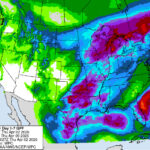
Indiana saw a lot of precipitation in the early part of this past week, with rainfall totals of 0.5” or more in northern and far southwestern counties and more than 5” in south-central Indiana. In fact, an observer just south of Bedford, IN, reported a combined total of 5.80”! Figure 1 shows the 2-day total…Read more about An Impressive Amount of Rain[Read More]
Climate and Weather
Soil temperatures are often a guide for various timing decisions in agriculture. In the spring, once soil temperature (often at 4” depths) is sustained above a particular threshold (e.g., 50°F), field preparations and planting can progress, for example. Temperatures may also relate to pest and weed emergence. The Midwestern Regional Climate Center, in partnership with…Read more about A Look at Soil temperature Climatology[Read More]
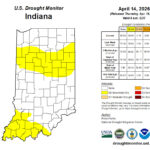
Indiana has exceeded its previous maximum duration record of 46 weeks in drought (since May 20, 2025) since the U.S. Drought Monitor (USDM) began in 2000. The previous record was 44 consecutive weeks. This was a bit of a surprise when I saw it, since it includes the 2012 drought and multiple other drought periods…Read more about An Impressive Amount of Rain[Read More]
The Midwestern Regional Climate Center (MRCC) has launched a new version of cli-MATE, its main online portal for United States climate data, analyses, statistics, maps, graphics, and other information. For over 40 years, MRCC has provided climate data to the public—initially through printed reports and later digitally as web access grew. The latest redesign of…Read more about Explore the New cli-MATE: Your self-service portal to U.S. climate data, maps, and more[Read More]
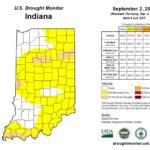
If you have any stakes in agriculture, you may have noticed a fairly rapid drying trend as summer has come to a close. According to the U.S. Drought Monitor on September 2, 76 percent of Indiana is considered abnormally dry—up from just 26 percent one week earlier. Moderate drought conditions have also expanded from less…Read more about Abnormally Dry and Drought Conditions Are On The Rise[Read More]

With brute and sudden force, the atmosphere is doing its job: acting like a fluid. Weather is not a precise science, which means the atmosphere is constantly shifting. There tends to be some sort of pattern shift come mid-late August, and it looks like it’s just about here. Temperatures are on their way down, as…Read more about Super cool & super dry for August’s end: How the weather tables have turned[Read More]

Press release originally published HERE WEST LAFAYETTE, Ind. — The Midwestern Regional Climate Center (MRCC), with support from the United Soybean Board, has launched the Ag Climate Dashboard — a centralized digital hub offering streamlined access to integrated climate and agricultural data and decision-support tools for producers, advisors and researchers in the Midwest. Designed to support on-farm decision-making, the Ag…Read more about New Ag Climate Dashboard Makes Climate Resources More Accessible for Midwest Farmers[Read More]

The heat and humidity have returned to the state, as heat indices soared above 100°F on Wednesday and Thursday (July 23-24) this week. The National Weather Service issued heat advisories that spanned from northeast Texas to northeast Ohio on July 24. Over the last 7-day period (July 16-22), average temperatures ranged from near normal in…Read more about Hot and Humid Weather Persists, but a Cool Down is Expected During the First Week of August[Read More]

One heat wave down, more to come. It is summer, though, so aside from expecting plenty of hot days, the primary concern is that reference (or potential) evapotranspiration (ET) significantly exceeds precipitation, which would ultimately lead to drought-related impacts. The National Weather Service provides a 7-day forecast reference ET product as well as a 7-day…Read more about More Heat on the Way[Read More]

Calling all corn and soybean producers and agricultural advisers! The United Soybean Board (USB), in partnership with the Midwestern Regional Climate Center (MRCC), Iowa State Extension, Iowa Department of Agriculture & Land Stewardship, and the Iowa Soybean Association, invites you to a virtual workshop informing the future of the MRCC’s Ag Climate Dashboard and new…Read more about July 16: Get Paid for Your Opinions About Ag Climate Data[Read More]