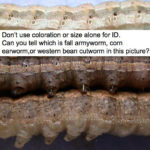
Several caterpillars in the ear can be very similar in appearance and habits, so identification to species of some of the worms in ears can be tricky. Note that, in general, you cannot use overall body color or damage for identification. Some identification tips, though not foolproof, appear below for the corn earworm, western bean…Read more about Know Your Worms in the Ear[Read More]
Insect and Mite Management
It’s not uncommon for us to get calls from growers who are expressing concern about a particular insecticide product that is not working as well as the growers would like. Often, growers will suggest that Product X is no good or that the target insect has now developed resistance to that particular insecticide. Before we…Read more about Why Your Insecticide May Not Be Working as Well as You Would Like[Read More]
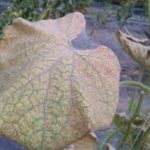
Despite the wet start to the summer that we are experiencing, we have some growers reporting spider mites in field watermelons (Figure 1). This pest is typically associated with hot, dry weather and can be especially problematic in crops grown under protection, such as in high tunnels. Spider mites often move into a field from…Read more about Spider Mites on Cucurbit Crops[Read More]

Bacterial wilt is one of the most destructive diseases in high tunnel cucumber production. The reason bacterial wilt is so important is because, like other wilt diseases, it ties up with the entire vascular system of a plant, causing systemic effects (Figure 1). The relatively less important roles that other cucumber diseases play also make…Read more about Bacterial Wilt of Cucumbers Grown in a High Tunnel[Read More]
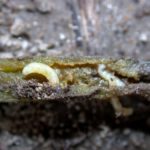
Three species of seed and root maggots attack vegetables in Indiana. The seedcorn maggot feeds on seeds and seedlings of sweet corn, cucurbits, lima and snap beans, peas, and other crops. Cabbage maggots can cause serious damage to transplants of cabbage, broccoli, cauliflower, and Brussels sprouts and make the fleshy roots of radishes, turnips, and…Read more about Seed and Root Maggots[Read More]
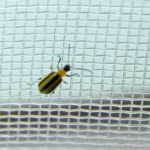
One of the most problematic insect pests that organic vegetable growers have to deal with is the striped cucumber beetle. The insect feeds on all the cucurbit crops, but can be particularly devastating to muskmelons and cucumbers because those two crops are susceptible to bacterial wilt of cucurbits, which is caused by a bacterium carried…Read more about Organic Control Methods for Striped Cucumber Beetles[Read More]
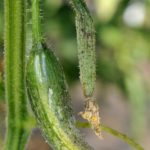
It’s that time of year, where we are prepping high tunnels and getting back into the full swing of production, slowly, here in the Midwest. Many of you have already begun to transplant and may have encountered your first pests on these new crops. Aphids are one that remain a problem in high tunnels, and…Read more about Aphids in High Tunnels[Read More]
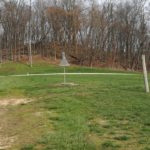
One way insects communicate with individuals of the same species is with pheromones. Pheromones are volatile chemicals released by an insect that usually can be detected only by individuals of the same species. There are a number of different types of pheromones, but the most common type is the sex pheromone. Usually the females will…Read more about Pheromones and Pheromone Traps[Read More]
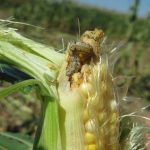
Now is a good time to begin your plans for managing corn earworms (Figure 1) in your sweet corn. Below are several tips that will help you in this process: Make sure you have a corn earworm pheromone trap and earworm pheromones. See the article below for details. Consider planting Bt sweet corn, especially for…Read more about Corn Earworm[Read More]
Populations of earworms, as evidenced by pheromone trap catches, have not gone to zero as the often due in July. Catches have been fairly low, but moths are still flying and presumably laying eggs. The good news is that in most areas, dent corn is silking, which attracts most of the moths away from our…Read more about Corn Earworms[Read More]