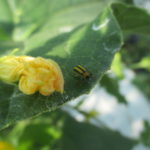
Populations of the overwintering generation of striped cucumber beetles are just about at their peak levels right now (Figure 1.). For muskmelons and cucumbers, this generation is the one that we worry the most about in terms of transmitting the pathogen that causes bacterial wilt. As a result, our spray threshold is relatively low, 1…Read more about Striped Cucumber Beetles[Read More]
Insect and Mite Management
One of the most damaging pests in cucurbit production are cucumber beetles and the bacterial pathogen they transmit (Erwinia trachephila), leading to bacterial wilt. In the recently released video, Dr. Laura Ingwell from Purdue Entomology demonstrates how to install insect exclusion screens on high tunnels. Such screens are effective at excluding cucumber beetles and the pathogen…Read more about Video—Installing High Tunnel Insect Exclusion Screen[Read More]
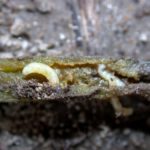
I received my first report of seedcorn maggot damage on cantaloupes last week (Figure 1 and 2). A grower in northern Indiana reported losing 90-95% of his plants. Given the cool, wet growing conditions, it wouldn’t be surprising to see more reports of this type for a number of crops, including melons, beans, corn, onions,…Read more about Seed and Root Maggots[Read More]
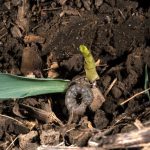
We have had substantial black cutworm moth (Figure 1.) catches in our pheromone traps. Black cutworm moths typically lay their eggs on winter annual weeds growing in un-tilled fields. When the eggs hatch, the larvae will begin feeding on the weeds. Then, when you kill the weeds with either tillage or a burndown herbicide, the…Read more about Black Cutworm[Read More]
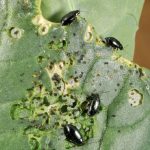
Many of our vegetable crops are attacked by one or more species of flea beetles (Figure 1). All species do similar types of damage, chewing small holes in the leaves. Damage is most important on young plants or transplants, so growers should watch young plants carefully. Fortunately, flea beetles are easy to control. Sevin®, the…Read more about Flea Beetles[Read More]
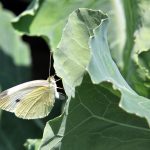
Crucifers such as cabbage, cauliflower, and broccoli are frequently attacked by a variety of caterpillars, with the most important being the imported cabbageworm, diamondback moth, and cabbage looper. The first caterpillar pest to attack crucifers is the imported cabbageworm. The adult stage is the common white butterfly that you will see flying around your field…Read more about Cabbage Caterpillars[Read More]
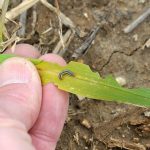
We have had major flights of armyworm moths (Figure 1.), as evidenced by pheromone trap catches. Catches have been highest in the northeastern portion of the state. Armyworms prefer grasses but will feed on other crops if necessary. During outbreak years, the infestation usually will start in pastures or other grassy areas. Once the armyworms…Read more about Armyworms[Read More]
One way insects communicate with individuals of the same species is with pheromones. Pheromones are volatile chemicals released by an insect that usually can be detected only by individuals of the same species. There are a number of different types of pheromones, but the most common type is the sex pheromone. Usually the females will…Read more about Pheromones and Pheromone Traps[Read More]

Screening can be an effective measure to exclude unwanted pests from colonizing your crops. In high tunnels, one of the biggest challenges to successfully implementing exclusion screening is managing the unintended side effect: reduced airflow. In spring we are clamoring to get inside the warmth that high tunnels provide, but by mid-summer they can become…Read more about High Tunnel Screening for Insect Pest Management[Read More]
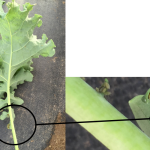
Aphids can be one of the most damaging and hard to control pests during the winter months in high tunnels. The first step to managing aphids is to develop a scouting plan. Aphids reproduce clonally and develop quickly leading to very large population build-up in a short period of time. Therefore scouting is recommended at…Read more about Aphid Management in Winter Green Production in High Tunnels[Read More]