Corn earworm flights are quite variable around the state, but are generally heavy. Counts in pheromone traps are higher in the northern part of the state, with the LaPorte County trap reporting 1422 moths over a 7 day period last week. That’s about 20 X the threshold level. As I wrote in the last newsletter,…Read more about Corn Earworms[Read More]
Insect and Mite Management
After a season of relatively low corn earworm activity, pheromone trap catches have taken a dramatic turn upward, especially in the northern half of the state. Catches of 100-200 moths per night in the trap are not uncommon currently. Keep in mind that the threshold for treatment is 10 moths per night, so these catches…Read more about Corn Earworm[Read More]
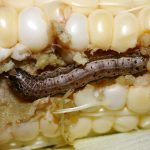
Fall armyworms (Figure 1) are only able to survive the winter in extreme southern US, along the Gulf Coast and in Florida. Fall armyworms tend to migrate northward gradually, with each successive generation moving several hundred miles further north. They reach Indiana every year, but their populations are unpredictable in numbers and location. This week…Read more about Fall Armyworms[Read More]
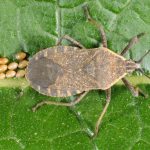
Squash bug is the most consistent insect pest of squash and pumpkins and is the most difficult to control. The key to management is early detection and control of the nymphs. The adults are extremely difficult to kill (Figure 1). Foliar insecticides should be applied to control the nymphs (Figure 2) when you have more…Read more about Squash Bugs[Read More]

Hornworms can be pests of tomato and pepper in field grown crops, but for some reason seem to be particularly severe in high tunnels. Hornworms are very large caterpillars, measuring up to 4 inches long (Figure 1), and they can consume large quantities of foliage and will also feed on green fruit (Figure 2). In…Read more about Hornworms[Read More]
Pheromone trap catches of corn earworms have been relatively low in most areas of the state, with northern Indiana having the highest counts. Counts from the Purdue research farms can be seen at https://extension.entm.purdue.edu/cornearworm/index.php. Remember that as the field corn surrounding your sweet corn begins to silk and be attractive to the earworm moths for…Read more about Corn Earworm[Read More]
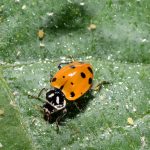
Supplementing the natural enemy population to control insect pests, i.e. augmentation biological control, is of interest to many high tunnel producers. Augmentation biological control has proven very effective at managing a number of greenhouse pests and there are a variety of commercial suppliers. For high tunnels, the greatest challenge is keeping the released predators or…Read more about Augmentation Biological Control in High Tunnels[Read More]
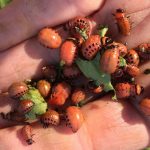
Last week we had a report of an infestation of Colorado potato beetle larvae on tomatoes in a high tunnel (Figure 1). Potato beetles are a pest of most of the solanaceous crops (potato, tomato, eggplant, pepper), but they rarely become a serious problem on tomato in Indiana. In addition, we have not seen them in…Read more about Colorado Potato Beetles on High Tunnel Tomatoes[Read More]
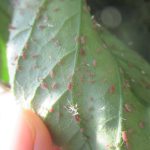
We have begun to receive the first reports of aphid outbreaks in high tunnels on tomato, pepper, and cucumber (Figure 1). Aphids are a very common problem in high tunnels because the covering excludes rainfall, which is a major mortality factor for small insects like aphids. Some growers are interested in using biological control in…Read more about Aphids in High Tunnels[Read More]
I continue to catch low numbers of corn earworm moths in my pheromone trap. Although the numbers are low, growers with very early sweet corn that is in the reproductive stage should be alert for potential damage. The threshold for spraying sweet corn that matures prior to field corn silking is only one moth per…Read more about Corn Earworm[Read More]