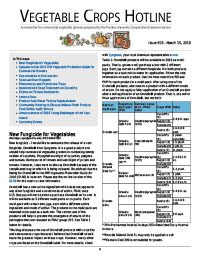
New fungicide – I would like to announce the release of a new fungicide, Orondis® from Syngenta. It is a good product and should help commercial vegetable growers in combating downy mildew of cucurbits, Phytophthora blight of cucurbits, peppers and tomato, Buckeye rot of tomato and late blight of potato and tomato. However, I also want to…Read more about New Fungicide for Vegetables[Read More]
Updates to the MW Vegetable Production Guide for Commercial Growers 2016 (ID-56)-The table below gives the changes that have been made to the on-line version of the ID-56 as of this date. If you have purchased, or will purchase, a hard copy of this guide, please make these changes. If you use the ID-56, these…Read more about Updates to the 2016 MW Vegetable Production Guide for Commercial Growers[Read More]
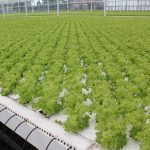
Travelling through Indiana last summer, I realized that many growers plant their crops in soil inside their high tunnels or greenhouses. Soilless production offers different benefits and challenges. This is the first article in a series focusing on soilless crop production in high tunnels and greenhouses. Today we are discussing Hydroponics. What is Hydroponics? The…Read more about Opportunities in Hydroponics[Read More]
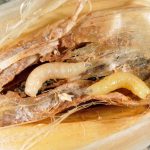
Three species of seed and root maggots attack vegetables in Indiana. The seedcorn maggot (Figure 1) feeds on seeds and seedlings of sweetcorn, cucurbits, lima and snap beans, peas, and other crops. Cabbage maggots can cause serious damage to transplants of cabbage, broccoli, cauliflower, and Brussels sprouts and make the fleshy roots of radishes, turnips,…Read more about Seed and Root Maggots[Read More]
One way insects communicate with individuals of the same species is with pheromones. Pheromones are volatile chemicals released by an insect that usually can be detected only by individuals of the same species. There are a number of different types of pheromones, but the most common type is the sex pheromone. Usually the females will…Read more about Pheromones and Pheromone Traps[Read More]
In recent years, many seed companies have begun using the neonicotinoid insecticide thiamethoxam (FarMore) as a seed treatment on cucurbit and other vegetable seeds. Thiamethoxam is a systemic insecticide that moves from the seed coat into the seedling and then moves throughout the plant. Research has shown that these seed treatments provide about 3 weeks…Read more about Neonicotinoid Seed Treatment on Cucurbits[Read More]
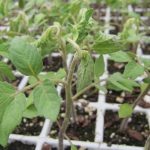
Tomatoes grown in controlled environment are exposed to conditions that are different from their original habitats. As a result, varieties that are not specifically bred for greenhouse production may respond to the controlled environment with abnormal symptoms. One group of the symptoms is called edema. Bumps, galls or blisters develop on tomato leaves, petioles or…Read more about Edema on Tomato Rootstocks[Read More]
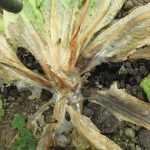
Cool season crops such as lettuce are becoming a more popular crop among Indiana greenhouse/high tunnel growers. One of the most important diseases of lettuce is known as lettuce drop. The symptoms of lettuce drop are often noticed after the thinning stage, early in the crop development. The early symptoms may include browning of leaves. Later…Read more about Lettuce Drop[Read More]
In January 2016, Standards for the Growing, Harvesting, Packing, and Holding of Produce for Human Consumption, otherwise known as the Produce Rule, became law. This rule, as part of the Food Safety and Modernization Act, sets a standard for produce food safety. Not all growers are covered by the rule. An excellent flowchart to help determine coverage…Read more about Produce Rule Water Testing Requirements[Read More]
Fruit and vegetable farmers, wholesale produce buyers, agency personnel, and others are invited to attend a Community Meeting to discuss the potential development of an Indiana Fresh Produce Food Safety Audit Service. This community event is a critical component of a study being conducted by New Venture Advisors and Liz Maynard to assess whether or not an…Read more about Community Meeting to Discuss Indiana Fresh Produce Food Safety Audit Service[Read More]
Purdue University prohibits discrimination against any member of the University community on the basis of race, religion, color, sex, age, national origin or ancestry, genetic information, marital status, parental status, sexual orientation, gender identity and expression, disability, or status as a veteran. This material may be available in alternative formats. 1-888-EXT-INFO Disclaimer: Reference to products in this publication is not intended to be an endorsement to the exclusion of others which may have similar uses. Any person using products listed in this publication assumes full responsibility for their use in accordance with current directions of the manufacturer.