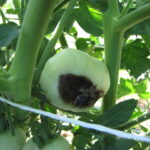
Tomatoes need a consistent water supply when they start to bloom and set fruit. As plants grow more foliage and have more fruits set, their water needs increase. As a result, the irrigation amount must steadily increase to maintain the consistent soil water content and the water supply to the plants. What would happen if…Read more about Tomatoes Need a Consistent Water Supply[Read More]
Irrigation
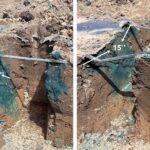
We discussed wetting patterns in drip irrigation in a previous article. The take home message is drip irrigation applies water to only a portion of the soil. Uneven water distribution in the soil profile is not a problem as long as enough water is applied to the crop. However, the water wetting pattern might influence…Read more about Water Affects Efficacy of Soil-Incorporated Fertilizers and Amendments[Read More]
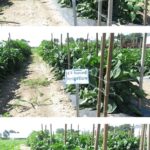
At Pinney Purdue (PPAC) bell peppers were harvested for the first time on August 15. Plants appear a little larger in the irrigated plots than in the unirrigated plots, but it is not obvious in photographs (Figure 1). Similar to what was observed at SWPAC, blossom end rot (BER) was much more common in the…Read more about Irrigation Demonstration Update July Aug. 24, 2022, Pinney Purdue Ag Center.[Read More]
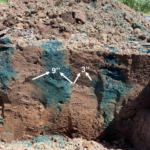
A major difference between drip irrigation and other irrigation methods is that drip irrigation applies water to only a portion of the soil. This works great for vegetables grown on the plastic mulch, since no irrigation water is applied between the row middles; water applied to row middles encourages weed growth. So, does the soil…Read more about Understanding Wetting Patterns in Drip Irrigation[Read More]

At Pinney Purdue (PPAC) 2.67 inches of rain fell July 27 through August 9. The potential evapotranspiration (PET) over the period was 1.68 inches. Estimates for water use by the crops are equal to or just slightly lower than potential evapotranspiration. For tomatoes, estimated water use was 1.68 inches, and for watermelons, 1.52 inches. There…Read more about Irrigation Demonstration Update Aug 9, 2022, Pinney Purdue Ag Center[Read More]
At Pinney Purdue (PPAC) 2.19 inches of rain fell July 12 through July 26. The potential evapotranspiration (PET) over the period was 2.67 inches. Estimates for water use by the crops are somewhat lower than potential evapotranspiration. For tomatoes, estimated water use was 2.03 inches, and for watermelons, 1.54 inches. Dry periods between heavy rains…Read more about Irrigation Demonstration Update July 27, 2022, Pinney Purdue Ag Center[Read More]
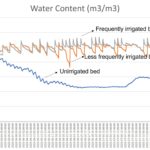
At Southwest Purdue Ag Center (SWPAC), more than 10 inches of rain fell since July 7; over 8 inches happened since the evening of July 24. Soil water content on the unirrigated tomato/pepper/eggplant bed (12’’ under plastic mulch) increased from 10% (early July) to about 15% after 3 inches of rain on July 7-9. The…Read more about Irrigation Demonstration Update July 27, 2022 Southwest Purdue Ag Center[Read More]
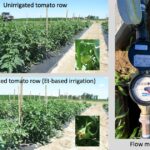
At Pinney Purdue (PPAC) 1.66 inches of rain fell June 25 through July 11. The potential evapotranspiration (PET) over the period was 2.79 inches. Estimates for water use by the crops are lower than potential evapotranspiration because it is only 5 weeks after transplanting. For tomatoes, estimated water use was 2.01 inches, and for watermelons,…Read more about Irrigation Demonstration Update — PPAC July 11[Read More]
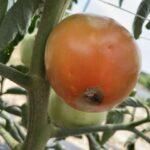
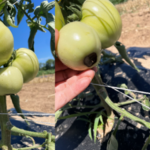
After planting on May 16, we only received 1.4 inches of rain in June. The early-setting tomatoes on plants grown on the unirrigated bed had more than 40% fruit blossom end rot (BER) (recorded on June 23). It was 3% on plants grown in a bed that received 17 irrigation events in June and 10%…Read more about Irrigation Demonstration Update — SWPAC July 13[Read More]
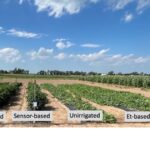
At Southwest Purdue Ag Center (SWPAC) and Pinney Purdue Ag Center (PPAC), we demonstrate irrigation impacts on several fruiting vegetable crops. Tomato, pepper, eggplant, watermelon, and cantaloupe are planted on plastic-covered beds with drip tapes. They grow on beds side-by-side with and without irrigation. We used two approaches to schedule irrigation, one bed is irrigated based on…Read more about Irrigation Demonstration Update June 25[Read More]