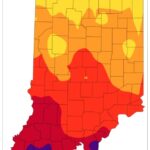
After another wet weekend and cooler temperatures to start this week, it may be surprising to hear that conditions will be changing back to warm and dry for the next several weeks. Climate models are strongly favoring above-normal temperature throughout the rest of September with a slight favoring of below-normal precipitation. Abnormally dry conditions continue…Read more about Warm, Dry Conditions Ahead[Read More]
Beth Hall

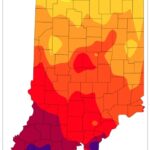
Rainfall over the past few weeks has helped to improve drought conditions across much of Indiana. Northeastern and southwestern Indiana have benefited the most, removing previous Abnormally Dry or Moderate Drought status from the U.S. Drought Monitor (USDM; Figure 1). Unfortunately, west-central Indiana and near the greater Cincinnati area have been missing out from most…Read more about Drought Improving … for now[Read More]
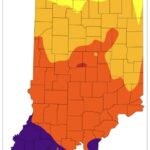
The most recent U.S. Drought Monitor now has over 87 percent of Indiana in some level of dryness and/or drought (Figure 1). The rate this coverage has both expanded and intensified is impressive. Since at least 2012, drought specialists and climatologists have been studying “flash drought” including how to define it and therefore identify it….Read more about Is Indiana Experiencing a Flash Drought?[Read More]
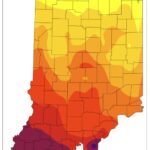
This week has made me long for the time when I lived in Reno, Nevada. Further north and higher in elevation than Las Vegas, the climate was absolutely beautiful – particularly if you are not into green vegetation, bugs, and drink coasters. Reno was never quite as hot as Las Vegas, but still had the…Read more about Heat Wave and Mugginess[Read More]
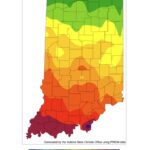
June 1st marked the beginning of meteorological summer (i.e., June, July, and August). Time between sunrise and sunset is still increasing, temperatures are increasing, and vegetation is growing. How did this past spring compare to climatology and what is expected over the next several months? Let us start with May’s climatology. May’s average temperature across…Read more about Meteorological Summer Begins[Read More]
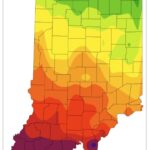
Indiana has been receiving less precipitation than normal, particularly over the last 30 days (Figure 1). In fact, southern Indiana has only received 25%-50% of the precipitation amounts it normally sees during this period. One would think this would mean “Abnormally Dry (D0)” if not “Moderate Drought (D1)” classifications for the U.S. Drought Monitor. However,…Read more about Too Dry or Too Wet?[Read More]
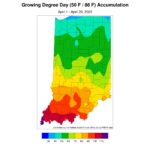
On the third Thursday of every month, the national Climate Prediction Center releases their 3-month climate outlook for temperature and precipitation. These outlooks are presented as the level of confidence (i.e., probability of occurrence) for conditions to be above or below normal. Since last fall, these outlooks have been consistently favoring above-normal temperatures and precipitation…Read more about Cool and Wet Conditions now Predicted Over the Next Few Months[Read More]
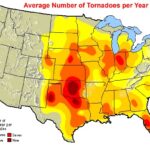
Indiana’s been seeing a lot of rain lately, while avoiding severe weather such as hail, tornadoes, and strong winds. Will this mild pattern continue, or could things shift soon? The southern states along the Gulf coast have been experience what has seemed like non-stop severe weather with tornado watches (if not warnings) becoming almost a…Read more about Severe Weather Season Yet to Get Started[Read More]
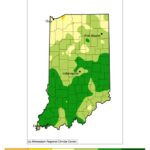
This past winter has been mild across Indiana. With the second La Niña winter in a row, there were expectations that the season would start of mild with some hope that winter would come back fiercely in February and March. While most of the season’s snowfall happened in February, it still was not enough to…Read more about La Niña Sticking Around Longer than Expected[Read More]
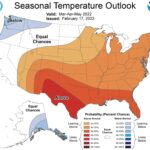
February has brought all kinds of precipitation to the state and now conditions are muddy if not flooded. Will this continue? The national Climate Prediction Center just released their 1-month and 3-month climate outlooks for March and March-May periods, respectively. Both are conveying the same story, which is heavily influenced by our ongoing La Niña…Read more about Above-normal Precipitation and Temperature Expected into Spring[Read More]