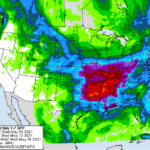
It seems the weather pattern may have shifted toward wetter conditions. Over the past week, Indiana has received over an inch of rain and the 7-day forecast is predicting at least another inch (Figure 1) in the central and southern parts of the state. The northern counties of Indiana, that have been in the Abnormally…Read more about More Observers Needed to Monitor Precipitation Across Indiana[Read More]
Beth Hall

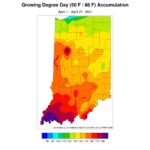
This week, much of Indiana got to see some snow falling as we were hoping that winter weather was behind us. It is not unusual for some to ask when this sort of event happens how “global warming” could be real when things are feeling so cold. The start of my answer is pointing out…Read more about Does Snow in April Mean Global Warming is not Happening?[Read More]
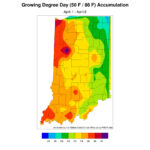
March wrapped up as one of Indiana’s wettest (44th wettest out of 126 years) and warmest (16th warmest). It was marked by unusually warm days and then cool days. Was it ever just average? Certainly, most days fell within the climatological range of temperatures. Precipitation seemed to be partial to the southern part of the…Read more about April Showers or Lingering Drought?[Read More]

The rain events northern Indiana saw last week may be the last significant precipitation seen in Indiana for the next several weeks. The US Drought Monitor has already place most of the state in abnormally dry to moderate drought conditions and there doesn’t seem to be much relief in sight. South-central Indiana’s precipitation amounts so…Read more about Dry Conditions Expected for the Rest of September[Read More]
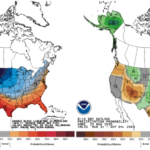
After the last several weeks of predominantly dry conditions, the national climate outlooks are finally showing confidence that temperatures should start shifting to cooler than normal and precipitation will be wetter than normal (Figure 1). Hurricane Laura will definitely help the precipitation side of that prediction with current tracks having the strongest rainfall amounts in…Read more about Cooler, Wetter Conditions Expected Over Next Several Weeks[Read More]
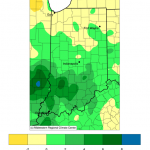
Rain moved across Indiana earlier this week, bringing much-needed precipitation to the northern counties. Unfortunately, the 30-day rainfall totals are still up to two inches below normal (Figure 1). The southern and southwestern counties are well above normal and could likely use a break for the next few days! Good news for those tiring of…Read more about Monitoring Potential Evapotranspiration Across Indiana[Read More]
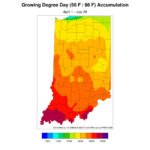
On July 16th, the national Climate Prediction Center released the climate outlooks for August (Figure 1) and the August-September-October (Figure 2) period. Both outlooks are indicating a significant probability for above-normal temperatures. Precipitation is likely to be above normal for the southern two-thirds of Indiana in August, but there is little-to-no guidance for the 3-month,…Read more about Indiana Climate and Weather Outlook[Read More]
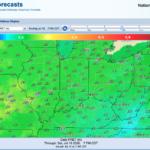
The past 30 days have been met with warmer than normal temperatures in the northern counties and drier than normal conditions throughout most of the state (Figures 1 and 2). This warm and dry environment is conducive to developing drought – particularly with the increased evapotranspiration rates. While climate outlooks are calling for increased confidence…Read more about Reference Evapotranspiration Forecasts across Indiana[Read More]
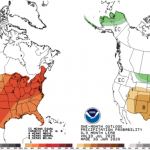
The roller coaster ride of Indiana weather continues. Things were drying out across the state with signs of browning lawns, rolling vegetation leaves, and lowering pond and stream levels. Then the rains came. Most of the state received between 2 and 3 inches of precipitation from June 20 through 29th – with wetter areas to…Read more about Outlooks Showing Confidence for Below-normal Precipitation[Read More]
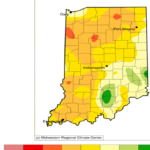
Indiana has been very dry the last several weeks (Figure 1) and conditions are starting to show in lawns and fields. This dryness has been exacerbated by low humidity and warmer temperatures (Figure 2). After a nice respite this past weekend, temperatures will start rising again into the weekend, but may not seem too uncomfortable…Read more about Warm, Dry Weather Causing Abnormally Dry Conditions Across Indiana[Read More]