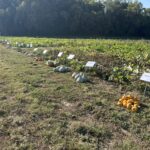
This article provides a summary of information provided by Purdue Extension specialists at the 2025 Southwest Purdue Agricultural Center (SWPAC) Pumpkin Field Day. Diverse Pumpkin and Winter Squashes Dr. Liz Maynard gave a presentation on the diversity of pumpkins and winter squashes, covering different market types, their botanical classifications, maturity indicators, and storage life. Dr….Read more about 2025 SWPAC Pumpkin Field Day Recap[Read More]
Cesar Escalante

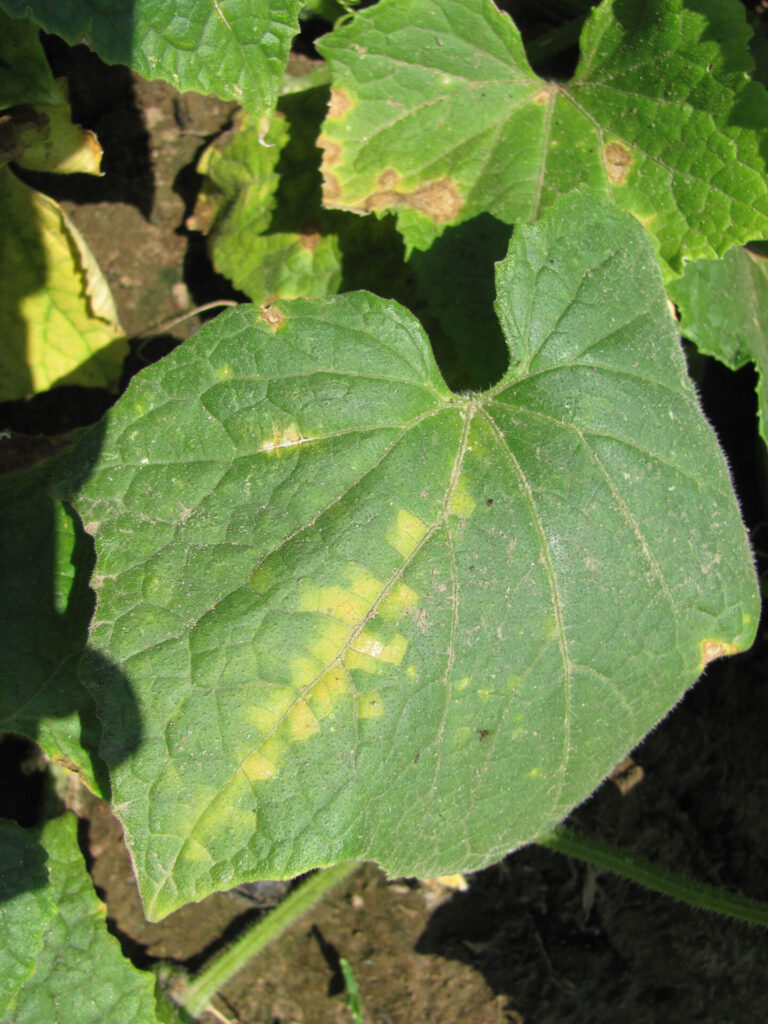
Last week, cucurbit downy mildew (Pseudoperonospora cubensis) was reported on cucumber in southwest Kentucky and northern Ohio. Last month, the disease was also reported in cucumber crops in Michigan. Being that close to Indiana, it is a good time to stay alert and scout fields for symptoms related to this disease. Remember, early detection of…Read more about Downy Mildew Confirmed in States Surrounding Indiana[Read More]
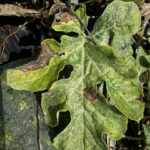
Multiple foliar pathogens (some of which are also major problems for fruits) are appearing in watermelon and cantaloupe crops. It is time to continue or begin fungicide applications to prevent diseases such as gummy stem blight (Figure 1), anthracnose (Figure 2), and Phytophthora blight. During recent field visits, I have observed gummy stem blight and…Read more about Disease Watch: Gummy Stem Blight, Anthracnose, and Phytophthora in Cucurbits[Read More]
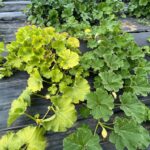
Introduction Cucurbit yellow vine disease (CYVD) is an emergent disease in the United States caused by the bacterium Serratia ureilytica, and it commonly affects zucchini, squash, watermelon, and melons. The pathogen that causes CYVD is transmitted by the squash bug (Anasa tristis, Figure 1), and other potential vectors include the striped cucumber beetle (Acalymma vittatum)…Read more about Pathogen Spotlight: Serratia ureilytica Causing Cucurbit Yellow Vine Disease[Read More]
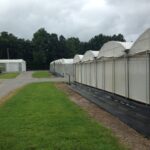
Many of you are getting ready to start planting your seeds in the greenhouse, especially if you are planning to transplant. Regardless of the time you start or the type of crop you are planting, it is important to ensure that you have clean and disinfected areas in your greenhouse to prevent disease infections and…Read more about Cleaning and Disinfesting Your Greenhouse Before Planting[Read More]
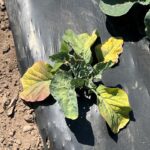
Pathogen and symptoms Wirestem is a disease of cole crops (e.g., broccoli, cauliflower, and cabbage) caused by the soilborne fungus Rhizoctonia solani. This summer, cole growers from the state’s northern region reported that their crops were affected by poorly developed root systems. Upon examination, the plants showed brown stems (figure 1) and narrow roots with…Read more about Management of Wirestem of Cole Crops[Read More]
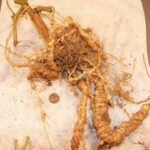
Root-knot nematode (RKN, Meloidogyne spp.) is a major problem in cucurbits such as watermelon, cantaloupe, cucumber, pumpkin, and squash. The reason RKN is problematic lies in their ability to persist for long periods in the soil and their wide host range, which includes more than 2,000 plant species, including crops and weeds. RKN infestations are…Read more about Battling Root-knot Nematodes In Commercial Cucurbit Crops[Read More]
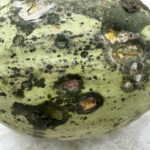
Bacterial fruit blotch (BFB) is a disease caused by the pathogen Acidovorax avenae subsp. citrulli. Most cucurbit crops are affected by this disease, although watermelon cultivars are commonly more susceptible. However, this summer, I received cantaloupe samples (Figures 1 and 2) that tested positive for BFB using serological tests. When environmental conditions are conducive,…Read more about Bacterial Fruit Blotch On Cucurbits[Read More]