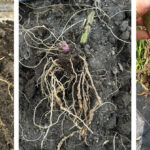
It is time to remove tomato plants from high tunnels. By season’s end, plants often harbor pathogens and insect pests, and removing crop residues can reduce carryover into the next growing season. We remember to remove leaves, stems, and fruit, but often overlook the roots. Roots can harbor several hiding pathogens and pests, including one…Read more about High Tunnel Tomato Production: Dig Out Tomato Roots and Check Root-Knot Nematode Galling at the End of the Season[Read More]
Lei Zhang

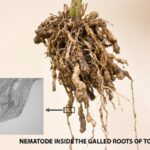
Root-knot nematodes (RKN, Meloidogyne spp.) are among the most damaging plant-parasitic nematodes in vegetable production systems. Infective juveniles hatch from eggs in the soil, find and penetrate host plant roots. They migrate to the vascular tissue, where they establish specialized feeding sites, develop into adults, and reproduce by laying eggs on the surface of roots….Read more about Root-knot Nematodes and Their Populations Identified in Indiana[Read More]

Plant-Parasitic Nematodes Plant-parasitic nematodes (PPN) are a group of microscopic, worm-like organisms that live in soil or plant tissues and cause damage to crop production. While some species infect aboveground plant parts such as leaves and stems, those of greatest concern across a wide range of vegetables are soil-dwelling species that feed on plant roots….Read more about Understanding Nematodes in Soils of Diversified Vegetable Farms in Indiana[Read More]
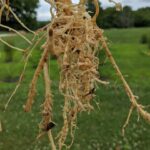
Root-knot nematodes cause severe damage in vegetable production. Its infection results in root swellings called galls that interrupt plant water and nutrient uptake (Figure 1). Aboveground, plants show symptoms that include stunted growth, wilting, and leaf yellowing. In addition to root-knot nematodes, several other plant parasitic nematodes can cause damage to vegetable roots. Damage to…Read more about Plant Parasitic Nematodes Survey in Indiana[Read More]