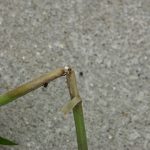
In early March, I observed white mold of recently transplanted tomato plants in a greenhouse situation. I have described the symptoms, biology and management of white mold at https://ag.purdue.edu/arp/swpap/VeggieDiseasesBlog/Lists/Posts/Post.aspx?ID=18 . I have never observed white mold (a.k.a, timber rot) in February before. I have observed white mold of tomato transplants in April. However, the very…Read more about White Mold of Tomatoes Observed in Greenhouse[Read More]
One way insects communicate with individuals of the same species is with pheromones. Pheromones are volatile chemicals released by an insect that usually can be detected only by individuals of the same species. There are a number of different types of pheromones, but the most common type is the sex pheromone. Usually the females will…Read more about Pheromones and Pheromone Traps[Read More]
Three species of seed and root maggots attack vegetables in Indiana. The seedcorn maggot feeds on seeds and seedlings of sweet corn, cucurbits, lima and snap beans, peas, and other crops. Cabbage maggots can cause serious damage to transplants of cabbage, broccoli, cauliflower, and Brussels sprouts and make the fleshy roots of radishes, turnips, and…Read more about Seed and Root Maggots[Read More]
I’m trying something new this year. I plan to tweet out what I am seeing as far as insects in fruit and vegetables as I see it, rather than waiting for the next edition of the newsletters to come out. My twitter address is “Rick Foster @PurdueFVInsect”. If you currently have a twitter account, please…Read more about Follow Me on Twitter[Read More]
Bacterial spot of tomato is one of the most serious diseases facing tomato growers in Indiana. As described at Vegetable Diseases in Greenhouses (PDF), bacterial spot is more of a problem for field tomatoes than for greenhouse tomatoes. Symptoms and management of bacterial spot are described briefly at Bacterial Spot of Tomato and Pepper (PDF). A more detailed…Read more about An Update on the Use of Copper Products for Managing Bacterial Spot of Tomato[Read More]
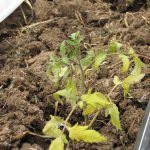
Sometimes newly transplanted crops don’t take off like we’d expect. Consider the newly transplanted tomato seedlings in these images. In Figure 1, lower leaves are chlorotic (yellow) and leaflet edges and leaves curl downward. In Figure 2, lower leaves are chlorotic or bleached and some had necrotic (dead) spots. In Figure 3, some leaves have…Read more about Too Much Fertilizer for Transplants?[Read More]
Two USDA grant programs may be of interest to vegetable growers or grower organizations. The Rural Energy for America Program helps growers and small rural business improve energy efficiency, or purchase or install renewable energy systems. The program includes guaranteed loan financing and grant funding. For more information see the USDA website at www.rd.usda.gov/programs-services/rural-energy-america-program-renewable-energy-systems-energy-efficiency or…Read more about Grant Programs: Rural Energy for America and Specialty Crop Block Grant[Read More]
For those who receive hard copies of the Vegetable Crops Hotline by US Mail, this will be the last issue mailed unless you have renewed your subscription for 2015. You may renew by 1) mailing subscription form included in this issue with payment, or 2) joining or renewing membership in the Indiana Vegetable Growers Association…Read more about Have You Renewed your Hard Copy Subscription yet?[Read More]
WebsitesBotany and Plant Path Extension – Vegetables ag.purdue.edu/btny/Extension/Pages/VegetablePathology.aspx Entomology Extension – Vegetables – extension.entm.purdue.edu/veg/commercial/ Food Safety for Fresh Fruits and Vegetables – ag.purdue.edu/hla/foodsafety Hort Extension – ag.purdue.edu/hla/Extension/ Plant and Pest Diagnostic Lab – www.ppdl.purdue.edu Purdue Extension – extension.purdue.edu Purdue Small Farms – ag.purdue.edu/extension/smallfarms/ TwitterHort Extension – @PurdueHortExtRick Foster – @purduefvinsectNW Commercial Hort (Liz Maynard) –…Read more about Purdue Vegetable Connections on Social Media and Online[Read More]
Good Agricultural Practices A to Z Workshops. Funded by Purdue, as part of AgSEED Crossroads funding to support Indiana’s Agriculture and Rural Development, or by USDA/ISDA Specialty Crops Block Grant to Purdue. Programs focused on cantaloupe are also relevant to other fresh fruits and vegetables; all growers are welcome to attend. Register online at tinyurl.com/RegisterGAPsAtoZ….Read more about Upcoming Events[Read More]
Purdue University prohibits discrimination against any member of the University community on the basis of race, religion, color, sex, age, national origin or ancestry, genetic information, marital status, parental status, sexual orientation, gender identity and expression, disability, or status as a veteran. This material may be available in alternative formats. 1-888-EXT-INFO Disclaimer: Reference to products in this publication is not intended to be an endorsement to the exclusion of others which may have similar uses. Any person using products listed in this publication assumes full responsibility for their use in accordance with current directions of the manufacturer.