It is time to remove tomato plants from high tunnels. By season’s end, plants often harbor pathogens and insect pests, and removing crop residues can reduce carryover into the next growing season. We remember to remove leaves, stems, and fruit, but often overlook the roots.
Roots can harbor several hiding pathogens and pests, including one of the most damaging: root-knot nematodes. In our previous soil survey, we detected root-knot nematodes in more than half of the high tunnels sampled in Indiana. Although not all infestations are severe enough to cause economic damage to tomatoes, ignoring the pest can lead to significant yield loss later.
What to Check on Tomato Roots
Look for abnormal swellings, or galls (Figure 1). These may appear as large, irregular swellings on the main roots or small, beadlike swellings on fine roots. Such symptoms can indicate root-knot nematode infection. If you are unsure whether the swellings are nematode galls, submit a picture sample or physical root sample to the Purdue Plant & Pest Diagnostic Lab for confirmation.
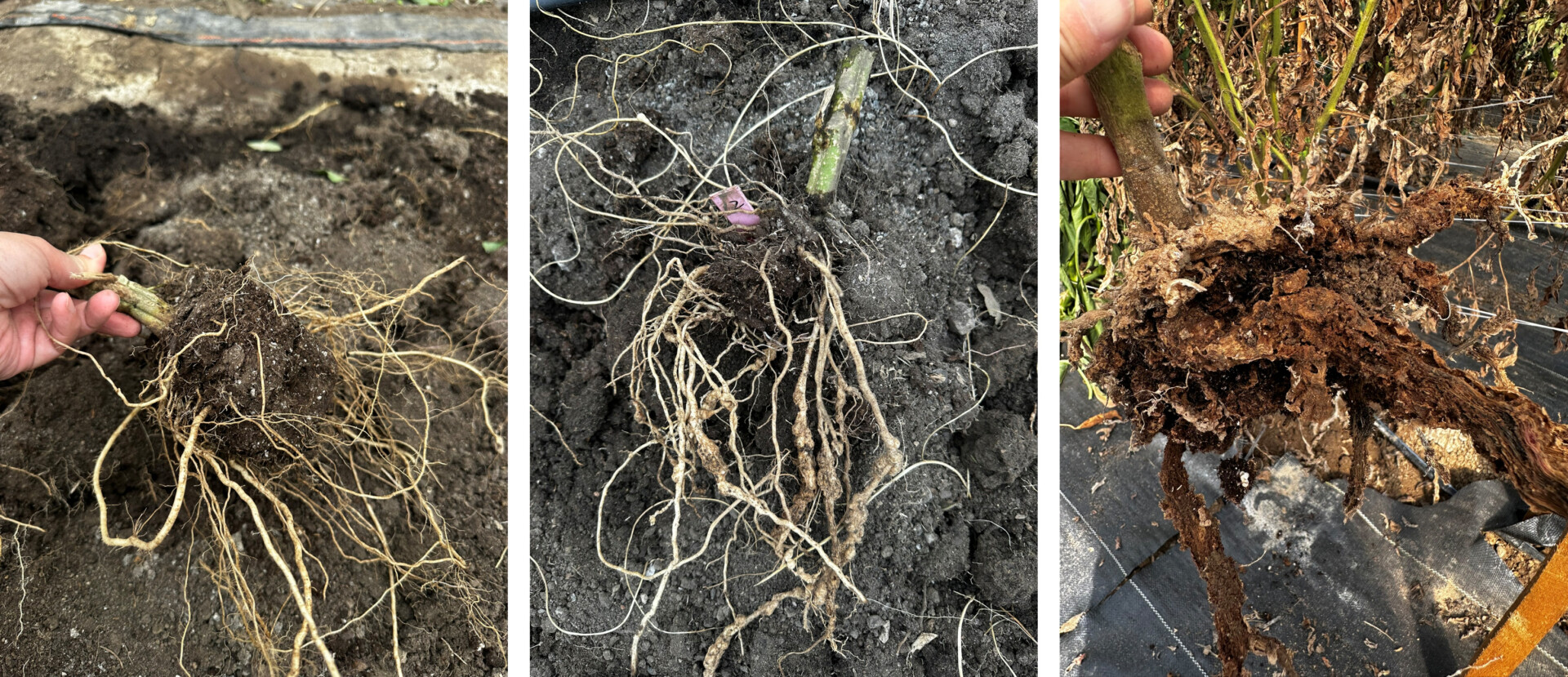
Figure 1. A healthy tomato root (left); tomato roots with root-knot nematode galling (middle); and a heavily infested tomato root beginning to decay (right) (Photo by Wenjing Guan).
Why Check Tomato Roots?
Checking tomato roots serves two purposes. First, it provides an opportunity to detect root-knot nematode infestations that might otherwise go unnoticed. Tomatoes are highly susceptible to root-knot nematodes and typically develop visible root galls when infected, making root inspection a useful detection method. You can also take soil samples and perform a plant-parasitic nematode test to detect the problem. Soil samples cannot accurately reflect root-knot nematode population levels and distribution across the entire high tunnel. Depending on where the soil was collected, results might differ dramatically, even between adjacent plants. This is because root-knot nematodes move only short distances on their own in the soil, but their populations can increase dramatically in localized areas where suitable host roots are available. The second reason to dig out tomato roots is to remove infested roots, which helps reduce nematode carryover into the next season. After tomato plants are terminated, roots may remain alive for a time and continue to support nematode reproduction. Even after the roots die, eggs attached to them can survive over the winter, hatch, and infect the next susceptible crop. Removing and properly disposing of infested roots removes many of these eggs and reduces the living root tissue that could support continued reproduction. Although this practice does not eliminate root-knot nematodes in the soil, it is an important step in reducing the population carried over to the next crop or season.
How to Appropriately Dispose of the Infested Roots
Galled roots can carry large numbers of root-knot nematode eggs, which may survive in moist conditions. One costly mistake we have observed is placing infested roots in compost piles that don’t reach temperatures high enough to kill the nematodes. When you later apply that compost across the farm, it can spread root-knot nematodes to previously uninfected areas.
For manageable quantities, place roots in sturdy, sealed bags and remove them. Bagged roots may be disposed of through regular trash collection where permitted by local waste disposal regulations and the waste collection service. For larger quantities, burning may be an option where local regulations allow it. During root removal and inspection, minimize soil movement to other beds, tunnels, or fields. Remove soil adhering to shoes and tools before leaving the infested area. Finally, when washing tools and equipment, prevent wash water from running into growing areas.
Taking time to inspect and remove infested tomato roots this time of year helps prevent root-knot nematodes from becoming a damaging issue on the farm. More information about root-knot nematode can be found in this article Root-Knot Nematodes and Their Populations Identified in Indiana
This project is supported by the USDA National Institute of Food and Agriculture (Specialty Crop Research Initiative grant number 2021-51181-35904 and Organic Transitions Program grant number 2024-51106-43054) and by the North Central Sustainable Agriculture Research and Education (SARE) (project number LNC24-511).