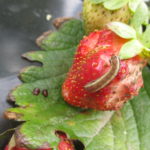
At the Southwest Purdue Ag Center, we are studying annual strawberry production on plastic mulch. Our hope is to gather information for best production practices in our area. As we learn about insect and disease problems, we will pass this information on to producers. This article is about the insect pests we have observed in…Read more about Strawberry Insect Pest Update[Read More]
Insect and Mite Management
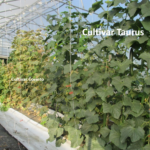
Supported by NC SARE (LNC17-390), we are continuing research for improving high tunnel cucumber production. One of the biggest challenges for growing cucumbers in high tunnels in the summer is two-spotted spider mites. Dry and hot environments featured in high tunnels allow two-spotted spider mite populations to increase rapidly. The mites cause leaf yellowing, necrosis,…Read more about Watch for Two-spotted Spider Mites on High Tunnel Cucumbers[Read More]
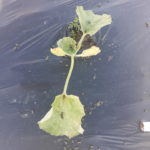
I know this may not come as a surprise to most of you, but it is rare that we get to observe the effectiveness of insecticides in such a dramatic way as we encountered when visiting a melon grower in southern IN recently. And in this case, the decision to apply an insecticide at transplant…Read more about Insecticides Kill Insects[Read More]
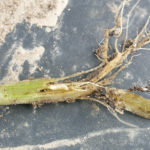
In addition to delaying much of our fieldwork, the cool set spring has wreaked havoc on some of the plants we have been able to squeeze in during brief dry periods. We have received reports of damage caused by seedcorn maggots (Figure 1) and wireworms (Figure 2). In preparation of this article I browsed the…Read more about Seedcorn Maggots and Wireworms in Cucurbits[Read More]
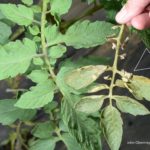
As we wait patiently for the ground to dry and our seedlings to grow, take a moment to consider your strategy for maintaining plant health. If you haven’t started already, it is time to make sure that your pest monitoring programs are in place for the season. For those of you growing in high tunnels,…Read more about Pest Monitoring[Read More]
Great information on pest management of brassica crops can be found at the Brassica Pest Collaborative website (https://ag.umass.edu/vegetable/resources/brassica-pest-collaborative). This project recently conducted several online workshops on managing insect pests of brassicas, including imported cabbageworm, cross-striped cabbageworm, cabbage maggot, flee beetle. All the webinars should be posted on the above website after April 12.
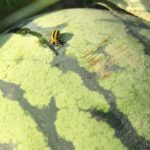
Striped cucumber beetle can be a significant pest in watermelon production systems. These pests can cause feeding damage to roots, stems, leaves, and flowers of plants as well as the watermelon fruit itself (Figure 1). In large enough densities, this damage can lead to economic loss. The economic threshold for striped cucumber beetles in watermelon…Read more about Striped Cucumber Beetles: Densities and Effective Scouting in Watermelons[Read More]
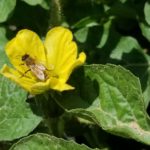
Insecticides are often needed to control pests in vegetable crops, but in crops that require pollinators we often worry about the impact those insecticides may have on those pollinators (Figure 1). In the summer of 2018, a team of researchers at Purdue University explored the effects of insecticide applications on watermelon yield across Indiana, considering…Read more about IPM Revisited: A Cost-effective Solution for Balancing Pest and Pollinator Management[Read More]
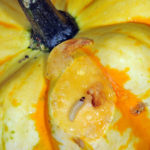
Many of us may forget about the pesky squash vine borer until it’s too late. This pest of cucurbit crops tends to be sporadic in our region; you are either battling it every year or it hardly makes an appearance. The squash vine borer is a member of the clear-winged moths, a unique group of…Read more about What’s Eating my Squash?[Read More]
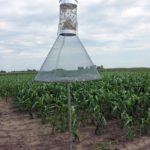
Corn earworm moth numbers have been relatively low this season until recently, as numbers have exploded in pheromone traps. These moths will lay their eggs on numerous crops, with late-market sweet corn being particularly vulnerable at this time. Tomato and pepper growers should also be aware of the potential for earworm (also called fruitworm) damage,…Read more about Corn Earworm Late Moth Flight Quite Impressive[Read More]