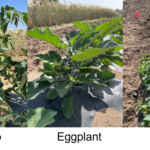
Vegetable growers understand that water deficiency decreases yield, reduces fruit marketability and quality, and, in extreme case, causes plants to die. In Indiana, we are typically not short of precipitation during growing seasons; rainfall is the primary water source. However, concentrated heavy rains and extended dry periods are not desirable for vegetable production. Severe losses…Read more about Irrigation Demonstration Update 1[Read More]
Irrigation
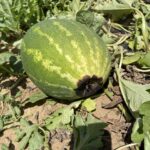
Supported by Indiana Vegetable Growers Association and Illiana Watermelon Association, a collaborative project between Purdue University and Michigan State University that aims to help watermelon farmers improve irrigation management was recently funded. In this project, the team will conduct the scientific experiment at the Southwest Purdue Agricultural Center to test currently used irrigation management tools,…Read more about Collaboration between Purdue University and Michigan State University to Improve Irrigation Management in Indiana Watermelon Production[Read More]
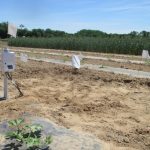
About half of the watermelon fields in our area are not equipped with supplemental irrigation. Watermelon production in these fields is therefore dependent exclusively on rainfall. In fields where supplemental irrigation is available, drip irrigation under black plastic mulch is the most commonly used system. Overhead irrigation through central pivot is also used in some…Read more about Considerations for Irrigation Management in Watermelon Production[Read More]
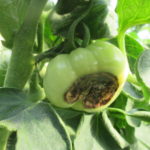
We recently received several calls reporting blossom end rot of tomatoes (Figure 1). Although blossom end rot is caused by deficient supply of calcium to the developing fruit. The occurrence of this physiological disorder often relates to inconsistent supply of water. As a general rule, vegetables require 1-1.5 acre-inches of water per week. Since there…Read more about Are You Applying Enough Water for Vegetables Grown in High Tunnels?[Read More]
I have recently received calls from growers who use surface water to irrigate produce crops. Their concern was that the results of their current water tests were very different from their last tests and that levels of indicator organisms appeared to have increased dramatically. Ponds and lakes that are used for irrigation can be very…Read more about What’s Causing My Water Test Results to Change?[Read More]