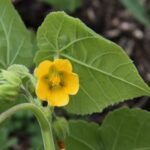
Velvetleaf (Abutilon theophrasti) – Mallow Family Synonyms: pie marker, buttonweed, Indian mallow, butter print, velvet weed, butter-weed, Indian hemp, cotton-weed, and wild cotton. Identification and General Description Summer annual that grows 3 to 8 feet tall. Heart-shaped leaves and stems are covered with short, soft hairs giving it a velvety feel. Young leaves and stems…Read more about Weed Spotlight[Read More]
Stephen Meyers


Using herbicides with different modes of action is one way to more effectively control weeds and avoid or delay herbicide resistance. But how do you know if you are rotating herbicides properly? Group Numbers. Most herbicide labels have a herbicide Group number on the front page, usually above or next to the product’s trade name…Read more about Am I Properly Rotating my Herbicides?[Read More]

As of March 29, 2022, Reflex herbicide is registered for use on select vegetables in the state of Indiana through an indemnified 24(c) special local needs label. Below we discuss what this means for Indiana vegetable producers and how to access the new label. What crops are included?: Pea (succulent) Bell and non-bell pepper (transplanted)…Read more about Reflex Herbicide Now Registered for Use in Select Indiana Vegetables[Read More]

If you use the herbicides Valor® or Chateau®, you may notice a change with your next jug. Valent U.S.A. Corporation is phasing out production of Valor SX® and Chateau SW®, both water soluble granule formulations. The new liquid formulations are called Valor EZ® and Chateau EZ®. While the granular formations contain 51% of the active…Read more about EZ (liquid) Formulations Set to Replace Granular Valor SX and Chateau SW[Read More]
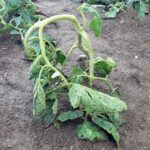
Off-target herbicide movement, whether from on-farm or neighboring farms, is not a new problem. However, in recent years it has been on the top of more minds. Although many crops seem to recover from an off-target herbicide event, vegetative recovery does not always imply that all is well. To illustrate this point, let’s look at…Read more about Herbicide Drift on Tomatoes[Read More]

A special project group of the North Central Integrated Pest Management (IPM) Center wants to learn about your concerns and experiences with herbicide drift. The group is surveying growers of fruits, vegetables, and other specialty crops in the upper Midwest. To truly understand the frequency, severity, and economic impact of herbicide drift on specialty crops,…Read more about Grower Survey to Assess Herbicide Drift Damage in the North Central U.S.[Read More]
Pyridate herbicide was once a cornerstone of broadleaf weed control in mint before its market withdrawal. Recently the use of pyridate (Tough® 5EC) was limited to emergency exemption use, also known as a Section 18 label, which had to be requested and approved annually. However, a new Tough® 5EC label was approved by the EPA…Read more about Tough® 5EC Herbicide Now Registered in Indiana with a Section 3 Label[Read More]
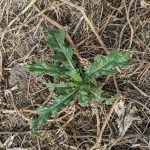
The vegetable crops have all been harvested and it’s time to just relax, right? Maybe. However, the decisions you make this fall will influence your weed control next spring. In all likelihood, you did not control EVERY weed during the growing season. Inevitably, there were weeds that escaped control. If so, these weeds have already…Read more about Post-harvest Weed Management[Read More]
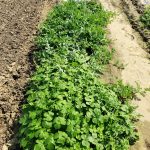
Watermelon is growing in this bed, but something went wrong. What happened? Answer: The weed morningglories are taking over watermelons. Morningglories have become one of the most severe weeds observed in the watermelon field in southern Indiana. More information about this weed can be found in the article Morningglories in this issue of Vegetable Crops…Read more about Answer to Question from Last Issue (7-30-2020)[Read More]
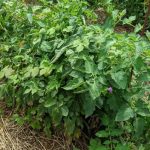
Genus: Ipomoea sp. Species: Ivyleaf: Ipomoea hederacea Entireleaf: Ipomoea hederacea integriuscula Tall: Ipomoea purpurea Pitted: Ipomoea lacunosa Morning glories are among the most troublesome weeds in many cropping systems in the Midwest. They are difficult to control due to their fast growth, large seed size, and impenetrable seed coat. Morning glories get their name because…Read more about Morningglories[Read More]