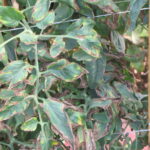
In the Midwest, three major bacterial diseases threaten tomato production. These diseases are bacterial canker, bacterial spot and bacterial speck. Although these diseases are all caused by bacteria, they vary in symptomology, biology and management options. We will discuss symptoms, biology and management of the three bacterial diseases in a series of newsletter articles. This…Read more about Tomato Bacterial Diseases — Bacterial Canker[Read More]
Strawberry harvest is coming to an end in most states. A couple of diseases were found. In addition to botrytis fruit rot and common leaf spot that farmers are familiar with, anthracnose was found caused severe damage in plasticulture production in southern Indiana. Part of the reason is the high temperature followed by frequent rainfalls…Read more about Strawberry Pests Observed in 2022 Season[Read More]
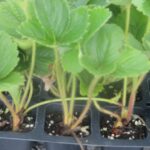
Strawberry plug plants that have active growing root systems are easier to establish than bare-root plants. Interest in growing strawberries using plug plants and plastic mulch is growing. Strawberry plug plants are produced from the runner tips of mother plants. In commercial production, mother plants may be grown in climate-controlled greenhouses or open fields in…Read more about Is it Okay to Propagate Your Own Strawberry Plug Plants?[Read More]
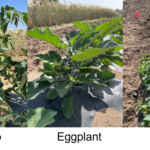
Vegetable growers understand that water deficiency decreases yield, reduces fruit marketability and quality, and, in extreme case, causes plants to die. In Indiana, we are typically not short of precipitation during growing seasons; rainfall is the primary water source. However, concentrated heavy rains and extended dry periods are not desirable for vegetable production. Severe losses…Read more about Irrigation Demonstration Update 1[Read More]

Grass-selective herbicides are valuable to weed management in broadleaf vegetable crops. As harvest season draws closer, it is important to note that not all grass herbicides have the same pre-harvest interval (PHI) requirements. The two most commonly used grass-selective herbicides are clethodim and sethoxydim. While most PHI’s are similar between the two (Table 1), there…Read more about Keeping an Eye on Grass Herbicide PHI (Pre-Harvest Interval)[Read More]
Topics of July strawberry chat are Weed Control and Insect Pest Management. Our guests are Drs. Stephen Meyers and Samantha Willden, and Mr. David Doud. Dr. Meyers is an assistant professor and weed scientist at the Horticulture and Landscape Architecture Department. Dr. Meyers will discuss weed management and herbicide options in matted-row and plasticulture strawberry…Read more about Strawberry Chat — June Record and July Topics[Read More]
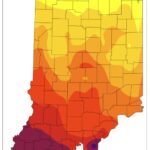
This week has made me long for the time when I lived in Reno, Nevada. Further north and higher in elevation than Las Vegas, the climate was absolutely beautiful – particularly if you are not into green vegetation, bugs, and drink coasters. Reno was never quite as hot as Las Vegas, but still had the…Read more about Heat Wave and Mugginess[Read More]

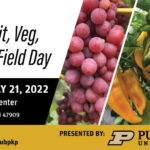
Purdue Fruit, Veg & Hemp Field Day will be held at Meigs Purdue Ag Center (9101 S 100 E, Lafayette, IN 47909) on July 21, 2022. Register the event https://tinyurl.com/ypfubpkp If you have any questions about this event, please contact Petrus Langenhoven at (765) 496-7955, plangenh@purdue.edu or Lori Jolly-Brown (765) 494-1296, ljollybr@purdue.edu.
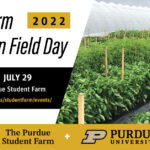
The annual Purdue Small Farm Education Field Day will be presented on July 29th from 9 am – 12 pm at the Purdue Student Farm, West Lafayette. Register the event https://purdue.ca1.qualtrics.com/jfe/form/SV_25gK2j29sF7Is9o If you have any questions about this event, please contact Petrus Langenhoven at (765) 496-7955, plangenh@purdue.edu or Lori Jolly-Brown (765) 494-1296, ljollybr@purdue.edu.
Purdue University prohibits discrimination against any member of the University community on the basis of race, religion, color, sex, age, national origin or ancestry, genetic information, marital status, parental status, sexual orientation, gender identity and expression, disability, or status as a veteran. This material may be available in alternative formats. 1-888-EXT-INFO Disclaimer: Reference to products in this publication is not intended to be an endorsement to the exclusion of others which may have similar uses. Any person using products listed in this publication assumes full responsibility for their use in accordance with current directions of the manufacturer.