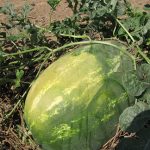
Loss of foliage due to poor growing conditions or disease can cause fruit to be exposed to the sun. Hot temperatures and direct sunlight can lead to areas of the fruit that appear bleached or sunburned. Sunburned fruit may not be marketable. To reduce the probability sunburned fruit, every effort should be made to maintain foliage…Read more about Sunburn on Vegetables[Read More]
Tomato
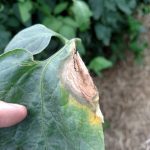
Gray mold of tomato is one of the more common diseases of greenhouse-produced tomatoes. Although it is often a minor problem, if left unchecked, gray mold can cause yield loss. Gray mold, or more properly, Botrytis gray mold, often causes a light gray or brown necrotic lesion on leaves (Figure 1). The lesions on leaves are sometimes…Read more about Botrytis Gray Mold of Tomato[Read More]
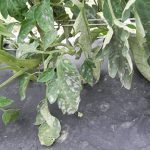
This disease has been reported near West Lafayette and in Wanatah Indiana. Powdery mildew of tomato can be recognized by the white fungal colonies on both leaf surfaces (Figure 1). Occasionally, stems may also be infected. Severely affected tomato plants may have leaves that turn chlorotic and necrotic. Fruit will not be directly affected. The causal organism has been…Read more about Powdery Mildew of Tomato[Read More]

Pinney Purdue Vegetable Field Day and Sweet Corn Sampler. Thursday, August 13, 2015. 4:00 p.m. – 8:00 p.m. CDT. Pinney Purdue Ag Center, 11402 S. County Line Rd., Wanatah, IN. Plot tours include soil health management and disease suppressive soils, tomatoes and peppers in high tunnels, and sweet corn varieties. Private Applicator Recertification (PARP) Credit…Read more about Upcoming Events[Read More]
We are again seeing a lull in pheromone trap catches of corn earworms. However, I caution sweet corn growers to remain vigilant in checking their traps. Populations can increase rapidly, especially if carried north on storm fronts from the Gulf Coast. It is also important to watch the development of the field corn around your…Read more about Corn Earworm[Read More]
Yellowstriped armyworms continue to cause problems for tomato growers, especially in high tunnels. The populations are often spotty within a field or high tunnel, but can easily reach damaging levels. Most of the insecticides listed in the Midwest Vegetable Production Guide for control of caterpillars on fruiting vegetables (pages 135-6) will control yellowstriped armyworms. If…Read more about Yellowstriped Armyworm[Read More]
Pinney Purdue Vegetable Field Day and Sweet Corn Sampler. Thursday, August 13, 2015. 4:00 p.m. – 8:00 p.m. CDT. Pinney Purdue Ag Center, 11402 S. County Line Rd., Wanatah, IN. Plot tours include soil health management and disease suppressive soils, tomatoes and peppers in high tunnels, and sweet corn varieties. To register, contact Lori Jolly-Brown,…Read more about Upcoming Events – Pinney Purdue Vegetable Field Day and Sweet Corn Sampler[Read More]
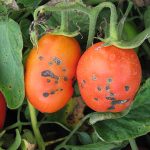
Bacterial spot of tomato causes lesions on foliage and fruit of tomato. On leaves, the lesions begin as small water soaked areas and turn into brown lesions with a yellow halo. Lesions on stems often lack a yellow halo. Fruit lesions, which are responsible for direct loss of marketable yield, are often scabby in appearance (Figure…Read more about Quintec Labeled for Bacterial Spot of Tomato[Read More]
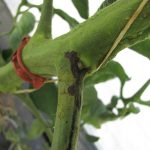
This disease has been reported in two different greenhouse situations. Although the disease is not usually economically important, a brief review of the disease is offered here to help tomato growers differentiate pith necrosis from more important problems. Tomato pith necrosis causes dark brown streaks on tomato stems and leaf petioles (Figure 1). Often stems may…Read more about Pith Necrosis of Tomato[Read More]
After a brief lull in pheromone trap catches, we have resumed catching earworm moths all around the state. Although most of the counts are relatively low (less than 10 per night), remember that for early planted sweet corn that silks before the neighboring field corn silks, the threshold for treatment is 1 moth per night….Read more about Corn Earworms[Read More]