The Southwest Melon and Vegetable Grower Association will have their Annual meeting in association with the Illiana Watermelon Association (IWA) on January 20, 2023 in French Lick, IN. Note that this is an earlier date than the meeting usually takes place. PARP and CCH credit will be applied for. The meeting agenda has not been…Read more about Southwest Melon and Vegetable Growers Association Annual Meeting will be January 20, 2023[Read More]
Found 1707 Articles

Register for Veteran Farmer Webinar Series. October registration link: https://purdue.ca1.qualtrics.com/jfe/form/SV_3NS6mjFCjjEPXJs November registration link: https://purdue.ca1.qualtrics.com/jfe/form/SV_eWdvzeeMGy6ouR8 More information about the Webinar Series can be found at https://extension.purdue.edu/food-safety-for-military-veteran-farmers/upcoming-events.html

Purdue University will host the 2023 Indiana Horticulture Conference at the Beck Agricultural Center, West Lafayette, IN on Jan.23 and 24. Registration will open in November 2022 and close one week before the event. Educational tracks will include vegetable production, small fruit, tree fruit, apples for beginners, food safety, controlled environment, farming basics, and business…Read more about 2023 Indiana Horticultural Conference Registration to Open in November[Read More]
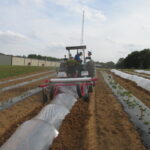
5I have heard concerns about the size of strawberry plants this year. To provide a timely update of crop status, we created a blog site where there will be frequent updates of plasticulture strawberry status across Indiana. If you are interested in learning the current crop status, please visit this site https://www.purdue.edu/hla/sites/guan/blog/. We saw a…Read more about Plasticulture Strawberry Crop Status: Are Additional Protections Needed to Encourage Fall Growth?[Read More]
OISC will mail renewal notices this week to all pesticide applicators with expiration of Dec. 31, 2022. Programs approved for credit are listed on PARP Event site: https://ppp.purdue.edu/private-applicators/recertification-parp/parp-events/ Only 2 PARPs in one year. Private applicators must have attended at least 1 PARP prior to 2022. If not, They will need to pass the certification exam….Read more about Private Applicator Permit[Read More]
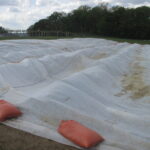
Row covers are used in plasticulture strawberry production for winter protection. There is also interest in using row covers to encourage fall growth. The different purposes of using row covers affect when farmers should consider applying the row covers, and what type of materials best meet these goals. At Strawberry Chat on Plasticulture production, Brad…Read more about Applying Row Covers for Winter Protection in Plasticulture Strawberry Production[Read More]
PCNB fungicides include Blocker 4F® and 10G®. PCNB is an acronym for the chemical pentachloronitrobenzene. In Indiana, PCNB fungicides are used for bottom rot, club root, and wirestem in brassica crops. Brassica crops for which PCNB products are labeled for include: Broccoli, Brussels sprout, cabbage, cauliflower, collards, kale, kohlrabi, and mustard greens. Be sure to…Read more about EPA Proposal to Cancel all uses of PCNB Fungicides[Read More]
This article was originally published in the August 2022 Center for Crop Diversification Newsletter. Dakota Moore is the Grower Outreach Coordinator of Kentucky Horticulture Council. You can reach Dakota at dakota@kyhortcouncil.org “That’ll never happen to us.” “It’s always been this hot and dry.” “This storm won’t be that bad.” If the last year has taught…Read more about Protect Your Livelihood with Crop Insurance[Read More]
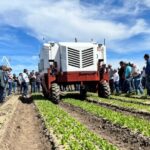
This questionnaire is part of a USDA Specialty Crop Research Initiative (SCRI)-funded proposal (DEVELOPING A NATIONAL TEAM TO OPTIMIZE NON-HERBICIDE WEED MANAGEMENT TECHNIQUES IN COLE AND LEAFY GREEN CROPS) to identify grower interest in novel technology for weed management. Novel technology includes vision-guided sprayers/thinners, steam weeding, and precision mechanical, laser, and electric weeders. It may…Read more about New Questionnaire to Identify Grower Interest in Novel Weed Management Technology[Read More]
Purdue University prohibits discrimination against any member of the University community on the basis of race, religion, color, sex, age, national origin or ancestry, genetic information, marital status, parental status, sexual orientation, gender identity and expression, disability, or status as a veteran. This material may be available in alternative formats. 1-888-EXT-INFO Disclaimer: Reference to products in this publication is not intended to be an endorsement to the exclusion of others which may have similar uses. Any person using products listed in this publication assumes full responsibility for their use in accordance with current directions of the manufacturer.