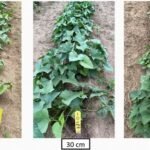
Background Sweet potato is a staple crop that provides nutritional benefits to humans globally, but weed interference (Figure 1) can reduce yields by 22 to 90%. Despite increased organic sweet potato production in the United States, growers face challenges with limited weed management options and often resort to cultivation and hand-weeding. Objectives and Methodology To…Read more about Findings From Two Years of Organic Sweet Potato Weed Management Research[Read More]
Stephen Meyers

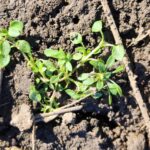
Common names Common chickweed, chickweed, starwort, starweed, bindweed, chicken-weeds, winter weed, satin flower, tongue grass, chickwhirtles, cluckenweed, mischievous Jack, skirt buttons, cyrillo, and white bird’s eye. Fun fact Did you notice how many common names refer to chickens? It turns out that this weed was used as a go-to in chicken and bird diets! Latin…Read more about Weed Spotlight: Common Chickweed[Read More]
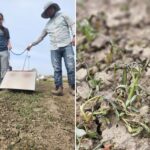
Weeds can quickly take over vegetable farms, reducing yield and interfering with harvest. Effective weed management is vital for keeping farms efficient and productive. Because every farm is unique, there is no universal weed management solution. Prior to implementing a weed control strategy, you should properly identify the problematic weeds on your farm and establish…Read more about Weed Management Strategies for Vegetable Farms[Read More]
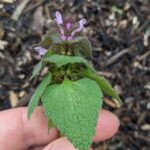
Common Names Purple deadnettle, red deadnettle. Latin name Lamium purpureum. “Lamium” is derived from the Latin for “throat,” referencing the flower tube’s elongated shape. “purpureum”, also derived from the Latin, means “purple”. Family Lamiaceae – “the mint family”. Life cycle In Indiana, purple deadnettle is a winter annual. Plants emerge as small seedlings in the…Read more about Weed Spotlight: Purple Deadnettle[Read More]
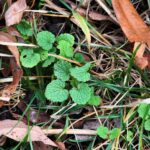
Common names: Henbit, henbit dead nettle, henbit nettle, blind nettle, bee nettle, and giraffe head. Latin name: Lamium amplexicaule. “Lamium” is derived from the Latin for “throat,” referencing the flower tube’s elongated shape. “amplexicaule”, also derived from the Latin, means “embracing the stem,” describing the upper leaves of henbit that encircle the stem. Family: Lamiaceae…Read more about Weed Spotlight: Henbit[Read More]

Many of the pesticide products Indiana farmers use do not include specialty crops on the container’s label. These uses are often added through 24C Special Local Need (SLN) or supplemental labels, which can be challenging to locate. In response, the Office of the Indiana State Chemist created a “Pesticide Products- Special State Registrations” webpage with…Read more about Where to Find “Special” Indiana Pesticide Registrations[Read More]

Educational Tracks The event will include educational tracks in fresh vegetables; processing tomatoes; small and tree fruits; business, marketing, succession planning; food safety; and controlled environment agriculture. Credits will be available for Certified Crop Advisors (CEUs) as well as Indiana-licensed private (PARP) and commercial pesticide applicators (CCH). PARP can be earned on both days. Registration…Read more about Save the Date: Indiana Horticulture Conference & Expo – Jan. 22-23, 2024[Read More]
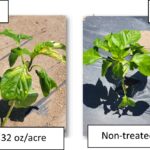
Command® 3ME herbicide recently received a 24C Special Local Need label for use in banana peppers in the state of Indiana (Figure 1). Prior to this registration, Command® 3ME could be applied in the production of other types of bell and non-bell peppers, but not banana peppers. Field research results by the Horticulture Crops Weed…Read more about Command 3ME Now Registered for Use in Banana Peppers in Indiana[Read More]
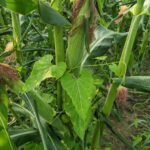
What is it? Honeyvine milkweed (Cynachum laeve) is a perennial, deciduous, vining member of the milkweed family Asclepiadaceae. It is native to the United States and can serve as a host for monarch butterfly larvae. Honeyvine milkweed tends to be more problematic in production systems with reduced or no tillage, including perennial fruits. It can…Read more about Honeyvine Milkweed[Read More]
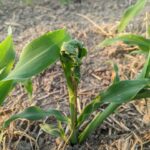
What is buggy whipping? “Buggy whipping” is the term for when leaves in the corn whorl become crinkled and fail to unfurl (Figure 1) properly. It can also be referred to as “twisted whorl syndrome” or “rapid growth syndrome”. Often these crinkled leaves bend toward the ground, resulting in an appearance some liken to a…Read more about Buggy Whipping in Sweet Corn[Read More]