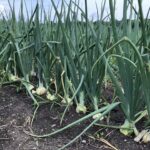
Onions are poor competitors with weeds. Their narrow leaves do not compete well for light, and their shallow root system makes them poor competitors for water. Tight in-row and between-row plant spacing make mechanical weed control, including hand-weeding, difficult. Chemical weed control can be effective and reduce the amount of time required to hand-weed onions….Read more about Even Minimal Herbicide Use Can Reduce Hand-Weeding Time[Read More]
Stephen Meyers


What is Optogen®? The active ingredient in Optogen® (Figure 1) is bicyclopyrone. Corn growers may recognize bicyclopyrone as one of the four ingredients in Acuron® herbicide. Bicyclopyrone is a Group 27 herbicide with pre- and post-emergence activity on select weed species. Group 27 herbicides inhibit an enzyme known as “HPPD”, resulting in an inhibition of…Read more about Optogen®- a New Herbicide Available in Select Vegetables and Strawberry[Read More]

Purdue University will host the 2023 Indiana Horticulture Conference at the Beck Agricultural Center, West Lafayette, IN on Jan.23 and 24. Registration will open in November 2022 and close one week before the event. Educational tracks will include vegetable production, small fruit, tree fruit, apples for beginners, food safety, controlled environment, farming basics, and business…Read more about 2023 Indiana Horticultural Conference Registration to Open in November[Read More]

Purdue University will host the 2023 Indiana Horticulture Conference at the Beck Agricultural Center, West Lafayette, IN on Jan.23 and 24. This two-day conference will feature educational sessions for commercial fruit and vegetable producers. CCA credits will be available. We look forward to seeing you there. More information will be available soon. If you have…Read more about 2023 Indiana Horticulture Conference Save the Date[Read More]
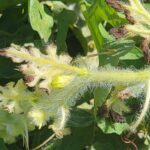
Throughout the growing season, vegetable crop farmers often report suspected herbicide drift injury. Each type of herbicide results in specific types of injury. Knowing what to look for can help us narrow which herbicide or herbicide mode of action could be responsible. To document how watermelon and pumpkin respond to various herbicides, we sprayed a…Read more about Pumpkin and Watermelon Herbicide Injury Symptoms – In Photos[Read More]
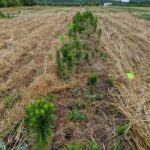
Attendees at a July field day at the Meigs Horticulture Research Farm in Lafayette, Indiana saw first-hand the potential of cover crops to suppress weeds in a SARE-funded demonstration plot. First, some background: Three cover crop species were sown with a ten-foot drill on September 10, 2021: Oats at 100 lb/acre Cereal rye at 65…Read more about Cover Crop Demonstration Plots Show Weed Suppression Potential[Read More]
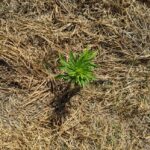
Try as we might, it seems that no weed management program controls 100% of the weeds in a field. Inadequate or excessive rainfall can limit the success of preemergence herbicides. Less-than-ideal soil moisture can result in unsatisfactory in-season cultivation. Even when we have effective herbicide options, late emerging weeds often cannot be treated within the…Read more about Going Rogue[Read More]

Grass-selective herbicides are valuable to weed management in broadleaf vegetable crops. As harvest season draws closer, it is important to note that not all grass herbicides have the same pre-harvest interval (PHI) requirements. The two most commonly used grass-selective herbicides are clethodim and sethoxydim. While most PHI’s are similar between the two (Table 1), there…Read more about Keeping an Eye on Grass Herbicide PHI (Pre-Harvest Interval)[Read More]
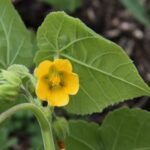
Velvetleaf (Abutilon theophrasti) – Mallow Family Synonyms: pie marker, buttonweed, Indian mallow, butter print, velvet weed, butter-weed, Indian hemp, cotton-weed, and wild cotton. Identification and General Description Summer annual that grows 3 to 8 feet tall. Heart-shaped leaves and stems are covered with short, soft hairs giving it a velvety feel. Young leaves and stems…Read more about Weed Spotlight[Read More]

Using herbicides with different modes of action is one way to more effectively control weeds and avoid or delay herbicide resistance. But how do you know if you are rotating herbicides properly? Group Numbers. Most herbicide labels have a herbicide Group number on the front page, usually above or next to the product’s trade name…Read more about Am I Properly Rotating my Herbicides?[Read More]