
Dr. Steve Weller, professor and extension weed scientist in the Dept. of Horticulture and Landscape Architecture is retiring from Purdue. I’m sure many readers share the Purdue Vegetable Extension team’s appreciation for all the work he has done to help vegetable growers with weed management and wish him the best in life’s next adventures. Thanks…Read more about Farewell to Dr. Steve Weller[Read More]

One of the most impressive insect pests that we deal with on vegetables are the hornworms (Figure 1 and 2). These two species, tomato and tobacco hornworm, can reach up to 4 inches long and consume massive quantities of foliage and fruit. In recent years, we have seen damage in high tunnels that is more…Read more about Hornworms[Read More]
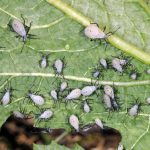
Squash bug is the most consistent insect pest of squash and pumpkins and is the most difficult to control (Figure 1 and 2). The key to management is early detection and control of the nymphs. The adults are extremely difficult to kill. Foliar insecticides should be applied to control the nymphs when you have more…Read more about Squash Bugs[Read More]
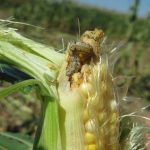
The first generation flight of corn earworm moths continues throughout the state. Heaviest populations as evidenced by pheromone trap catches have been in the northwest. This first generation flight should be ending soon. Then we will likely have a lull in catches for a while (several weeks) until the second generation emerges or we get…Read more about Corn Earworms[Read More]
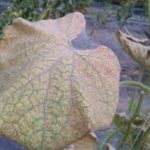
It is that time of year again, when the two-spotted spider mites (Tetranychus urticae; TSSM, Figure 1), and other mite species, show up in full force and wreak havoc on fruit and vegetables. These pests are very inconspicuous and often go unnoticed until the resulting damage appears. For TSSM this includes the webbing produced on…Read more about Two-Spotted Spider Mite Control[Read More]

In southern Indiana, we are between generations of striped cucumber beetles. That doesn’t mean there are none out there, but numbers are lower than they were and lower than they will be. The second generation should be coming out soon. Northern areas are a little behind. The biggest concern we have with the first generation…Read more about Striped Cucumber Beetles[Read More]
When we first began working in high tunnels about 8 years ago, most of the popular literature said that the tunnels would provide protection from most insect pests, other than the usual greenhouse pests like aphids and mites. What we found very quickly is that that information was untrue. We found very high populations of…Read more about Caterpillars in High Tunnels[Read More]
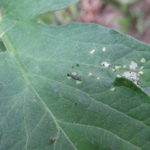
We are seeing small caterpillars feeding on tomato leaves in high tunnels at Pinney Purdue. The first sign may be feeding partially through the leaf, or ‘windowpane’ feeding, or small holes on the leaf. By turning the leaf over we find a yellowstriped armyworm or hornworm (Figures 1 and 2). In the morning, we find…Read more about Caterpillars on High Tunnel Tomatoes[Read More]
I have observed very few foliar diseases of cucurbits this season. However, I have had several worried phone calls about these diseases, so here is an update. Alternaria leaf blight-this disease is caused by a fungus that survives in crop residue. It usually is not an important disease. However, Alternaria can cause brown lesions with…Read more about Foliar Disease of Cucurbit Update[Read More]
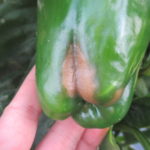
In the past few weeks, we have received several reports about blossom end rot on tomatoes and peppers as the crops start to set fruit. Blossom end rot is a physiological disorder (not an infectious disease) that commonly occurs on tomatoes and peppers. Initial symptoms of the physiological disorder include dark green or brown water-soaked leisure…Read more about Blossom End Rot of Tomato and Pepper[Read More]
Purdue University prohibits discrimination against any member of the University community on the basis of race, religion, color, sex, age, national origin or ancestry, genetic information, marital status, parental status, sexual orientation, gender identity and expression, disability, or status as a veteran. This material may be available in alternative formats. 1-888-EXT-INFO Disclaimer: Reference to products in this publication is not intended to be an endorsement to the exclusion of others which may have similar uses. Any person using products listed in this publication assumes full responsibility for their use in accordance with current directions of the manufacturer.